سلام خوش آمدید  "چگونه نااميد شوم، وقتي كه تو مهربان و صميمي جوياي حال مني؟"

Top AI Tools Every Researcher Should Know about in 2025 (https://www.linkedin.com/feed/update/urn:li:activity:7331300766969663490/)

link 1 link

در سال 2025، ابزارهای هوش مصنوعی به بخشی حیاتی در تحقیقات تبدیل شده اند. در ادامه، برخی از برترین ابزارهای هوش مصنوعی که هر محققی باید بشناسد، همراه با لینک های دسترسی آورده شده است:

1. ابزارهای تحقیق و تحلیل متون

- ChatGPT-4o (OpenAI)

- مدل پیشرفته پردازش زبان طبیعی برای تولید محتوا، ترجمه و تحلیل داده های متنی.

- لینک: (https://openai.com/chatgpt)

- Gemini (Google DeepMind)

- مدل چندمنظوره برای تحلیل متن، کدنویسی و استدلال علمی.

- لینک (https://deepmind.google/technologies/gemini)

- Elicit

- کمک به پژوهشگران برای مرور سیستماتیک مقالات علمی.

- لینک: (https://elicit.org)

- Scite.ai

- تحلیل استنادات مقالات و تشخیص اعتبار منابع.

- لینک: (https://scite.ai)

---

2. ابزارهای جستجوی علمی پیشرفته

- Consensus

- موتور جستجوی هوش مصنوعی برای پاسخ های مبتنی بر تحقیقات علمی.

- لینک: (https://consensus.app)

- Semantic Scholar

- جستجوی هوشمند مقالات با فیلترهای پیشرفته.

- لینک: (https://www.semanticscholar.org)

---

3. ابزارهای تحلیل داده و یادگیری ماشین

- TensorFlow/Keras (Google)

- چارچوب های محبوب برای توسعه مدل های یادگیری عمیق.

- لینک: (https://www.tensorflow.org)

- PyTorch (Meta)

- کتابخانه انعطاف پذیر برای تحقیقات یادگیری ماشین.

- لینک: (https://pytorch.org)

- Hugging Face Transformers

- کتابخانه مدل های NLP مانند BERT و GPT.

- لینک: (https://huggingface.co)

---

4. ابزارهای ترسیم داده و مصورسازی

- Tableau (با قابلیتهای هوش مصنوعی)

- ابزار مصورسازی داده با پیش بینی خودکار.

- لینک: (https://www.tableau.com)

- RAWGraphs

- ابزار متن باز برای مصورسازی داده های پیچیده.

- لینک: (https://rawgraphs.io)

---

5. ابزارهای نوشتن و ویرایش علمی

- Writefull

- کمک به نگارش و ویرایش مقالات آکادمیک.

- لینک: (https://writefull.com)

- Trinka

- ویرایشگر هوشمند متون علمی با قابلیت بررسی گرامر و سبک.

- لینک: (https://www.trinka.ai)

---

6. ابزارهای مدیریت منابع و استناددهی

- Zotero + AI Plugins

- مدیریت منابع و استناددهی خودکار با افزونه های هوشمند.

- لینک: (https://www.zotero.org)

- Mendeley (Elsevier)

- سازماندهی مقالات و پیشنهاد منابع مرتبط با هوش مصنوعی.

- لینک: (https://www.mendeley.com)

---

7. ابزارهای پردازش تصویر و داده های چندرسانه ای

- OpenCV + AI Models

- کتابخانه پردازش تصویر با قابلیتهای یادگیری ماشین.

- لینک: (https://opencv.org)

- DeepLobe

- پلتفرم بدون کد برای مدلهای بینایی کامپیوتر.

- لینک: (https://deeplobe.ai)

---

8. ابزارهای شبیه سازی و محاسبات علمی

- Wolfram Alpha

- موتور محاسباتی هوشمند برای حل مسائل ریاضی و علمی.

- لینک: (https://www.wolframalpha.com)

---

9. ابزارهای همکاری توزیع شده

- GitHub Copilot

- دستیار کدنویسی هوشمند برای توسعه نرمافزارهای تحقیقاتی.

- لینک: (https://github.com/features/copilot)

---

این ابزارها می توانند سرعت، دقت و کیفیت تحقیقات را در سال 2025 به طور چشمگیری بهبود بخشند. انتخاب ابزار مناسب به حوزه تخصصی و نیازهای پژوهشی شما بستگی دارد.

+ نوشته شده در  یکشنبه چهارم خرداد ۱۴۰۴ساعت 23:35  توسط   | 

The current status of environmental pollution by heavy metals (HMs) will affect the entire ecosystem components. The results obtained so far indicate that some plants can be effective in removing toxic metals from the soil. For this purpose, the phytoremediation ability of three fleshy ornamental plants; cactus (Opuntia humifusa), kalanchoe (Kalanchoe blossfeldiana) and bryophyllum (Bryophyllum delagoensis), was evaluated under the stress of HMs. These succulents are known for their remarkable adaptive capabilities, allowing them to thrive in harsh environmental conditions, including those with high levels of contaminants. Their robust nature, efficient water-use strategies, and proven potential for heavy metal accumulation made them viable candidates for investigating their phytoremediation potential. This experiment was performed as factorial based on completely randomized block design with two factors; the first factor included the type of plant in 3 levels (cactus, kalanchoe and bryophyllum) and the second one included the type of metal in 5 levels (control, silver, cadmium, lead and nickel) in 3 repetitions. The concentration of each salt used was 100 ppm. The measured parameters included stem height, relative growth, diameter, dry matter percentage of root and shoot, chlorophyll a, b and total chlorophyll, carotenoid, anthocyanin, proline, and elements of nickel, silver, lead and cadmium, as well biological concentration factor. The results showed that the highest amount of final stem height, relative growth, dry matter percentage of shoot and the highest amount of chlorophyll a and b, carotenoid and anthocyanin were obtained in bryophyllum. Also, the results of mean comparison of the data related to the effect of metal type on the plants showed that the highest amount of carotenoid, anthocyanin and biological concentration factor were induced by cadmium. On the other hand, the highest and lowest amount of proline as well anthocyanin and proline were induced by silver and lead, respectively. Totally, bryophyllum had a high resistance to HMs and the examined HMs had less effect on the growth of this plant. Cactus, among trial species, exhibited superior potential for HM absorption compared to kalanchoe and bryophyllum. The study underscores cactus as an excellent phytoremediator.

FULLTEXT

+ نوشته شده در  دوشنبه بیست و نهم مرداد ۱۴۰۳ساعت 0:1  توسط   | 

ن کتاب دارای اهمیت خاص خود است تا پژوهشگران بخش کشاورزی، از آن در پژوهش‌های خود؛ دانشجویان رشته‌های علوم و مهندسی باغبانی، در مطالعات مربوط به به‌نژادی و تولیدكنندگان كیوی برای افزایش تولید خود بتوانند بهره ببرند.

کتاب حاضر شامل سه بخش است كه هر كدام از بخش‌ها یك تا چند فصل دارند، نویسندگان تلاش کرده اند با زبانی گویا و ساده، توضیحاتی درباره پرورش و نگهداری کیوی، كاربرد به‌نژادی در بهبود صفات مهم آن و همچنین‌ بهره‌گیری از مكانیزاسیون در مراحل مختلف كاشت، نگهداری، بهره‌برداری، بسته‌بندی و حتی رسیدن به دست مصرف‌كنده ارایه شود. بخش نخست کتاب كه شامل چهار فصل است، پرورش و نگهداری کیوی بررسی شده است. در فصل اول، درباره ویژگی‌های عمومی کیوی توضیحاتی بیان شده است. در فصل‌ دوم به احداث باغ کیوی پرداخته شده است كه مهمترین موضوعات آن عبارتند از: انتخاب و آماده‌سازی محل باغ، نیاز حرارتی، داربست و انواع آن، سیستم‌های آبیاری، واکنش کیوی به کمبود آب، هرس یا پیرایش و تربیت تاک کیوی، محافظت از سرمازدگی و یخبندان و کوددهی در هنگام احداث باغ كیوی. در فصل سوم علاوه بر کوددهی، آبیاری، گرده‌افشانی، تنک گل و میوه، پیرایش پوست و ریشه و هرس باردهی و تابستانی، به آفات و بیماری‌های کیوی نیز پرداخته شده است. فصل‌ چهارم نیز شامل مواردی از جمله برداشت، حمل، نگهداری و انبار کیوی است.

بخش دوم كتاب درباره به‎نژادی کیوی است. از آنجا كه كتاب مرجعی برای به‎نژادی درختان میوه در دسترس نیست، در فصل پنجم درباره به‌نژادی درختان میوه مطالبی بیان شده است. در این راستا اهلی شدن درختان میوه، روش‌های به‌نژادی درختان میوه شامل هیبریداسیون و انتخاب، اصلاح به کمک جهش، شیمر، پلی‌پلوئیدی و بیوتکنولوژی و اصلاح ییوه‌ها توضیح داده شده است. مطالب این فصل بر پایه سرفصل درس اصلاح درختان میوه است که می‌تواند برای دانشجویان مقاطع كارشناسی و كارشناسی ارشد علوم و مهندسی باغبانی به‌عنوان منبع درسی در نظر گرفته شود. فصل ششم كتاب، آرایه‌شناسی جنس Actinidia است كه دربرگیرنده تاکسونومی، توزیع جغرافیایی و تکامل، اهلی‌سازی و تجارت کیوی و همه‌گیری Psa (بیماری شانکر باکتریایی کیوی ناشی از Pseudomonas spp.) است. در فصل هفتم، اهداف و روش‌های به‌نژادی کیوی توضیح داده شده است كه در آن به روش‌های به‌نژادی ارقام کیوی شامل آغاز به‎نژادی، به‌نژادی با استفاده از جهش، انتخاب به کمک نشانگر (MAS)، توالی‌یابی ژنوم، اینتروگرسیون ژن از وابستگان وحشی، ویرایش ژن و استفاده از کشت بافت و جنین پرداخته شده است. در ادامه مهمترین اهداف به‌نژادی در كیوی شامل بهبود عطر و طعم، بازارپسندی رنگ میوه و تنوع در رنگ، کیفیت انبارداری، فعالیت‌های متابولیکی مربوط به رسیدگی، کیفیت تغذیه‌ای، مقاومت به تنش‎های زیستی و غیرزیستی، سازگاری پیوندک-پایه و ویژگی‎های مربوط به فتوسنتز توضیح داده شده است.

بخش سوم كتاب درباره مکانیزاسیون تولید کیوی است كه مهمترین نكات، بهره‌گیری از ماشین‌آلات كشاورزی در مبارزه مکانیکی با علف‎های هرز، سم‎پاشی باغات کیوی، کوددهی کیوی، هرس کیوی، برش کمربندی تنه، گرده‌افشانی مصنوعی و برداشت مکانیزه است. بهره‌گیری از پهپادها و واحدهای GPS، فناوری شمارش دیجیتال محصول، درجه‌بندی با اشعه نزدیک به مادون قرمز و دوربین و بسته‎بندی خودکار نیز از دیگر مباحث مطرح شده در این بخش می باشد.

منبع خبر

+ نوشته شده در  دوشنبه سی ام بهمن ۱۴۰۲ساعت 23:12  توسط   | 

به گزارش روابط عمومی جهاددانشگاهی استان اردبیل، این کتاب توسط دکتر شهرام صداقت حور عضو هیئت‌علمی دانشگاه آزاد اسلامی واحد رشت و دکتر سیده خدیجه عباس نیای زارع دانش آموخته دکتری باغبانی به رشته تالیف درآمده است.

استفاده از توری‌های رنگی اخیراً کاربرد زیادی در مناطق مختلف دنیا در بخش تولید گیاهان زینتی، پرورش سبزی، ریزمیوه‌ها و ... داشته اند. ترکیب نور می تواند بر مورفولوژی، فیزیولوژی و رشد گیاهان موثر باشد، استفاده از توری های رنگی علاوه بر تغییر در طیف جذبی نور، می توانند از شدت نور دریافتی توسط گیاه نیز بکاهند. ضمن اینکه مشاهده شده است که کاربرد توری‌های زرد و صدفی می تواند به کاهش ناهنجاری‌های ناشی از آفات منجر شود.

کاربرد توری‌های رنگی می تواند فراگیرتر هم شود زیرا استفاده از توری‌های رنگی در مقایسه با گلخانه ها، نیاز به سرمایه گذاری کمتری دارند. اگرچه استفاده از توری‌های سیاه از دیرباز کاربرد داشته اما کشاورزان در حال بکاربردن توری‌های خاکستری و رنگی در جهت استفاده از تاثیر آنها بر رشد رویشی، کوتاهی شاخساره، شاخه دهی، برگ دهی و زمان گلدهی هستند. احتمال داده می شود که با استفاده از توری‌های رنگی، نیاز به استفاده از تنظیم کننده های رشد شیمیایی و مواد تنک کننده کاهش یابد.

در این کتاب به اهمیت موضوع نور و سایبان‌ها در تولید محصولات باغی، کنترل محیط رشد گیاهان در گلخانه و عوامل موثر بر رشد گیاهان، اهمیت نور تکمیلی در گلخانه و به کاربرد انواع سایبان‌ها در باغبانی، بررسی اثر سایبان‌های رنگی بر خصوصیات گیاهان، اثر سایبان‌های رنگی در چند گیاه مهم باغبانی پرداخته شده است.

منبع خبر

+ نوشته شده در  دوشنبه سی ام بهمن ۱۴۰۲ساعت 23:4  توسط   | 

1. Biochemical and physiological traits of strawberry as influenced by organic acids and deficit irrigation under colored netting

خواص بیوشیمیایی و فیزیولوژیک توت فرنگی تحت تاثیر اسیدهای آلی و کم آبیاری  و توری رنگی

Zahra Narouei, Shahram Sedaghathoor, Behzad Kaviani, Mohammad Hossein Ansari

To improve strawberry fruit quantity and quality, the effects of colored netting and foliar application of amino acids and humic acid were studied on the physiological traits of strawberries exposed to different irrigation frequencies in a factorial experiment in a greenhouse of the Lahijan Agricultural Research Station, Iran. The studied factors were colored nets at four levels (no netting, green netting, red netting, yellow netting), organic acids at four levels (water as the control, humic acid, glutamine, arginine), and irrigation at three levels (irrigation intervals of 2 d, 4 d and 6 d). The highest phenolics content, antioxidant capacity, total soluble solids, taste index and membrane stability index (MSI) were obtained using colored netting. Among the organic acid treatments, the plants treated with humic acid had the highest proline content (mean±SD; 0.82±0.07 mM/L) and MSI (79.89±2.1%) and those treated with glutamine had the highest yield (14.48±1.44 g/plant) and stability index (79.91±2.11%). The irrigation intervals of 2d and 4 d had an optimal effect on the studied traits compared to 6 d. The results on the three-way interaction effects of the trial factors revealed that ‘green netting× glutamine× 4 days’ produced the highest fruit yield (40.80±2.41 g/plant),‘no netting× humic acid× 6 days’ was related to the highest antioxidant capacity (84.39±4.23% of 2, 2-diphenylpicrylhydrazyl),‘no netting× control× 4 days’ was related to the highest peroxidase content (0.085±0.003 units) and ‘red netting× control× 4 days’ and ‘red netting× humic acid× 2 days’ were related to the highest fruit protein content.

Fulltext. pdf

2. Effect of salicylic acid and progesterone on physiological characteristics of Kentucky bluegrass under salinity stress

اثر سالیسیلیک اسید و پروژسترون بر صفات فیزیولوژیک چمن بلوکنتاکی تحت شرایط تنش شوری

Elham Sabzmeydani, Shahram Sedaghathoor, Davood Hashemabadi

Salinity is one of the most important limiting factors in plant growth. It is also a predominant constraint that impairs grass growth and quality. Plant hormones play important roles in the capability of plants to adapt to environmental stresses. Hence, the impact of two plant growth regulators (PGRs) ie salicylic acid (SA) and progesterone (P4) was studied on biological characteristics of Poa pratensis in saline conditions in a greenhouse experiment. The experimental treatments were composed of salinity at four levels (0, 2, 4, and 6 dS m-1) and six levels of PGRs (control, 1 mg L-1 P4, 10 mg L-1 P4, 1 mM SA, 3 mM SA, and 1 mg L-1 P4+ 1 mM SA). The results showed that leaf firing percentage was increased with the excess in salinity, but the use of SA and P4 eased the effects of salinity stress and reduced leaf firing under salinity. 6 dS m-1 and 3 mM SA salinity caused to the maximum electrolyte leakage. The highest relative water content was observed in 4 dS m-1 salinity and 1 mM SA treatment. The highest glycine betaine was related to 6 dS m-1 NaCl and no hormone application. Salinity increased total protein and catalase, and the simultaneous use of P4 and SA exhibited the highest total protein and catalase content, whilst the control plants showed the lowest ones. The application of salinity stress reduced chlorophyll content, but SA and P4 increased it. The application of the two growth regulators improved carotenoid content under salinity stress. Overall, the results showed that the application of SA and P4 improved salinity tolerance and increased pigments and antioxidant enzyme activities.

Keywords: lawn; ascorbate peroxidase; reactive oxygen; carotenoid.

Fulltext pdf

3. Physiological and morphological traits of tulip (Tulipa sp.) as affected by different concentrations of ethanol and methanol

صفات فیزیولوژیک و مورفورلوژیک لاله تحت تاثیر غلظتهای مختلف اتانل و متانل

Sajedeh Ramazannejad, Shahram Sedaghathoor

Tulip (Tulipa sp.) is of the highest economic importance and cultivated area among all bulbous ornamental species. The spray of alcohol is regarded as a proper strategy to improve plant yields in sustainable agriculture systems. This study aimed to investigate the effect of different rates of ethanol and methanol on the traits of the tulip in a factorial experiment based on a Randomized Complete Block Design with two factors including ethanol at four levels (0, 10, 20, and 30 vol%) and methanol at four levels (0, 10, 20, and 30 vol%). The estimated traits included anthocyanin, carotenoid, chlorophyll a and b, total chlorophyll, stem and leaf Brix index, leaf length and width, leaf area, total and bulb fresh and dry weight, leaf number, and flowering stalk length. Analysis of variance showed that the simple and interactive effects of different treatments were statistically significant on most estimated traits. The highest anthocyanin content (3.92 mg 100 g-1 DM), leaf length (25.83 cm), leaf area (258.6 cm2), and bulb fresh weight (25.81 g) were obtained from the plants treated with 30% ethanol, and the highest anthocyanin content (3.45 mg 100 g-1 DM) and leaf Brix index (10.15%) were related to 30% methanol. It can be concluded from the results that methanol and ethanol can be used as plant growth regulators.

Keywords: anthocyanin; carotenoid; ethyl alcohol; methyl alcohol

Fulltext PDF

4. Effect of foliar application of amino acid, humic acid and fulvic acid on the oil content and quality of olive

اثر محلولپاشی اسید آمینه، اسید هیومیک و اسید فولویک بر مقدار روغن و کیفیت زیتون

Mohsen Miri Nargesi, Shahram Sedaghathoor, Davood Hashemabadi

Olives are evergreen trees with a low growth rate that are cultivated in semi-tropical climates. The biochemical properties of three olive cultivars were explored under the foliar application of amino and organic acids in a two-factor factorial experiment based on a randomized complete block design with three replications in Rudbar County, Iran. The first factor was assigned to olive cultivar (‘Zard’, ‘Arbequina’, and ‘Manzanilla’) and the second factor to the foliar application of organic acids at 9 levels of control, arginine, glutamine, humic acidfulvic acid, arginine + humic acid, arginine + fulvic acid, glutamine + humic acid, and glutamine + fulvic acid. The recorded traits included the Brix value, content of oil, protein, chlorophyll, carotenoid, anthocyanins, phenols, and the activity of antioxidant enzymes. The Results showed that cv. ‘Zard’ had the highest Brix value, fruit protein content, carotenoid, anthocyanins, and phenols, and cv. ‘Arbequina’ had the highest oil fraction. The Results of the simple effects of organic acids revealed that the trees treated with arginine + humic acid had the highest fruit protein content and total chlorophyll, and those treated with humic acid had the highest anthocyanin and phenol contents. Data on the interaction of ‘cultivar × organic acids’ showed that ‘Arbequina × glutamine’ had the highest oil content, ‘Manzanilla × fulvic acid’ and ‘Manzanilla × glutamine + fulvic acid’ had the highest fruit protein content, ‘Zard × humic acid’ had the highest phenol content, ‘Arbequina × arginine’ had the highest superoxide dismutase activity, and ‘Arbequina × glutamine + fulvic acid’ had the highest peroxidase activity. Finally, it can be concluded that Arbequina cultivar produced the most oil when foliar sprayed with glutamine.

Keywords: Anthocyanin, Antioxidant capacity, Oil content, Olea, Phenol

Fulltext PDF

5. The Response of Three Mandarin Cultivars Grafted on Sour Orange Rootstock to Salinity Stress

6. اثر بسترهای مختلف کشت حاوی کمپوست آزولا و سبوس برنج بر شاخص‌‌های رویشی و مورفوفیزیولوژیک سه رقم پتوس

7. Study on Fruitset and Pollen-Compatibility Status in Sweet Cherry (Prunus avuim L.) Cultivars

+ نوشته شده در  شنبه سیزدهم فروردین ۱۴۰۱ساعت 20:22  توسط   | 

از آنجایی که بسیار عنوان می شد که چرا کار استادی دانشگاه در دانشگاه صنعتی اصفهان را رها کردم و قصد بازگشت هم ندارم، تصمیم گرفتم در باره دلایل خود بنویسم.

قصدم این نیست که بیانیه بدهم، و یا کسی را تخطئه کنم، چون من خود هفت سال در این سیستم کار کرده ام، و به اندازه هر شخص دیگری در باره آن مقصر یا بی تقصیرم. قصدم آن است که یک بار همه دلایلی که بارها و بارها روی آنها فکر کرده ام و گاه در باره آن با شما بزرگواران صحبت کرده ام را مکتوب کنم. اینها به واقع برای من دغدغه ذهنی است و نه مفاهیم مجردی که از روی روشنفکری یا بهانه گیری به آنها بپردازم. و اما دلایل اینجانب (به صورت پراکنده و متشتت)

۱٫ در هفت سالی که در دانشگاه مشغول کار بودم، توصیه ام به دانشجویان عدم ادامه در مقاطع بالاتر تحصیلی (به خصوص در ایران) بود. دو بازخورد متفاوت ولی در حقیقت یکسان داشتم: فقط دو نفر از دانشجویان به حرفم گوش دادند، و بعد از چند وقت با من تماس گرفتند و بسیار از من تشکر کردند. بقیه بعد از چند سال پیش من می آمدند و اظهار پشیمانی می کردند از این که به حرفم گوش نکردند. تصور کنید کالایی را عرضه می کنید، ولی نخریدن آن را تبلیغ می کنید، و فقط کسانی که آن را نخریده اند از شما ممنون باشند؟ در طول این هفت سال هیچ کاری نکردم که اثر مثبتی داشته باشد. خود را گول می زنم اگر فکر کنم که وقتی در آن هفت سال حضورم نقشی مثبت نداشته، بعدا می تواند داشته باشد.

۲٫ دانشگاه یک کار دولتی است، بنابراین حقوق آن از جیب مردم می آید، مردمی که هیچ گونه اختیاری در این که این پولها کجا خرج شود، چگونه خرح شود و هیچ نظارتی بر نحوه آن ندارند. مردمی که به آنان همیشه در مورد مفید بودن موارد استفاده پولشان در دولت دروغ گفته شده.

۳٫ دانشگاه در حقیقت یک بوروکراسی ناکارآمد است که عمده وظیفه اش تربیت بوروکرات برای بوروکراسی های ناکارآمد دیگر است. اگر در رشته های فنی و مهندسی و پزشکی دانشگاه ها گاه نیروی متخصص به معنی حقیقی کلمه تربیت می کنند، در رشته های دیگر اکثر قریب به اتفاق نیروها برای بوروکرات شدن تربیت می شوند، یعنی برای کارهایی که مضر برای مملکت است.

۴٫ مانند هر بوروکراسی دیگری، آن هم از نوع دولتی اش، دانشگاه پر است از رانت طلبی، رقابت ها [و حتی حسادت ها]ی مریض، و دغدغه های ذهنی احمقانه و در عین حال احساس مهم بودن و مفید بودن و احساس دانشمند بود. این مسئله ای فراگیر در کل دنیاست، ولی سیستم ارزش گذاری به شدت بوروکراتیک اعمال شده در دانشگاه های ایران، این مسئله را شدت و حدت خاصی بخشیده است. برای من کار کردن در چنین محیطی بسیار سخت و شکنجه آور بود.

۵٫ حتی در مورد تربیت متخصصین، با بودجه و هزینه بسیار کمتر می توان نتایج بسیار بهتری کسب کرد. مثلا در مورد آی تی، من افراد بسیار واردی سراغ دارم که اصلا تحصیلات دانشگاهی نداشته اند. از طرف دیگر، ما در کار خود چند سال گذشته، به شدت با کمبود نیروی فنی وارد مواجه بوده ایم، ولی عمدتا نیروهای تحصیل کرده مهندسی که برای مصاحبه می آمدند بیشتر ادعا داشتند تا تخصص.

۶٫ کار تحقیقات آکادمیک در دنیا تبدیل به یک در و دکان، آن هم از نوعی ناصادق شده است. هر صنفی کارش توسط مشریانش سنجیده می شود، مگر کار آکادمیک که سنجشش توسط خود آن صنف انجام می گیرد. شما فرض کنید فردا بگویند که سنجش کار رستوران داران باید توسط خود رستوران داران انجام شود و مشتریان باید بی چون و چرا این ارزیابی را بپذیرند. فکر می کنید این مسئله چه قدر فساد به وجود می آورد؟ چرا آکادمی از این فساد مبرا باشد؟! حرفم در این است که این فساد خواسته و یا ناخواسته به وجود می آید و خیلی ربطی به این که افراد فاسد باشند یا نه ندارد…

۷٫ تحقیقات آکادمیک در ایران وضعی از این بدتر دارند. انبوه مقاله هایی که به جرات بالای %۹۵ آن به هیچ دردی نمی خورد، هیچ مشکلی را حل نمی کند و حتی مرزهای علم را هم چندان جلو نمی برد!

۸٫ امان از احساس احمقانه ای که به شخص دست می دهد، وقتی ساعتها روی مسئله ای تمرکز شدید می کند تا مقاله ای بدهد که در کل عالم ۱۰ الى ۲۰ نفر به سرعت نگاهی به آن بیندازند، و به هیچ درد دیگری مگر ترفیع حقوق شخص نخورد! دردش خیلی زیاد است، لااقل برای من! باور کنید این دیگر از من ساخته نیست. نمی توانم! واقعا نمی توانم!

۹٫ کار استاد قاعدتا باید پرورش دانشجو باشد. در دانشگاه دانشجویان ضایع می شوند! با شور و حرارت جوانی می آیند، و دل خسته و ترسو بیرون می روند. یادشان می دهیم که عرضه هیچ کاری جز درس خواندن ندارند. هر چه ذوق یادگرفتن در سیستم فاسد آموزشی پیش از دانشگاه برایشان مانده بود در دانشگاه نابود می شود. عوض آن که تشویق شان کنیم که زندگی کنند و برای سختی های زندگی آماده شان کنیم، یادشان می دهیم چگونه از واقعیت های زندگی در قالب ادامه درس فرار کنند. محیط خشک و مرده دانشگاه صنعتی اصفهان در این مورد از پیشروان است و فقط با فاصله کمی از دانشگاه اصفهان احتمالا مقام دوم را دارد.

۱۰٫ دانشکده ریاضی طلایه دار این موضوع است! من بسیاری از دانشجویان قدیمی دانشگاه را دیده ام که از اثرهای بد روحی و روانی می گفتند که فشارهای دروس ریاضی سال اول و دوم دانشگاه روی آنها گذاشته است. اینها دانشجویان تنبلی نبودند و در دانشگاه صنعتی در رشته های خوب مهندسی قبول شده بودند.

۱۱٫ آیا همکاران عزیز دانشگاهی که دانشجوی کارشناسی ارشد و دکترا (آن هم بغیر حساب!) می گیرند، هیچ گونه دلسوزی برای آینده این جوانان دارند؟ یا فقط به نفع شخصی خود می اندیشند؟

۱۲٫ ولی سئوال دیگر آن است که آیا با قوانین فعلی می شود در دانشگاه تدریس کرد، ولی دانشجوی دکترا نگرفت؟!

۱۳٫ من فکر می کنم در دنیا درباره نقش مثبت دانشگاه ها اغراق زیادی شده.

به نظرم ترتیب:
دانشگاه –> علم و صنعت –> اقتصاد خوب
ترتیبی که در از زمان پهلوی بر ذهن و تصمیمات برنامه ریزان و عموم مردن بیشترین تاثیر را داشته، ترتیب کاملا، غلطی است. ترتیب درست بیشتر این گونه است:
اقتصاد سالم و درست –> صنعت –> کنجکاوی یا نیاز علمی –> دانشگاه.

بنابر این رشد سرطانی دانشگاه در کشورمان حاصل سرنا را از سرگشادش زدن است. دوستانی که فکر می کنند دانشگاه های ما مثلا به رشته ای چون PDEنیاز دارد، در اشتباهند. کشور ما الان فقط به یک چیز نیاز مبرم و اساسی درد و آن فضای کسب و کار درست است. در چین به یک کارگاه موفق ماشین سازی(ماشینهای مواد غذایی رفتم که رئیسش مدرک دیپلم دبیرستان را هم نداشت، ولی بسیاری از طراحی های فنی ماشینها را خودش انجام می داد. نکته در این جاست که سیستم اقتصادی چین به این شخص اجازه می داد که موفق باشد و به صورت تجربی بیاموزد.

۱۴٫ همه اش یاد گرفته ایم تقصیر را به عهده مسئولین اندازیم. وقتی برای کارشناسی ارشد کنکور سراسری گذاشتند، آیا استادان نمی توانستند یک صدا به آن اعتراض کنند و حتی در اعتراض به آن از پذیرش دانشجو خودداری کنند؟ برای کنکور احمقانه دکترا چه طور؟ آیا اساتید عزیز و بسیار دانشمند ناآگاه بودند از اثرات سوء و مخربی که چنین تصمیم گیریهای مرکز مدارانه بر همه چیز دارد؟ یا آگاه بوند، ولی نفع خودشان هم در آن بود؟ دانشگاه های ما اکنون دانش آموزانی که برای کنکور تربیت شده اند را تحویل می گیرد تا آنها را برای کنکورهای بعدی آماده کند! استادان ما نه تنها اعتراض نکردند بلکه با سهیم شدن در طرح سئوالات کنکور خود سهیم شدند در این فاجعه، چون برایشان امتیاز داشت.

دلایل دیگری نیز هست، ولی به قول مولانا شرح این هجران و این خون جگر، این زمان بگذار…

محمدرضا رئوفی
دانش آموخته دکتری ریاضی دانشگاه آمریکایی ایندیانا،
پست دکترا در موسسه ماکس‌پلانک واقع در لایپزیگ آلمان،
عضو سابق هیئت علمی دانشگاه صنعتی اصفهان

 منبع

+ نوشته شده در  پنجشنبه بیست و هشتم مرداد ۱۴۰۰ساعت 14:14  توسط   | 

1. Plant regeneration by organogenesis from bulbous explants in Fritillaria imperialis

2. Micropropagation of two near threatened orchid. Part 2: Phalaenopsis amabilis

3. Effect of different colored netting on quantitative and qualitative traits of two foliage plant specie

+ نوشته شده در  جمعه بیست و دوم فروردین ۱۳۹۹ساعت 1:34  توسط   | 

  • Marzieh Alidust
  • Shahram Sedaghathoor
  • Ebrahim Abedi Gheshlaghi

The foliar application of nutrients is prevailing in most orchards and it has noticeable favorable effects on vegetative traits, yield and fruit quality. The effect of foliar application of zinc (Zn) and boron (B) on qualitative traits of hazelnut fruits was explored in a factorial experiment based on a randomized complete block design with 12 treatments and three replications in Shavak Village of Rudsar County, Iran. The experimental factors included cultivar (including a local variety, ‘Fertile’, and ‘Ronde du Pimount’) and foliar application (control, B at the rate of 3 mg/L, Zn at the rate of 3 mg/L, and a mixture of B and Zn at the same rates of 3 mg/L) in spring. The recorded traits were antioxidant, anthocyanin, catalase, peroxidase, phenolic compounds, fat, ash, protein, Zn, B, and P. The results indicated that the effect of cultivar was significant (p < 0.01) on anthocyanin, catalase, peroxidase, phenolics, fat, ash, Zn, and B. Mean comparison for the effect of the foliar application revealed that the highest anthocyanin was observed in the local variety. In addition, the effect of foliar application was significant (p < 0.01) on anthocyanin, catalase, peroxidase, fat, ash, protein, Zn, B, and P. Means comparison for the effect of cultivar revealed that cv. ‘Ronde du Pimount’ had the highest anthocyanin, catalase, peroxidase, fat, and Zn content in its kernels. The effect of the foliar application of the micronutrients was positive on the measured qualitative traits. The foliar application of B had a more significant impact on the traits.

Keywords

Phenolics Anthocyanin Fat Corylus avellana 

 link

+ نوشته شده در  چهارشنبه هجدهم دی ۱۳۹۸ساعت 0:15  توسط   | 

Seyedeh Khadijeh Abbasnia Zare,Shahram SedaghathoorORCID Icon,Mohammad-Naghi Padasht Dahkaei & Davood Hashemabadi 

A new group of colored shade net has been developed that can influence the quality and quantity of the light intercepted by the plants. To explore the effect of applying colored shade nets on physiological traits of marigold and violet plants, a split-plot experiment was carried out. The trial was done with two factors including colored shade net at four levels (no net, green, yellow and red net) and two plant species (marigold and violet). The results showed that yellow shade net increased the vegetative growth of the plants. However, the highest leaf area was related to the red shade net. Chlorophyll content, Brix°, and carotenoid content were significantly higher in plants grown under the yellow net. The highest peroxidase was obtained from green and red shade nets. The plants grown under the green shade net had higher anthocyanin and antioxidant activities than other shade nets. The interaction of “shade net × plant species” showed that the highest root and flower fresh weights were related to “yellow net × marigold”, the highest plant growth rate, total chlorophyll, and carotenoid contents was related to “yellow net × violet”. The results revealed that yellow shade nets outperformed the other nets in improving plant growth.

Keywords: antioxidantBrixcolored shade netphysiological traits

 FULLTEXT

+ نوشته شده در  چهارشنبه سی ام مرداد ۱۳۹۸ساعت 20:50  توسط   | 

Shahram Sedaghathoor; Parisa Zakibakhsh-Mohammadi

The use of animal sex hormones in plants does not have a long history, but the presence of these hormones in plants has been proven. The aim of the research was to investigate the effects of gibberellic acid and progesterone on growth and development of Zinnia elegans flower in a factorial experiment based on a completely randomized design with three factors considering three replications. The first factor included application times (pre-sowing, four-leaf stage and two months after sowing), the second factor was progesterone rates (0, 5 and 10 mg·L-1) and three gibberellic acid rates (0, 100, and 200 mg·L-1). The measured traits were dry weight and fresh weight of aerial organ and root, number of nodes, number of flowers, number of buds, number of branches and leaves, the distance from the crown to the first leaf, the distance from the crown to the first branch, plant height, chlorophyll a, b and total chlorophyll and leaf area. Results showed that the highest fresh weight of aerial organ and root, maximum number of nodes, flower number, bud number, branch number, the highest plant height and the highest content of chlorophyll a occurred two months after planting. Overall, 10 mg·L-1 progesterone had the best effects on the traits. The maximum leaf area was obtained by applying 5 mg·L-1 two months after sowing.

Fulltext

https://chapingo.mx/revistas/phpscript/download.php?file=completo&id=Mzk5MQ== 

بررسی اثر زمان و مقادیر اسیدجیبرلیک و پروژسترون بر رشد و نمو گل آهار ((Zinnia elegans

 شهرام صداقت­ حور، پریسا زکی ­بخش محمدی

چکیده

 این پژوهش به منظور بررسی اثرات مصرف اسیدجیبرلیک و پروژسترون بر رشد و نمو گل آهار به صورت آزمایش فاکتوریل در قالب طرح پایه بلوک کامل تصادفی با سه تکرار انجام شد. فاکتور اول شامل زمان مصرف در سه سطح (قبل از کاشت، چهار برگی شدن، دوماه بعد ازکاشت) و فاکتور دوم شامل پروژسترون در سه سطح (0، 5 و 10پی‌پی­ام) و اسیدجیبرلیک در سه سطح (صفر، 100و 200 میلی­گرم در لیتر) مورد استفاده قرار گرفت. صفات مورد ارزیابی در این آزمایش شامل: وزن تر و خشک اندام هوایی و ریشه، تعداد گره، گل، غنچه، انشعاب و برگ، فاصله آخرین برگ تا گل، فاصله طوقه تا اولین برگ، فاصله طوقه تا اولین انشعاب، ارتفاع گیاه، کلروفیل a،  bو کل و شاخص سطح برگ بود. نتایج نشان داد که بیشترین وزن تر ریشه و اندام هوایی، بیشترین تعداد گره، تعداد گل، تعداد غنچه، تعداد انشعاب، بیشترین ارتفاع گیاه و بیشترین میزان کلروفیل a مربوط به تیمار زمان دو ماه بعد از کاشت بوده است. تیمار پروژسترون 10 میلی‌گرم در لیتر روی تمام صفات مورد آزمایش بیشترین اثر را داشته است. بر اساس نتایج این آزمایش افزایش غلظت اسید­جیبرلیک از صفر میلی­گرم در لیتر به 200 میلی­گرم در لیتر کمترین اثر را روی صفات مورد ارزیابی داشته است به طوریکه استفاده از تیمار بدون اسیدجیبرلیک اثرات مطلوبتری را روی صفات مورد آزمایش داشته­است. در این پژوهش بیشترین شاخص سطح برگ از تیمار "دو ماه بعد از کاشت × پروژسترون پنج میلی‌گرم در لیتر" بدست آمد.

+ نوشته شده در  یکشنبه شانزدهم دی ۱۳۹۷ساعت 20:41  توسط   | 

 Review
CRISPR/Cas approach: A new way of looking at plant-abiotic interactions    Review Article 
Pages 156-162 
Muntazir Mushtaq, Javaid Akhter Bhat, Zahoor A. Mir, Afreen Sakina, Sajad Ali, Anil Kumar Singh, Anshika Tyagi, Romesh Kumar Salgotra, Ajaz Ahmad Dar, Rohini Bhat 
 
  Physiology
A disturbed auxin signaling affects adventitious root outgrowth in Solanum dulcamara under complete submergence    Original Research Article 
Pages 11-18 
Xinping Yang, Martijn J. Jansen, Qian Zhang, Lidiya Sergeeva, Wilco Ligterink, Celestina Mariani, Ivo Rieu, Eric J.W. Visser 
The compensation effects of physiology and yield in cotton after drought stress    Original Research Article 
Pages 30-48 
Jing Niu, Siping Zhang, Shaodong Liu, Huijuan Ma, Jing Chen, Qian Shen, Changwei Ge, Xiaomeng Zhang, Chaoyou Pang, Xinhua Zhao 
Involvement of an autotoxic compound in asparagus decline    Original Research Article 
Pages 49-55 
Hisashi Kato-Noguchi, Keisuke Nakamura, Nobuyuki Okuda 
Proteomic analysis of tree peony (Paeonia ostii ‘Feng Dan’) seed germination affected by low temperature   Original Research Article 
Pages 56-67 
Xiu-Xia Ren, Jing-Qi Xue, Shun-Li Wang, Yu-Qian Xue, Ping Zhang, Hai-Dong Jiang, Xiu-Xin Zhang 
L-NAME decreases the amount of nitric oxide and enhances the toxicity of cadmium via superoxide generation in barley root tip    Original Research Article 
Pages 68-74 
Ladislav Tamás, Loriana Demecsová, Veronika Zelinová 
Antioxidant and enzymatic responses to oxidative stress induced by cold temperature storage and ripening in mango (Mangifera indica L. cv. ‘Cogshall’) in relation to carotenoid content    Original Research Article 
Pages 75-85 
Rémy Rosalie, Mathieu Léchaudel, Claudie Dhuique-Mayer, Laurent Dufossé, Jacques Joas 
Metabolic process of raffinose family oligosaccharides during cold stress and recovery in cucumber leaves   Original Research Article 
Pages 112-120 
Hao Gu, Man Lu, Zhiping Zhang, Jinjin Xu, Wenhua Cao, Minmin Miao 
Elevated CO2 induces a global metabolic change in basil (Ocimum basilicum L.) and peppermint (Mentha piperita L.) and improves their biological activity    Original Research Article 
Pages 121-131 
Soad Al Jaouni, Ahmed M. Saleh, Mohammed A.M. Wadaan, Wael N. Hozzein, Samy Selim, Hamada AbdElgawad 
The paradox of oleuropein increase in harvested olives (Olea europea L.)    
Pages 132-136 
Mina Kafkaletou, Eleni Tsantili 
SPL7 locally regulates copper-homeostasis-related genes in Arabidopsis    Original Research Article 
Pages 137-143 
Ryoichi Araki, Mélanie Mermod, Hiroaki Yamasaki, Takehiro Kamiya, Toru Fujiwara, Toshiharu Shikanai 
Identification of miRNAs linked with the drought response of tef [Eragrostis tef (Zucc.) Trotter]    Original Research Article 
Pages 163-172 
Federico Martinelli, Gina Cannarozzi, Bipin Balan, Fredy Siegrist, Annett Weichert, Regula Blösch, Zerihun Tadele 
 
  Molecular Biology
Transcript analyses of ethylene pathway genes during ripening of Chinese jujube fruit    Original Research Article 
Pages 1-10 
Zhong Zhang, Jian Huang, Xingang Li 
Promoter analysis and functional implications of the selenium binding protein (SBP) gene family in Arabidopsis thaliana    Original Research Article 
Pages 19-29 
Chrysanthi Valassakis, Pantelis Livanos, Martha Minopetrou, Kosmas Haralampidis, Andreas Roussis 
Proteases catalyzing vicilin cleavage in developing pea (Pisum sativum L.) seeds    Original Research Article 
Pages 86-94 
Karl A. Wilson, Anna Tan-Wilson 
Heterologous expression and antimicrobial activity of OsGASR3 from rice (Oryza sativa L.)    Original Research Article 
Pages 95-102 
Krissana Boonpa, Supaluk Tantong, Kamonwan Weerawanich, Pawinee Panpetch, Onanong Pringsulaka, Yodying Yingchutrakul, Sittiruk Roytrakul, Supaart Sirikantaramas 
Cross-talk between ABA and sugar signaling is mediated by the ACGT core and CE1 element reciprocally inOsTIP3;1 promoter    Original Research Article 
Pages 103-111 
Chae-seong Han, Sol Kim, Sung-eun Lee, Siyoung Choi, Soo-hwan Kim, In sun Yoon, Yong-sic Hwang 
Transcriptome sequencing dissection of the mechanisms underlying differential cold sensitivity in young and mature leaves of the tea plant (Camellia sinensis)    Original Research Article 
Pages 144-155 
Na-na Li, Chuan Yue, Hong-li Cao, Wen-jun Qian, Xin-yuan Hao, Yu-chun Wang, Lu Wang, Chang-qing Ding, Xin-chao Wang, Ya-jun Yang 
Arabidopsis ILITHYIA protein is necessary for proper chloroplast biogenesis and root development independent of eIF2α phosphorylation    Original Research Article 
Pages 173-182 
I. Faus, R. Niñoles, V. Kesari, P. Llabata, E. Tam, S.G. Nebauer, J. Santiago, M.T. Hauser, J. Gadea 
+ نوشته شده در  یکشنبه شانزدهم اردیبهشت ۱۳۹۷ساعت 0:10  توسط   | 

Structural changes in roots of peach rootstock cultivars grown in soil with high zinc content    Original Research Article 
Pages 1-10 
Luiza Michelon Somavilla, Daniela Guimarães Simão, Tadeu Luis Tiecher, Rodrigo Knevitz Hammerschimitt, João Marcelo Santos de Oliveira, Newton Alex Mayer, Elizandra Pivotto Pavanello, Edicarla Trentin, Simone Weide Belles, Gustavo Brunetto 
Fruit quality traits of ten California-grown pomegranate cultivars harvested over three months    Original Research Article 
Pages 11-19 
John M. Chater, Donald J. Merhaut, Zhenyu Jia, Peggy A. Mauk, John E. Preece 
Advances in Ribes x nidigrolaria Rud. Bauer & A. Bauer fruits as potential source of natural molecules: A preliminary study on physico-chemical traits of an underutilized berry    Original Research Article 
Pages 20-27 
D. Donno, M.G. Mellano, Z. Prgomet, G.L. Beccaro 
Species identification, genetic diversity and population structure of sweet cherry commercial cultivars assessed by SSRs and the gametophytic self-incompatibility locus    Original Research Article 
Pages 28-35 
Congli Liu, Xiliang Qi, Lulu Song, Yuhong Li, Ming Li 
Long-term water deficit modulates antioxidant capacity of peppermint (Mentha piperita L.)    Original Research Article 
Pages 36-43 
Yousef Rahimi, Alireza Taleei, Mojtaba Ranjbar 
Effects of physio-chemical changes during fruit development on nutritional quality of fig (Ficus carica L. var. ‘Sabz’) under rain-fed condition    Original Research Article 
Pages 44-50 
Sahar Sedaghat, Majid Rahemi 
Postharvest gum Arabic and salicylic acid dipping affect quality and biochemical changes of ‘Grand Nain’ bananas during shelf life    Original Research Article 
Pages 51-58 
Ahmad A. Alali, Mohamed A. Awad, Adel D. Al-Qurashi, Saleh A. Mohamed 
Development and application of rice starch based edible coating to improve the postharvest storage potential and quality of plum fruit (Prunus salicina)    Original Research Article 
Pages 59-66 
R. Thakur, P. Pristijono, J.B. Golding, C.E. Stathopoulos, C.J. Scarlett, M. Bowyer, S.P. Singh, Q.V. Vuong 

Graphical abstract


Anatomical graft compatibility study between apricot cultivars and different plum based rootstocks   Original Research Article 
Pages 67-73 
Gemma Reig, Olfa Zarrouk, Carolina Font i Forcada, María Ángeles Moreno 
Impact of clonal selection on Cabernet Franc Grape and wine elemental profiles    Original Research Article 
Pages 74-80 
Bojana Stanimirović, Jelena Popović Djordjević, Boris Pejin, Radojka Maletić, Dragan Vujović, Petar Raičević, Živoslav Tešić 

Graphical abstract


Physiological response of selected avocados (Persea americana) subjected to NaCl and NaHCO3 stress   Original Research Article 
Pages 81-88 
Carlos Alvarez-Acosta, Antonio Marrero-Dominguez, Luisa Gallo-Llobet, Agueda M. Gonzalez-Rodriguez 
Strigolactones restore vegetative and reproductive developments in Huanglongbing (HLB) affected, greenhouse-grown citrus trees by modulating carbohydrate distribution    Original Research Article 
Pages 89-95 
Yongqiang Zheng, Neveen Kumar, Pedro Gonzalez, Ed. Etxeberria 
Estimation of the optimal plot size and number of replications in a field pepper crop experiment with varying irrigation depths and application frequencies    Original Research Article 
Pages 96-104 
Richard Alberto Rodríguez Padrón, Sidinei José Lopes, Víctor Sánchez-Girón Renedo 
Controlled water deficit modifies the phenolic composition and sensory properties in Cabernet Sauvignon wines   Original Research Article 
Pages 105-111 
Alejandro Cáceres-Mella, Camila Ribalta-Pizarro, Luis Villalobos-González, Italo F. Cuneo, Claudio Pastenes 
Progress in genetic analysis and breeding of tepary bean (Phaseolus acutifolius A. Gray): A review    Review Article 
Pages 112-119 
Zinhle Babongile Mhlaba, Jacob Mashilo, Hussein Shimelis, Amelework Beyene Assefa, Albert Thembinkosi Modi 
In vitro germination and growth protocols of the ornamental Lophophora williamsii (Lem.) Coult. as a tool for protecting endangered wild populations    Original Research Article 
Pages 120-127 
C. Cortés-Olmos, G. Gurrea-Ysasi, J. Prohens, A. Rodríguez-Burruezo, A. Fita 
A TaqMan real-time polymerase chain reaction assay for accurate detection and quantification of Fusarium solaniin strawberry plants and soil    Original Research Article 
Pages 128-134 
Eduardo De la Lastra, María José Basallote-Ureba, Berta De los Santos, Luis Miranda, María Dolores Vela-Delgado, Nieves Capote 
Adventitious shoot regeneration from in vitro leaves of Aronia mitschurinii and cotyledons of closely related Pyrinae taxa    Original Research Article 
Pages 135-141 
Jonathan D. Mahoney, Peter V. Apicella, Mark H. Brand 
Effect of rootstocks on growth, yield, quality, and leaf mineral composition of Nagpur mandarin (Citrus reticulataBlanco.), grown in red lateritic soil of West Bengal, India    Original Research Article 
Pages 142-147 
Sayan Sau, Satya Narayan Ghosh, Sukamal Sarkar, Saikat Gantait 
Effect of summer-fall deficit irrigation on morpho-physiological, anatomical responses, fruit yield and water use efficiency of cucumber under salt affected soil    Original Research Article 
Pages 148-155 
Taia A. Abd El-Mageed, Wael M. Semida, Ragab S. Taha, Mostafa M. Rady 
Automatic detection of mango ripening stages – An application of information technology to botany   Original Research Article 
Pages 156-163 
Farjana Sultana Mim, Syed Md. Galib, Md. Fakhrul Hasan, Sanjida Akther Jerin 
Salt leaching and Iris germanica L. growth in two coastal saline soils under drip irrigation with saline water   Original Research Article 
Pages 164-168 
Xiaobin Li 
Reduced Meloidogyne incognita infection of tomato in the presence of castor and the involvement of fatty acids   Original Research Article 
Pages 169-175 
Linlin Dong, Xiaolin Li, Chengdong Huang, Qiaofang Lu, Baoshen Li, Yuanyuan Yao, Tongtong Liu, Yuanmei Zuo 
Kaolin and salicylic acid foliar application modulate yield, quality and phytochemical composition of olive pulp and oil from rainfed trees    Original Research Article 
Pages 176-183 
Cátia Brito, Lia-Tânia Dinis, Ermelinda Silva, Alexandre Gonçalves, Carlos Matos, Manuel A. Rodrigues, José Moutinho-Pereira, Ana Barros, Carlos Correia 
Gibberellic acid enhances postharvest toon sprout tolerance to chilling stress by increasing the antioxidant capacity during the short-term cold storage    Original Research Article 
Pages 184-191 
Zhao Hu, Lv Weijian, Fan Yali, Li Huiquan 
An R2R3-MYB transcription factor, SlMYB28, involved in the regulation of TYLCV infection in tomato   Original Research Article 
Pages 192-200 
Tong Li, Xin-Yue Zhang, Ying Huang, Zhi-Sheng Xu, Feng Wang, Ai-Sheng Xiong 
Carotenoid accumulation and expression of carotenoid biosynthesis genes in mango flesh during fruit development and ripening    Original Research Article 
Pages 201-206 
Xiaowei Ma, Bin Zheng, Yongli Ma, Wentian Xu, Hongxia Wu, Songbiao Wang 
Damage-associated molecular patterns (DAMPs) as future plant vaccines that protect crops from pests   Review Article 
Pages 207-220 
Elizabeth Quintana-Rodriguez, Dalia Duran-Flores, Martin Heil, Xicotencatl Camacho-Coronel 

Graphical abstract


Nitrate in fruits and vegetables    Review Article 
Pages 221-238 
Giuseppe Colla, Hye-Ji Kim, Marios C. Kyriacou, Youssef Rouphael 
Banana MaABI5 is involved in ABA-induced cold tolerance through interaction with a RING E3 ubiquitin ligase, MaC3HC4-1    Original Research Article 
Pages 239-246 
Jiao Chen, Yixing Li, Fenfang Li, Qiong Wu, Yueming Jiang, Debao Yuan 
Transcriptome analyses provide new possible mechanisms of aroma ester weakening of ‘Nanguo’ pear after cold storage    Original Research Article 
Pages 247-256 
Fei Shi, Xin Zhou, Qian Zhou, Zhuo Tan, Miao-miao Yao, Bao-dong Wei, Shu-juan Ji 
Analysis of CmCADs and three lignifying enzymes in oriental melon (‘CaiHong7’) seedlings in response to three abiotic stresses    Original Research Article 
Pages 257-268 
Wei Liu, Yazhong Jin, Mengmeng Li, Lijuan Dong, Di Guo, Chang Lu, Hongyan Qi 
Fruit load in almond spurs define starch and total soluble carbohydrate concentration and therefore their survival and bloom probabilities in the next season    Original Research Article 
Pages 269-276 
Eduardo Fernandez, Graeme Baird, Daniela Farías, Eduardo Oyanedel, José A. Olaeta, Patrick Brown, Maciej Zwieniecki, Aude Tixier, Sebastian Saa 
Evaluation of salt tolerance and contributing ionic mechanism in nine Hami melon landraces in Xinjiang, China   Original Research Article 
Pages 277-286 
Mu Xiong, Xuejun Zhang, Sergey Shabala, Lana Shabala, Yanjun Chen, Chengli Xiang, Muhammad Azher Nawaz, Zhilong Bie, Haibo Wu, Hongping Yi, Mingzhu Wu, Yuan Huang 
Potential geography and productivity of “Hass” avocado crops in Colombia estimated by ecological niche modeling    Original Research Article 
Pages 287-295 
Joaquin Guillermo Ramírez-Gil, Juan Gonzalo Morales, A. Townsend Peterson 
Alleviating salt stress in almond rootstocks using of humic acid    Original Research Article 
Pages 296-302 
Elnaz Hatami, Ali Akbar Shokouhian, Ali Reza Ghanbari, Lotf Ali Naseri 

Graphical abstract


Effectiveness of bacterial inoculation in alleviation of salinity on water status, mineral content, gas exchange and photosynthetic parameters of Viburnum tinus L. plants    Original Research Article 
Pages 303-310 
María José Gómez-Bellot, María Fernanda Ortuño, Pedro Antonio Nortes, Antonio Bernavé, Félix Fernández, María Jesús Sánchez-Blanco 
Exogenous nitric oxide treatment impacts antioxidant response and alleviates chilling injuries in longkong pericarp    Original Research Article 
Pages 311-317 
Karthikeyan Venkatachalam 
+ نوشته شده در  یکشنبه شانزدهم اردیبهشت ۱۳۹۷ساعت 0:9  توسط   | 

Sedaghathoor S, F Sharifi, A Eslami

The tulip (Tulipa sp.) is an ornamental plant produced by bulbs. Wild tulips are native to several areas of Iran, especially the Alborz and Zagros mountains. Endemic Iranian tulips are the origin of some commercial cultivars of tulip, and mutagens are commonly used to produce new traits and varieties. In this trial, X-rays were applied at 60, 70 and 80 kV; sodium azide (SA) at doses of 0.01%, 0.02%, and 0.03%, and diethyl sulfate (DES) at doses of 0.1%, 0.2% and 0.4 on Kess Nelis and Jan Van Ness varieties of tulip. Morphophysiological traits of the treated plants were measured. The results showed that application of DES increased the fresh weight and number of bulbs, and decreased the number of offsets, main stem length, leaf area, and total fresh weight. The results showed that SA had a positive effect on most traits. All three doses of DES increased the flower longevity and all had an inverse effect on the anthocyanin content of the petals.
Keywords: Tulipa; Mutagenic; Sodium azide; Diethyl sulfate; X-ray.

http://www.revistaphyton.fund-romuloraggio.org.ar/vol86/Sedaghathoor.pdf 


بررسی اثر جهش‌زاهای مختلف بر صفات مورفولوژیکی و فیزیولوژیکی دو رقم لاله

صداقت حور، شریفی، اسلامی


گل لاله (Tulipa) از گل‌های زینتی پیازی است. نمونه‌های وحشی آن در قسمت‌های مختلف ایران به ویژه سلسله کوه‌های زاگرس و البرز وجود دارد. لاله‌های وحشی ایران اصل و منشا برخی از ارقامی هستند که امروزه پس از اصلاح با گل‌های درشت و رنگ‌های متنوع از هلند و بلژیک به تمامی جهان صادر می‌شود. يكي از روشهاي ايجاد ارقام جديد استفاده از مواد جهشزا يا موتاژن ميباشد. در این آزمایش اشعه ایکس در سه شدت 60، 70 و 80 کیلو وات؛ سدیم‌آزید در سه دز 01/0، 02/0 و 03/0 درصد و دی‌اتیل‌سولفات در سه دز 1/0، 2/0 و 4/0 درصد روی دو رقم لاله Kess Nelis و Jan Van Ness استفاده شد. برخی از صفات مورد اندازه‌گیری شامل تعداد پاگیاه، تعداد برگ، وزن تر و خشک کل گیاه،‌ سطح برگ، وزن تر و خشک پیاز، عمر گل، تعداد پیازچه و آنتوسیانین بود. نتایج نشان داد که تیمار سدیم‌آزید روی صفات تعداد پاگیاه، تعداد برگ، سطح برگ، وزن تر و خشک کل، عمر گل و تعداد پیاز اثر افزایشی دارد. اما تیمار دی‌اتیل‌سولفات سبب کاهش تعداد پاگیاه، وزن تر کل و سطح برگ شد. تیمار اشعه ایکس اثر معنی‌داری روی وزن تر کل نداشت. هر سه ماده آزمایشی روی میزان آنتوسیانین گلبرگ اثر منفی داشتند.


+ نوشته شده در  دوشنبه چهارم دی ۱۳۹۶ساعت 22:2  توسط   | 

Shahram Sedaghathoor, Gholamreza Golzari Dehno, Rohangiz Naderi, Sepideh Kalatehjari, Behzad Kaviani

Nowadays, Orchids are one of the most commercial products in flower markets. One of the propagation methods for Cymbidium is using old pseudobulbs that are thrown out after flowering period. This research carried out using standard Cymbidium back-bulbs based on randomized complete block design with 5 treatments in 3 replications. The trial traits were leaf length, root length, leaf number and root number that were studied for 180 days. The results show that minimum length of root was significant under different growth beds. The minimum percent of rooting was observed in pure sand treatment. The maximum length was observed in pure perlite. The shortest of leaves were gained in perlite + sand treatment and the maximum leaf length was observed in pure perlite treatment. The maximum average of root percent was seen in pure perlite treatment.

http://periodicosonline.uems.br/index.php/agrineo/article/view/1701/1725 


بررسی صفات رویشی ارکیده سیمبدیوم حاصل از پیازهای کاذب در بسترهای مختلف


غلامرضا گلزاری دهنو، شهرام صداقت حور، روح انگیز نادری، سپیده کلات جاری، بهزاد کاویانی

گل های ارکیده یکی از پرمصرف ترین گل های زینتی جهان هستند. یکی از راه های افزایش تعداد بوته های ارکیده سیمبیدیوم، استفاده و کشت پیازهای کاذب مسن است که پس از اتمام دوره گلدهی در بازپروری بوته ارکیده سیمبیدیوم عمدتا به دور ریخته می شده است. این آزمایش با استفاده از پیازهای کاذب مسن از نوع سیمبیدیوم استاندارد بر پایه طرح بلوک های کامل تصادفی با 5 تیمار شامل: پرلیت خالص، پرلیت + ماسه، ماسه خالص، کوکوپیت + ماسه، کوکوپیت + پرلیت در 3 تکرار اجرا شد. صفات مورد بررسی طول برگ، طول ریشه، تعداد برگ، تعداد ریشه در طی 180 روز بوده است. نتایج بدست آمده در مورد ریشه دهی، حداقل طول برگ و میانگین طول ریشه نشان داد که اثر بستر در سطح آماری 1 و 5 درصد معنی دار شده است. کمترین درصد ریشه دهی در تیمار ماسه خالص و بیشترین درصد ریشه دهی در تیمار پرلیت خالص مشاهده شد. کمترین اندازه در شاخص حداقل طول برگ در تیمار پرلیت + ماسه و بیشترین شاخص حداقل طول برگ در تیمار پرلیت خالص مشاهده شده است. همچنین کمترین طول ریشه در تیمار پرلیت + ماسه و بیشترین طول ریشه در تیمار پرلیت خالص مشاهده شد. 

+ نوشته شده در  دوشنبه چهارم دی ۱۳۹۶ساعت 21:53  توسط   | 

کد خبر: ۱۸۴۳۸
 
تاریخ انتشار: ۲۲ مرداد ۱۳۹۳ - ۲۲:۳۷
 

پروفسور مریم میرزاخانی، استاد 37 ساله دانشگاه استنفورد به عنوان نخستین زن ریاضیدان جهان موفق به دریافت مدال «فیلدز» شد که به عنوان عالی ترین جایزه علمی رشته ریاضیات از آن به عنوان «نوبل ریاضیات» یاد می‌شود.


او در کودکی مانند بسیاری از دختران دیگر عادت داشت برای خود داستانهایی در مورد شاهکارهای یک دختر منحصربه فرد تعریف کند که در آنها، قهرمانش گاهی یک شهردار، یک جهانگرد یا کسی بود که کارهای بزرگ دیگری انجام می‌داد.


میرزاخانی در حال حاضر استاد ریاضی دانشگاه استنفورد بوده و عمدتا بر روی ساختارهای هندسی سطوح و تغییر شکل آنها کار می‌کند اما هنوز برای خود داستانهای دقیقی در ذهن تعریف می‌کند که اگرچه هنوز همان جاه‌طلبی‌ها را دارند، اما شخصیتهای آنها تغییر کرده است.


این شخصیتها اکنون سطوح هذلولی، فضاهای مدول و سیستم‌های دینامیکی هستند.


به گفته این دانشمند ایرانی، تحقیقات ریاضی به وی حسی مانند نوشتن یک داستان می‌دهد.


میرزاخانی می‌گوید: شخصیتها متفاوت هستند و آنها را بهتر می‌شناسید. در این داستان، شخصیتها ارتقا یافته و هنگامی که مجددا به آنها نگاه می‌کنید، چیزی کاملا متفاوت از برداشت اولتان را خواهید دید.


استاد میرزاخانی که به عنوان اولین زن جهان موفق به دریافت جایزه پر افتخار فیلدز شده است، تحصیلات خود را در مقطع کارشناسی رشته ریاضی در دانشگاه صنعتی شریف به اتمام رساند و در سال 2004 دکتری خود را از دانشگاه هاروارد دریافت کرد.


موضوع پایان‌نامه وی به بررسی چگونگی محاسبه حجم‌های ویل-پیترسونی فضاهای مدول هم مرز سطوح ریمان پرداخته که شامل شمارش حلقه‌های در سطوح دارای هندسه هذلولی است. تحقیقات میرزاخانی شامل نظریه Teichmüller، هندسه هذلولی، نظریه ارگودیک، و هندسه symplectic است.


کودکی و نوجوانی در تهران


پرفسور میرزاخانی در تهران متولد شده و در ابتدا به جای ریاضیات، بیشتر به خواندن و نوشتن داستانهای تخیلی و تماشای زندگینامه زنان مشهوری مانند ماری کوری و هلن کلر علاقمند بود. او سپس به تحصیل در دبیرستان فرزانگان تهران پرداخته که طی آن توانست در سال‌های ۱۳۷۳ و ۱۳۷۴ با کسب مدال طلای المپیاد ریاضی کشوری به المپیاد جهانی ریاضیات در هنگ کنگ و کانادا اعزام و در المپیاد ۱۹۹۵ کانادا علاوه بر کسب مدال طلا، حائز بالاترین امتیاز در بین دانش آموزان جهان شود.


اگرچه در اولین سال ورود به دبیرستان، میرزاخانی نمره بسیار پائینی در درس ریاضی گرفت که معلم او را ناامید کرد. اما سال بعد با معلم جدیدی که به تشویق وی پرداخت، قابلیتهایش در این زمینه ارتقا پیدا کرده و به گفته رویا بهشتی، استاد دانشگاه واشنگتن در سنت لوئیس و دوست صمیمی میرزاخانی در دوران دبیرستان، او سال دوم در درس ریاضی به یک ستاره تبدیل شد.


میرزاخانی در مورد تجربیات و افرادی که بر تحصیلات وی در زمینه ریاضی تاثیر گذاشتند، می‌گوید: من انسان بسیار خوش‌شانسی بودم. جنگ تحمیلی زمانی که مدرسه راهنمایی را تمام کردم، به پایان رسید. اگر 10 سال زودتر به دنیا آمده بودم نمی‌توانستم فرصتهای عالی زمان خود را داشته باشم. من به یک دبیرستان عالی در تهران رفتم و معلمان بسیار خوبی داشتم. با رویا بهشتی در اولین هفته مدرسه جدید آشنا شدم که علایق مشابهی با من داشت و به من در باانگیزه ماندن کمک کرد. مدرسه من به خیابانی نزدیک بود که پر از کتاب‌فروشی بود. همچنین مدیر مدرسه من بسیار بااراده بود و می‌خواست برای ما همه فرصتهایی تحصیلی که در مدارس پسرانه وجود داشت، آماده کند. بعدها در المپیادهای ریاضی شرکت کردم که مرا به فکر مسائل سختتر انداخت چرا که به عنوان یک نوجوان دوست داشتم با چالش روبرو شوم اما مهمتر دوستان و ریاضیدانانی بودند که در دانشگاه صنعتی شریف با آنها ملاقات کردم و علاقه من را به این رشته افزودند.


این ریاضیدان ایرانی به دلیل پشتکار بالایش در حل سخت‌ترین سوالات در زمینه خود از شهرت خوبی میان سایر ریاضیدانان برخوردار است و کورتیس مک‌مولن از دانشگاه هاروارد که استاد راهنمای دکترای میرزاخانی بوده، درباره وی می‌گوید: او در زمینه ریاضی، بلندپروازی بی‌باکانه‌ای دارد.


بنسون فارب، ریاضیدان دانشگاه شیکاگو، همکاری میرزاخانی با الکس اسکین، یکی دیگر از ریاضیدانان این دانشگاه در پژوهش پویایی سطوح انتزاعی مرتبط با میزهای بیلیارد را قضیه احتمالی دهه در حوزه رقابتی میرزاخانی خوانده است.


مک‌مولن که در سال 1998 جایزه فیلدز را دریافت کرده، می‌گوید: مدالهای طلا در المپیادهای ریاضی همیشه به معنی موفقیت در تحقیقات ریاضی نیست. در این رقابتها، فرد با دقت زیاد مسئله را با یک راه‌حل هوشمندانه حل می‌کند اما در تحقیقات، شاید مسئله اصلا راه‌حلی نداشته باشد. اما میرزاخانی برخلاف بسیاری از برندگان المپیادها، می‌توانست چشم‌انداز خود را بسازد.


هاروارد


این دانشمند جوان با ورود به دانشگاه هاروارد به سطوح هذلولی علاقمند شد؛ این سطوح دوناتی شکل دارای دو یا چند سوراخ هستند که از یک هندسه غیراستاندارد برخوردارند و به طور کلی، به هر نقطه روی سطح یک شکل زین‌مانند می‌دهند. دونات‌های هذلولی را نمی‌توان در فضای عادی ساخت چرا که در حس انتزاعی وجود دارند و فواصل و زوایا بر اساس مجموعه خاصی از معادلات محاسبه می‌شوند.


به نظر می‌رسد که هر دونات به روشهای نامتناهی می‌تواند از یک ساختار هذلولی برخوردار شود. پس از گذشت یک قرن و نیم از کشف این سطوح هذلولی، آنها به یکی از اجسام مرکزی در هندسه تبدیل شده‌اند که با شاخه‌های ریاضی و فیزیک بسیاری در ارتباط هستند.


اما هنگامی که میرزاخانی وارد هاروارد شد، برخی از سوالات بسیار ساده در مورد چنین سطوحی هنوز بی‌جواب مانده بودند. یکی از آنها در مورد ژئودزیک‌ها یا خطوط راست در سطح هذلولی بود. حتی یک سطح منحنی می‌تواند دارای یک مفهوم پاره خط مستقیم باشد که کوتاهترین خط بین دو نقطه است. در یک سطح هذلولی، برخی ژئودزیک‌ها دارای طول بی‌نهایت هستند اما برخی دیگر در یک حلقه بسته می‌شوند. اکثر ریاضیدانان هرگز نتوانستند به جواب خوبی در این باره برسند اما میرزاخانی در پایان‌نامه خود توانست.


وی همچنین توانست ارتباطاتی برای دو پرسش اصلی پژوهشی دیگر ایجاد و هر دو را حل کند. اولی یک فرمول برای حجم فضای موسوم به مدول بود که به مجموعه‌ای از همه ساختارهای هذلولی ممکن در یک سطح ارائه شده گفته می‌شود. دومین موفقیت یک اثبات جدید و عجیب از یک حدس قدیمی است در مورد سنجشهای توپولوژیکی خاص فضاهای مدولی مرتبط با نظریه ریسمان است که توسط اوارد ویتن، فیزیکدان موسسه تحقیقات پیشرفته در پرینستون ارائه شده بود. این حدس به قدری مشکل بود که ماکسیم کنتسویچ از مؤسسه مطالعات پیشرفته علمی و جوی در پاریس به عنوان اولین ریاضیدانی که توانست آن را اثبات کند، در سال 1998 توانست مدال فیدلز را به طور اشتراکی بدست آورد.


پایان‌نامه میرزاخانی شامل سه مقاله بود که در سه مجله عالی ریاضیات یعنی Annals of Mathematics، Inventiones Mathematicae و مجله انجمن ریاضی آمریکا منتشر شد.


جان وونداک، همسر میرزاخانی که اکنون دانشمند علوم نظریه رایانه در مرکز تحقیقات آلمادن آی‌بی‌ام در کالیفرنیاست، در مورد او می‌گوید: همسرم همیشه بر روی کاغذهای بزرگ در حال خط خطی کردن بوده و همیشه اتاق کارش بسیار شلوغ و بهم ریخته است اما به نظر می‌رسد از آنجایی که مسائل ریاضی بسیار انتزاعی و پیچیده هستند، نمی‌تواند برای حل آنها از گامهای منطقی استفاده کرده و باید جهش داشته باشد.


پروفسور میرزاخانی در توضیح می‌گوید: خط خطی کردن به من در تمرکز بهتر کمک می‌کند و نمی‌توانید همه افکار را در مور یک مسئله سخت بنویسید اما فرآیند خط خطی کردن می‌تواند به متمرکز ماندن کمک کند. اگرچه آناهیتا، دختر سه ساله من با دیدن آنها می‌گوید که مامان دوباره نقاشی کشید! به نظر او من یک نقاش هستم!


این دانشمند ایرانی اولین زن در جهان است که موفق به کسب مدال فیلدز شده است. عدم تعادل جنسیتی در ریاضیات و بویژه مدال فیلدز از مدتها قبل وحود داشته و بسیار فراگیر بوده است. این جایزه به ریاضیدانان کمتر از 40 سال اهدا می‌شود. این در حالیست که میرزاخانی اطمینان دارد تعداد برندگان زن این جایزه معتبر در آینده افزایش خواهد یافت.


وی اگرچه احساس شعف و غرور زیادی از دریافت این جایزه معتبر دارد اما علاقه‌ای ندارد که به عنوان یک چهره زن ریاضیدان باشد. بخش نوجوان وجود او اگرچه از این جایزه خوشحال است اما اکنون بیشتر مشتاق است که توجهات از دستاوردهای وی دور شده وبتواند بر پژوهشهایش تمرکز کند.



مریم میرزاخانی و آناهیتا


میرزاخانی برنامه‌های بزرگی بر بخشهای بعدی داستان ریاضیات خود دارد. وی کار را برای ایجاد فهرست کاملی از انواع مجموعه‌هایی که مدارهای سطح تبدیل می‌توانند پر کنند، آغاز کرده است. این کار بسیار پیچیده است اما این دانشمند سخت‌کوش در طول سالهای متمادی یاد گرفته که بزرگ فکر کند. او می‌گوید: باید میوه‌های پائینتر را که اغواگرترند، نادیده گرفت. اگرچه این کار زحمت زیادی دارد اما من از آن لذت می‌برم چون قرار نیست تصور کنیم که زندگی آسان است.


وی در مورد تفاوت بین تحصیل در رشته ریاضی در ایران و آمریکا گفت: برای من سخت است که به این سوال جواب دهم چرا که تجربیات من در آمریکا به چند دانشگاه محدود بوده است و همچنین اطلاعات کمی در مورد تحصیلات دبیرستانی اینجا دارم. اما باید بگویم که سیستم آموزشی در ایران چیزی نیست که بیشتر افراد در آمریکا تصور می‌کنند. من به عنوان یک فارغ‌التحصیل دانشگاه هاروارد باید چندین بار توضیح دهم که من می‌توانستم به عنوان یک زن در ایران وارد دانشگاه شوم. اگرچه درست است که دختران و پسران تا دوران دبیرستان در مدارس جداگانه تحصیل می‌کنند، اما این امر آنها را از شرکت در المپیادها یا اردوهای تابستانی منع نمی‌کند.


تفاوتهای زیادی وجود دارد. در ایران شما قبل از ورود به دانشگاه، رشته خود را انتخاب می‌کنید و برای ورود به دانشگاه کنکور می‌دهید. همچنین حداقل در کلاس من در دانشگاه، ما به جای برداشتن دوره‌های پیشرفته‌تر، بیشتر بر حل مسئله تمرکز داشتیم.


پرفسور میرزاخانی همچنین لذت‌بخشترین بخش زندگی را لحظه «یافتم!» می‌داند که احساس بالای کوه رسیدن و دستیابی به یک دیدگاه واضح را به دنبال دارد.


مدال فیلدز


مدال فیلدز (Fields medal) که از آن به عنوان جایزه نوبل ریاضی یاد می‌شود، از سال 1936 میلادی به محققان جوان زیر 40 سال که اکتشافات و نوآوری‌های برجسته‌ای در علم ریاضی دارند، اهدا می‌شود.


هر چهار سال یکبار برندگان این جایزه شامل دو تا چهار محقق جوان از سوی کنگره بین‌المللی اتحادیه بین‌المللی ریاضی (IMU) انتخاب می‌شوند.


از سال 2006 میلادی جایزه نقدی به ارزش 15 هزار دلار کانادا برای برندگان در نظر گرفته شده است.


تمامی 52 برنده دوره‌های قبلی مدال فیلدز را ریاضیدانان مرد تشکیل می‌دهند و برای نخستین‌بار، پروفسور مریم میرزاخانی به عنوان یک دانشمند زن ایرانی موفق به دریافت این جایزه شد.


پیش از این پروفسور میرزاخانی، از سوی نشریه علمی معتبر Popular Science به عنوان 10 مغز برتر آمریکای شمالی معرفی شده بود؛ جایزه محققان سیمونز (Simons Investigators) و جایزه ستر (Satter Prize) انجمن ریاضی آمریکا در سال 2013 به همراه جایزه تحقیقاتی موسسه ریاضیات Clay در سال 2014 بخش دیگری از افتخارات این ریاضیدان جوان محسوب می‌شود.


مراسم اعطای مدال فیلدز 2014 به برندگان، امروز چهارشنبه 22 مرداد در سئول کره‌جنوبی برگزار می‌شود.


مریم میرزاخانی – 37 ساله


متولد ایران، برنده مدال طلای المپیاد جهانی 1994 و 1995 هنگ‌کنگ و تورنتو، دانش‌آموخته دانشگاه صنعتی شریف و استاد دانشگاه استنفورد آمریکا


آرتور آویلا – 35 ساله


متولد برزیل، برنده مدال طلای المپیاد جهانی 1995 تورنتو، دانش‌آموخته موسسه ملی ریاضیات محض و کاربردی (IMPA) ریودوژانیرو و استاد دانشگاه دنیس دیدور پاریس فرانسه


مارتین هایرر – 38 ساله


متولد اتریش، دانش‌آموخته دانشگاه ژنو و استاد دانشگاه وارویک انگلیس


مانجول بارگاوا – 40 ساله


متولد آمریکا، دانش‌آموخته دانشگاه هاروارد و استاد دانشگاه پرنیستون آمریکا

 
منبع: ایسنا
+ نوشته شده در  شنبه بیست و چهارم تیر ۱۳۹۶ساعت 22:34  توسط   | 

سنبل آبی

تهیه کننده: رضوان السادات کازرونیان

سنبل آبی (Eichhornia crassipes) گیاهی است از تیره Pontederiaceae با برگ‌های فوق‌العاده زیبا
که در قاعده به گونه‌ای متورم هستند که گیاه را به صورت شناور روی آب نگه می‌دارند.


سنبل آبی (Eichhornia crassipes) گیاهی است از تیره Pontederiaceae با برگ‌های فوق‌العاده زیبا

که در قاعده به گونه‌ای متورم هستند که گیاه را به صورت شناور روی آب نگه می‌دارند.

گل‌ها به رنگ بنفش با مرکز آبی تیره درخشان رنگ دیده می‌شوند.

عمده‌ترین راه تکثیر آن توسط ساقه رونده یا دستک است. همچنین هر گیاه می‌تواند

سالانه تعداد زیادی بذر تولید کند. جمعیت این گیاه به طور متوسط هر دو هفته دو برابر می‌شود.

این گیاه می‌تواند تا ارتفاع یک متر از سطح آب نیز رشد کند. تماس با این گیاه ممکن است

سبب بروز خارش شود.

شکل 1. استفاده از سنبل آبی در طراحی باغ‌های آبی
این گیاه بومی مناطق حاره‌ای آمریکای جنوبی است و خارج از این محدوده گونه‌ای

مهاجم محسوب می‌شود. سنبل آبی در حدود یک قرن پیش به عنوان یک گونه زینتی وارد

بسیاری از کشورها شد. این گیاه غیر بومی در سال­های اخیر با ورود به تالاب‌های استان

گیلان خصوصاً تالاب انزلی، تالاب عینک رشت و چند آب‌بندان شهرستان شفت، با گسترش

سریع و پوشش کامل سطح آب، خطر بروز مشکلات عدیده زیست محیطی به خصوص

کاهش تنوع زیستی و مرگ تدریجی تالاب‌ها را فراهم کرده است. همین مساله موجب اجرای

اقداماتی در جهت معدوم‌سازی این گونه شد. اگر جمعیت سنبل آبی کنترل نشود، سطح

تالاب‌ها و دریاچه‌ها را به سرعت می­پوشاند و مانع از عبور نور خورشید و رسیدن آن به

سایر گیاهان آبزی می‌شود و باعث کاهش سطح اکسیژن آب می‌شود که در نتیجه آن

آبزیان و لاک‌پشت‌ها نابود می‌شوند و همچنین زیستگاه مناسبی برای پشه‌ها و ناقلین

بیماری‌ها فراهم می‌نماید. تهدید زیست محیطی این گیاه باعث شد که در آگوست 2016،

فروش آن در اتحادیه اروپا ممنوع اعلام شود.
سه روش عمده کنترل جمعیت سنبل آبی شامل روش‌های فیزیکی، شیمیایی و بیولوژیکی هستند.

البته هر یک از این روش­ها مزایا و معایبی دارند. روش بهینه کنترل، به شرایط خاص منطقه

مورد تهاجم این گیاه نظیر گستره آلودگی توسط گیاه، اقلیم منطقه و نزدیکی آن به

زیستگاه­های انسانی و جانوری بستگی دارد. روش کنترل شیمیایی و استفاده از علف‌کش‌ها

به دلیل تأثیرات بلند مدت بر سلامت محیط زیست و انسان‌ها کمترین استفاده را دارد. در روش

کنترل فیزیکی از ماشین‌آلات مخصوص استفاده می‌شود و این شیوه بهترین راه حل کوتاه مدت

برای جلوگیری از ازدیاد سنبل آبی است. البته یکی از مشکلات این روش احتمال قطعه قطعه شدن

گیاه و ازدیاد دوباره آن است. از آن جا که روش‌های حذف شیمیایی و فیزیکی غالباً پرهزینه و

غیر موثر هستند، محققان روش کنترل بیولوژیک را پیشنهاد کرده‌اند که به کمک رهاسازی

حشرات خاصی در محیط انجام می­شود. این حشرات از بافت ساقه گیاه تغذیه می‌کنند و

باعث از دست رفتن قابلیت شناوری گیاه و درنتیجه غرق شدن آن می­شوند اما

یکی ازمشکلات این روش، عمر کوتاه حشرات است. لازم به ذکر است که غلظت پایین

مواد غذایی موجود و دمای پایین آب و هوا، عمده­ترین موارد بازدارنده رشد و تکثیر این گیاه

محسوب می‌شوند.


شکل 2. گسترش سنبل آبی در تالاب عینک رشت و مبارزه با آن به روش کنترل فیزیکی
 علیرغم مشکلات ذکر شده، این گیاه کاربردهای مفید و قابل توجهی نیز دارد. از جمله این که به خاطر رشد سریع، یک منبع آلی بیوماس محسوب می‌شود که در تولید بیوگاز استفاده دارد. کاربرد دیگر آن در زیست‌پالایی و تصفیه فاضلاب است. ریشه این گیاه به طورطبیعی می تواند مقادیر بالای مواد آلاینده از جمله سرب، جیوه، آرسنیک، کادمیم، آمونیوم، پتاسیم و استرانتیوم 90 و بعضی ترکیبات آلی سرطان‌زا را از محیط جذب ‌کند. این گیاه در تایوان به عنوان یک سبزی غنی از کاروتن مصرف می‌شود. همچنین عصاره برگ سنبل آبی، پتانسیل استفاده به عنوان علف‌کش زیستی را در مقابل برخی علف‌های هرز مهاجم نشان داده است. به علاوه از آن در تولید کمپوست و نیز به عنوان غذای حیوانات استفاده می‌شود. این گیاه به عنوان منبعی از ترکیبات طبیعی دارای خواص دارویی نظیر آنتی اکسیدان‌ها و ترکیبات ضد سرطان نیز شناخته می شود.
منابع:
1. ویکی پدیا، دانشنامه آزاد (بازیابی در 8 اوت 2016)
2. پیش بین، ا. گلکاری. آییژ. تهران. 1384.
3. Aboul-Enein AM, Shanab SM, Shalaby EA, Zahran MM, Lightfoot DA, El-Shemy HA.
Cytotoxic and antioxidant properties of active principals isolated from water hyacinth against four cancer cells lines. BMC Complementary and Alternative Medicine. 2014, 14(1):1.
4. Bhattacharya A, Kumar P. Water hyacinth as a potential biofuel crop. Electron J. Environ. Agric. Food Chem. 2010, 9(1):112-122.
5. Malik A. Environmental challenge vis a vis opportunity: the case of water hyacinth. Environment International. 2007, 33(1):122-138.
6. Villamagna AM, Murphy BR. Ecological and socio‐economic impacts of invasive water hyacinth (Eichhornia crassipes): a review. Fresh Water Biology. 2010, 55(2):282-198.

http://isop.ir/Pages/Article.aspx?cid=&aid=142

+ نوشته شده در  پنجشنبه یکم تیر ۱۳۹۶ساعت 12:39  توسط   | 

Volume 222, Pages 1-230, 19 August 2017 Scientia Horticulturae 
Volume 222, Pages 1-230, 19 August 2017 

Inside Front Cover - Editorial Board Page/Cover image legend if applicable    
Page IFC 
Microstructural changes in the fruit and pedicel of ‘Wonhwang’ oriental pear induced by exogenous gibberellins   Original Research Article 
Pages 1-6 
Yosup Park, Hee-Seung Park 
Usefulness of physical parameters for pistachio cultivar differentiation    Original Research Article 
Pages 7-11 
Adrián Rabadán, José E. Pardo, Ricardo Gómez, Andrés Alvarruiz, Manuel Álvarez-Ortí 
Rootstocks for the grapefruit hybrid “Sweetie” (‘Oroblanco’) under organic and conventional management   Original Research Article 
Pages 12-16 
Joshua D. Klein, Yonit Raz Shalev, Shlomo Cohen, Moshe Sachs 

Graphical abstract


Responses of ‘Rocha’ pear to delayed controlled atmosphere storage depend on oxygen partial pressure   Original Research Article 
Pages 17-21 
Adriano A. Saquet, Josef Streif, Domingos P.F. Almeida 
Low temperature induced ultrastructural alterations in tomato (Lycopersicon esculentum Mill.) shoot apex cells   Original Research Article 
Pages 22-31 
Adela Halmagyi, Ana Coste, Septimiu Tripon, Constantin Crăciun 
Pre-harvest hormetic doses of UV-C radiation can decrease susceptibility of lettuce leaves (Lactuca sativa L.) toBotrytis cinerea L.    Original Research Article 
Pages 32-39 
Hilariòn Vàsquez, Chayma Ouhibi, Yves Lizzi, Nassera Azzouz, Marine Forges, Marc Bardin, Philippe Nicot, Laurent Urban, Jawad Aarrouf 
Textural changes in ‘Hayward’ kiwifruit during and after storage in controlled atmospheres    Original Research Article 
Pages 40-45 
Huajia Li, David Billing, Paul Pidakala, Jeremy Burdon 
Morphological diversity of caprifig (Ficus carica var. caprificus) accessions in the eastern Mediterranean region of Turkey: Potential utility for caprification    Original Research Article 
Pages 46-56 
Oguzhan Caliskan, Safder Bayazit, Muruvvet Ilgin, Nesrin Karatas 
Characteristic of fruit development for optimal harvest date and postharvest storability in ‘Skinny Green’ baby kiwifruit    
Pages 57-61 
Seong Bok Oh, Sowbiya Muneer, Yong-Bum Kwack, Mi Hee Shin, Jin Gook Kim 
Fruit-load-induced starch accumulation causes leaf chlorosis in “off” ‘Nadorcott’ mandarin trees    Original Research Article 
Pages 62-68 
Ockert P.J. Stander, G.H. Barry, P.J.R. Cronjé 
Bioactive compounds and antimicrobial activity of black currant (Ribes nigrum L.) berries and leaves extract obtained by different soil management system    Original Research Article 
Pages 69-75 
Svetlana M. Paunović, Pavle Mašković, Mihailo Nikolić, Rade Miletić 

Graphical abstract


Effects of chlorine dioxide fumigation on redox balancing potential of antioxidative ascorbate-glutathione cycle in ‘Daw’ longan fruit during storage    Original Research Article 
Pages 76-83 
Athiwat Chumyam, Lalida Shank, Bualuang Faiyue, Jamnong Uthaibutra, Kobkiat Saengnil 
Effects of organic vs. conventional farming systems on quality and antioxidant metabolism of passion fruit during maturation    Original Research Article 
Pages 84-89 
Aurelice Barbosa de Oliveira, Mônica Maria de Almeida Lopes, Carlos Farley Herbster Moura, Luciana de Siqueira Oliveira, Kellina Oliveira de Souza, Enéas Gomes Filho, Laurent Urban, Maria Raquel Alcântara de Miranda 
Effects of deficit irrigation and biochar addition on the growth, yield, and quality of tomato    Original Research Article 
Pages 90-101 
Gamareldawla H.D. Agbna, She Dongli, Liu Zhipeng, Nazar A. Elshaikh, Shao Guangcheng, Luis Carlos Timm 
Assessment of amino acids during winter rest and ontogenetic development in sweet cherry buds (Prunus avium L.)   Original Research Article 
Pages 102-110 
Klaus-Peter Götz, Frank-M. Chmielewski, Kristin Gödeke, Kristine Wolf, Elisabeth Jander, Steven Sievers, Thomas Homann, Gerd Huschek, Harshadrai M. Rawel 
Transcriptome profiling in leaves representing aboveground parts of apple replant disease affected Malus domestica‘M26’ plants    Original Research Article 
Pages 111-125 
Stefan Weiß, Traud Winkelmann 

Graphical abstract


Phytochromes are key regulators of abiotic stress responses in tomato    Original Research Article 
Pages 126-135 
Marina A. Gavassi, Carolina C. Monteiro, Marcelo Lattarulo Campos, Hyrandir C. Melo, Rogério F. Carvalho 
Phenotypic and genotypic characterization of bottle gourd [Lagenaria siceraria (Molina) Standl.] and implications for breeding: A Review    Review Article 
Pages 136-144 
Jacob Mashilo, Hussein Shimelis, Alfred Odindo 
The importance of seed reserve on performance and breeding of tamarind seedlings    Original Research Article 
Pages 145-152 
Siamak Ghaffaripour, Nina Van den Bilcke, Roeland Samson 
Precipitation before bud break and irrigation affect the response of grapevine ‘Zinfandel’ yields and berry skin phenolic composition to training systems    Original Research Article 
Pages 153-161 
Johann Martínez-Lüscher, Luca Brillante, Clinton C. Nelson, Ashraf M. Al-Kereamy, Shijian Zhuang, S. Kaan Kurtural 
Effect of modified atmosphere packaging and ‘Parka’ treatments on fruit quality characteristics of sweet cherry fruits (Prunus avium L. ‘0900 Ziraat’) during cold storage and shelf life    Original Research Article 
Pages 162-168 
Erdal Aglar, Burhan Ozturk, Saadet Koc Guler, Orhan Karakaya, Serkan Uzun, Onur Saracoglu 
Improvement of plant recovery from avocado zygotic embryos by desiccation under high relative humidity conditions   Original Research Article 
Pages 169-174 
Belén Márquez-Martín, Fernando Pliego-Alfaro, Carolina Sánchez-Romero 

Graphical abstract


CMS system and its stimulation in hybrid seed production of Capsicum annuum L.    Review Article 
Pages 175-179 
B.N. Swamy, N.K. Hedau, Chaudhari G.V., Lakshmi Kant, A. Pattanayak 
Morphological variability within and among three species of Ziziphus genus using multivariate analysis   Original Research Article 
Pages 180-186 
Elham Norouzi, Javad Erfani-Moghadam, Arash Fazeli, Ali Khadivi 
Changes in quality and defense resistance of kiwifruit in response to nitric oxide treatment during storage at room temperature    Original Research Article 
Pages 187-192 
Xiaolin Zheng, Bin Hu, Lijun Song, Jie Pan, Mengmeng Liu 
Effects of preharvest applications of natural antimicrobial products on tomato fruit decay and quality during long-term storage    Original Research Article 
Pages 193-202 
Carmela Anna Migliori, Luca Salvati, Luigi Francesco Di Cesare, Roberto Lo Scalzo, Mario Parisi 

Graphical abstract


Tolerance and translocation of heavy metals in young grapevine (Vitis vinifera) grown in sandy acidic soil with interaction of high doses of copper and zinc    Original Research Article 
Pages 203-212 
Tadeu L. Tiecher, Tales Tiecher, Carlos A. Ceretta, Paulo A.A. Ferreira, Fernando T. Nicoloso, Hilda H. Soriani, Lessandro De Conti, Matheus S.S. Kulmann, Rodrigo O. Schneider, Gustavo Brunetto 

Graphical abstract


Adversity stress-related responses at physiological attributes, transcriptional and enzymatic levels after exposure to Cu in Lycopersicum esculentm seedlings    Original Research Article 
Pages 213-220 
Jihong Zhang, Li Zeng, Helong Sun, Hai Wu, Shaoyang Chen 
Photosynthesis, plant growth, and fruit production of single-truss tomato improves with supplemental lighting provided from underneath or within the inner canopy    Original Research Article 
Pages 221-229 
Chengyao Jiang, Masahumi Johkan, Masaaki Hohjo, Satoru Tsukagoshi, Mitsuru Ebihara, Akio Nakaminami, Toru Maruo 
+ نوشته شده در  جمعه پنجم خرداد ۱۳۹۶ساعت 23:55  توسط   | 

Volume 217, Pages 1-296, 15 March 2017  

Editorial Board    
Page IFC 
Regulation of ascorbic acid metabolism in response to different temperatures in citrus juice sacs in vitro   Original Research Article 
Pages 1-7 
Witchulada Yungyuen, Gang Ma, Lancui Zhang, Kazuki Yamawaki, Masaki Yahata, Satoshi Ohta, Terutaka Yoshioka, Masaya Kato 

Graphical abstract


Effects of Bemisia tabaci (Gennadius) infestation and squash silverleaf disorder on Cucurbita pepo L. leaf   Original Research Article 
Pages 8-16 
Jialei Zhang, Lanlan Wang, Yueping Zheng, Jie Feng, Yongming Ruan, Shuo Diao, Shaoning Chen, Bo Jiang, Zonggen Shen, Hongfei Lu 
Influence of growth medium on yield, quality indexes and SPAD values in strawberry plants    Original Research Article 
Pages 17-27 
Fátima Martínez, José Alberto Oliveira, Eunice Oliveira Calvete, Pedro Palencia 
Evolution of hydraulic properties and wettability of organic growing media during cultivation according to irrigation strategies    Original Research Article 
Pages 28-35 
Jean-Charles Michel, Eric Kerloch 
Effect of phytosanitary irradiation on the quality of two varieties of pummelos (Citrus maxima (Burm.) Merr.)   Original Research Article 
Pages 36-47 
A. Jain, J.J. Ornelas-Paz, D. Obenland, K. Rodriguez (Friscia), A. Prakash 
Spatial distribution of roots in medium-textured soils in the case of cherry trees grafted on Gi Sel A5 rootstock   Original Research Article 
Pages 48-54 
Cristian Paltineanu, Silvia Nicolae, Madalina Militaru, Madalina Butac, Emil Chitu, Nicolae Tanasescu, Mirela Calinescu, Radu Coman 
Growth media and mycorrhizal species effect on acclimatization and nutrient uptake of banana plantlets   Original Research Article 
Pages 55-60 
İbrahim Ortas, Mazhar Rafique, Cagdas Akpinar, Yıldız Aka Kacar 
Comparative transcriptome analysis of vase life and carnation type in Dianthus caryophyllus L.    Original Research Article 
Pages 61-72 
Maike Boxriker, Robert Boehm, Nicolas Krezdorn, Björn Rotter, Hans-Peter Piepho 
Abnormal megagametogenesis results in seedlessness of a polyembryonic ‘Meiguicheng’ orange (Citrus sinensis) mutant created with gamma-rays    Original Research Article 
Pages 73-83 
Jing-Hao Huang, Shou-Xing Wen, Yan-Fang Zhang, Qiu-Zhen Zhong, Ling Yang, Li-Song Chen 
Basil oil plus aluminium sulfate and modified atmosphere packaging controls Crown rot disease in Embul banana (Musa acuminata, AAB) during cold storage    Original Research Article 
Pages 84-91 
Harshani Siriwardana, Krishanthi Abeywickrama, Sagarika Kannangara, Bimali Jayawardena, Sumith Attanayake 

Graphical abstract


Orchard management, soil organic carbon and ecosystem services in Mediterranean fruit tree crops    Review Article 
Pages 92-101 
Giuseppe Montanaro, Cristos Xiloyannis, Vitale Nuzzo, Bartolomeo Dichio 
Effect of blue and UV-C irradiation on antioxidant compounds during storage of Hawthorn (Crataegus mexicana)    
Pages 102-106 
R. Ávila-Sosa, E. Ávila-Crisóstomo, E.A. Reyes-Arcos, T.S. Cid-Pérez, A.R. Navarro-Cruz, C.E. Ochoa-Velasco 
Elimination of Tobacco mosaic virus from irrigation runoff using slow sand filtration    Original Research Article 
Pages 107-113 
Lorence R. Oki, Sohrab Bodaghi, Eric Lee, Darren Haver, Bruno Pitton, Lloyd Nackley, Deborah M. Mathews 

Graphical abstract


Exogenous application of chitosan on biochemical and physiological characteristics, phenolic content and antioxidant activity of two species of basil (Ocimum ciliatum and Ocimum basilicum) under reduced irrigation    Original Research Article 
Pages 114-122 
A. Ghasemi Pirbalouti, F. Malekpoor, A. Salimi, A. Golparvar 

Graphical abstract


Rescue and in vitro culture of herbaceous peony immature embryos by organogenesis    Original Research Article 
Pages 123-129 
Daqiu Zhao, Yinfang Xue, Min Shi, Jun Tao 
Effect of ozone treatment and light colour on photosynthesis and yield of lettuce    Original Research Article 
Pages 130-136 
Tomasz Kleiber, Klaudia Borowiak, Anita Schroeter-Zakrzewska, Anna Budka, Szymon Osiecki 
Effect of rootstock on phenolic compounds and antioxidant properties in berries of grape (Vitis vinifera L.) cv. ‘Red Alexandria’    Original Research Article 
Pages 137-144 
Jianhui Cheng, Lingzhu Wei, Junxia Mei, Jiang Wu 
Photosystem inhibition and protection in tomato leaves under low light    Original Research Article 
Pages 145-155 
Zhaojuan Meng, Tao Lu, Guoxian Zhang, Mingfang Qi, Wan Tang, Linlin Li, Yufeng Liu, Tianlai Li 
Quality and biochemical changes of ‘Hindi-Besennara’ mangoes during shelf life as affected by chitosan, trans-resveratrol and glycine betaine postharvest dipping    Original Research Article 
Pages 156-163 
Mohamed A. Awad, Adel D. Al-Qurashi, El-Refaey F.A. El-Dengawy, Mohamed I. Elsayed 
The physiological responses of various pomegranate cultivars to drought stress and recovery in order to screen for drought tolerance    Original Research Article 
Pages 164-172 
Mohammadreza Pourghayoumi, Davood Bakhshi, Majid Rahemi, Ali Akbar Kamgar-Haghighi, Ali Aalami 
Comparative study of the toxic effect of salinity in different genotypes of tomato plants: Carboxylates metabolism   Original Research Article 
Pages 173-178 
Alejandro de la Torre-González, Alfonso Albacete, Esteban Sánchez, Begoña Blasco, Juan M. Ruiz 
Combination of strategies to supply calcium and reduce bitter pit in ‘Golden Delicious’ apples    Original Research Article 
Pages 179-188 
Estanis Torres, Inmaculada Recasens, Jaume Lordan, Simó Alegre 
Changes in physicochemical properties of mulberry fruits (Morus alba L.) during ripening    Original Research Article 
Pages 189-196 
Yongcheol Lee, Keum Taek Hwang 

Graphical abstract


Anatomically assisted cherry rootstock selection    Original Research Article 
Pages 197-208 
Mirjana Ljubojević, Lana Zorić, Ivana Maksimović, Jovana Dulić, Maja Miodragović, Goran Barać, Vladislav Ognjanov 
Response of okra (Abelmoschus esculentus (L.) Moench) and soil properties to different mulch materials in different cropping seasons    Original Research Article 
Pages 209-216 
A.O. Adekiya, T.M. Agbede, C.M. Aboyeji, O. Dunsin 
Horticultural performance of 23 Sicilian olive genotypes in hedgerow systems: Vegetative growth, productive potential and oil quality    Original Research Article 
Pages 217-225 
Giulia Marino, Laura Macaluso, Francesco Paolo Marra, Louise Ferguson, Annalisa Marchese, Giuseppe Campisi, Placido Volo, Vito Armando Laudicina, Tiziano Caruso 
Arsenic induced eco-physiological changes in Chickpea (Cicer arietinum) and protection by gypsum, a source of sulphur and calcium    Original Research Article 
Pages 226-233 
Arwa A. AL-Huqail, Sarah A. AL-Rashed, Mohamed M. Ibrahim, Gehan A. EL-Gaaly, Mohammad Irfan Qureshi 
Comparative transcriptome analysis provides insight into differentially expressed genes related to cytoplasmic male sterility in broccoli (Brassica oleracea var. italica)    Original Research Article 
Pages 234-242 
Xuli Pei, Zange Jing, Zheng Tang, Yuelin Zhu 
Influence of low light intensity and soil flooding on cacao physiology    Original Research Article 
Pages 243-257 
Márcia Christina da Silva Branco, Alex-Alan Furtado de Almeida, Ândrea Carla Dalmolin, Dário Ahnert, Virupax C. Baligar 
The differential and interactive effects of arbuscular mycorrhizal fungus and phosphorus on the lateral root formation inPoncirus trifoliata (L.)    Original Research Article 
Pages 258-265 
Weili Chen, Juan Li, Honghui Zhu, Pengyang Xu, Jiezhong Chen, Qing Yao 
Promotive effects of 5-aminolevulinic acid on fruit quality and coloration of Prunus persica (L.) Batsch   Original Research Article 
Pages 266-275 
Jiabao Ye, Xianghong Yang, Qiangwen Chen, Feng Xu, Guiyuan Wang 
Postharvest behavior of camu-camu fruits based on harvesting time and nutraceutical properties    Original Research Article 
Pages 276-284 
Leandro Camargo Neves, André José de Campos, Luis Cisneros-Zevallos, Ronan Carlos Colombo, Sergio Ruffo Roberto 

Graphical abstract


Effects of multiple factors on hyperhydricity of Allium sativum L.    Original Research Article 
Pages 285-296 
Min Liu, Fangling Jiang, Xiangyu Kong, Jie Tian, Zexiu Wu, Zhen Wu 
+ نوشته شده در  یکشنبه هشتم اسفند ۱۳۹۵ساعت 14:9  توسط   | 

از ویکی‌پدیا، دانشنامهٔ آزاد
  
 
جدول ریخت شناسی برگ‌ها (به انگلیسی).
 
برگ‌های پر مانند (به انگلیسی: Oddly pinnate)
 
برگ‌های (به انگلیسی: Perfoliate) که کاملاً ساقه را دوره کرده‌اند.
 
برگ‌های سادهٔ نخلی شکل
 
یک برگ دندانه دار گیاه (به انگلیسی:Adenanthos sericeus).

شکل ظاهری برگها بسیار متنوع است. آنها به شکل‌های دایره ٬بیضی ٬نیزه٬پر٬پنجه٬قلب و بسیاری شکلهای دیگر هستند، اما در مجموع می‌توان آنها را به سه گروه تقسیم کرد: برگهای پهن، برگهای باریک و برگهای سوزنی. غیر از این سه گروه بعضی گیاهان مانند سروکوهی برگهای پولک مانند دارند. شگل برگ گیاهان یکی از راههای مهم شناسایی نوع گیاه است. طول بیشتر برگها میان ۵/۲ تا ۳۰ سانتی‌متر است. اما برگ بعضی از گیاهان بسیار بزرگ است، برای مثال طول بعضی از برگ‌های نوعی نخل آفریقایی به ۲۰ متر هم می‌رسد یا قطر نوعی از برگ‌های شناور که در مردابهای آمریکای جنوبی می‌رویند، به ۸/۱ متر می‌رسد، همچنین در مرداب انزلی، قطر برگهای دایره‌ای نیلوفر ابی گاه بیش از ۵۰ سانتیمتر نیز می رسند. تعداد برگهای گیاهان گوناگون نیز متفاوت است. گیاهانی مانند گندم و ذرت دارای چند برگی هستند. درختان کهنسال نارون صدها هزار برگ دارند. بعضی از گیاهان تنها یک برگ دارند. برگها یا ساده هستند یا مرکب. برگی که یک پهنک داشته باشد برگ مرکب است و پهنکهای برگ مرکب را برگچه می‌نامند. برگچه‌های برگ مرکب بصورت پر یا پنجه روی ساقه قرار می‌گیرند. در آرایش نوع پر، برگها شبیه شانه‌ای دو طرف رگبرگ اصلی جای می‌گیرند، مانند برگ درخت گردو و زبان گنجشک. بچه‌های برگهای مرکب پنجه‌ای از انتهای دمبرگ می‌رویند، مانند برگ شبدر. در بعضی از گیاهان، برگچه‌ها به برگچه‌های کوچک‌تری تقسیم می‌شوند و این برگها را برگ مرکب دوگانه می‌نامند مانند برگ هویج و شبت (شوید). لبه و طرح رگبرگهای پهنک برگها گوناگون است. بعضی پهنکها دارای لبه صاف، بعضی دانه دار و بعضی کنگره‌دار هستند. لبه بیشتر برگهای باریک و سوزنی صاف است. لبه پهنک بیشتر گیاهانی که در منطقه اقلیمی استوایی و نیمه استوایی می‌رویند نیز صاف است. لبه پهنک درختانی مانند، پرتقال، نارون و گیلاس دانه دار است و همچنین روی آنها روزنه‌هایی نیز وجود دارد که بخشی از آب اضافی گیاه از راه این روزنه‌ها خارج می‌شود. لبه برگ بعضی از گیاهان، مانند توت سفید و بلوط جنگلی، کنگره‌دار است.

شکل‌های برگ‌ها[ویرایش]

در دانش گیاهشناسی برگ‌ها به اشکال زیر دسته بندی می‌شوند (لاتین، به همراه توضیح انگلیسی و ترجمه پارسی آن):

  1. Acicular (acicularis): Slender and pointed, needle-like (سوزنی شکل)
  2. Acuminate (acuminata): Tapering to a long point (هرمی شکل)
  3. Acute: pointed, having a short sharp apex angled less than ۹۰° (دارای زاویهٔ تند کمتر از ۹۰ درجه)
  4. Aristate (aristata): Ending in a stiff, bristle-like point (دارای انتهای زبر و محکم)
  5. Asymmetrical: With the blade shape different on each side of the midrib (با اجزاء گوناگون تیغی شکل)
  6. Basal: arising from the crown, bulb, rhizome or corm, etc. as opposed to cauline (تاجی شکل، چراغی شکل)
  7. Bipinnate (bipinnata): Each leaflet also pinnate (پر مانند)
  8. Caudate: tailed at the apex (دم دار)
  9. Cauline: borne on the stem as opposed to basal (موازی با ساقه)
  10. Compound: Not simple; the leaf is broken up into separate leaflets, and the leaf blade is not continuous (دارای برگچه)
  11. Cordate (cordata): Heart-shaped, with the petiole or stem attached to the cleft (قلبی شکل)
  12. Cuneate (cuneata): Triangular, stem attaches to point (مثلثی، وصل شده توسط سطح برگ)
  13. Deltoid (deltoidea) or deltate: Triangular, stem attaches to side (مثلثی، توسط کناده‌های برگ)
  14. Digitate (digitata): Divided into finger-like lobes (انگشتی شکل)
  15. Elliptic (elliptica): Oval, with a short or no point (بیضی شکل)
  16. Entire: having a smooth margin without notches or indentations (دارای یک لبه صاف و بدون شکاف و دندانه)
  17. Falcate (falcata): Sickle-shaped (داسی شکل)
  18. Fenestrate (fenestrata) "windowed" with holes (e.g. Monstera deliciosa or Aponogeton fenestralis), or window-like patches of translucent tissue. (cf Perforate) (پنجره‌ای شکل)
  19. Filiform (filiformis): Thread- or filament-shaped (رشته‌ای شکل)
  20. Flabellate (flabellata): Semi-circular, or fan-like (نیم دایره‌ای یا بادبزنی شکل)
  21. Hastate, spear-shaped (hastata): Pointed, with barbs, shaped like a spear point, with flaring pointed lobes at the base (نیزه مانند)
  22. Laciniate: Very deeply lobed, the lobes being very drawn out, often making the leaf look somewhat like a branch or a pitchfork (چنگالی شکل)
  23. Laminar: Flat (like most leaves) (صاف، مانند اکثر برگ‌ها)
  24. Lance-shaped, lanceolate (lanceolata): Long, wider in the middle (دراز و دارای میانه‌ای پهن)
  25. Linear (linearis): Long and very narrow (دراز و باریک)
  26. Lobed (lobata): With several points (دارای چندین نوک)
  27. Mucronate: Ending abruptly in a sharp point (دارای انتهایی تیز)
  28. Obcordate (obcordata): Heart-shaped, stem attaches to tapering point (قلبی شکل)
  29. Oblanceolate (oblanceolata): Top wider than bottom (انتهای فوقانی عریض تر از انتهای تحتانی)
  30. Oblong (oblongus): Having an elongated form with slightly parallel sides (کشیده و قرینه)
  31. Obovate (obovata): Teardrop-shaped, stem attaches to tapering point (اشکی شکل)
  32. Obtuse (obtusus): With a blunt tip (دارای لبهٔ بی نوک)
  33. Orbicular (orbicularis): Circular (دایره‌ای)
  34. Ovate (ovata): Oval, egg-shaped, with a tapering point (تخم مرغی شکل)
  35. Palmate (palmata): Consisting of leaflets or lobes radiating from the base of the leaf. (دارای برگچه‌های کوچک در مرکز)
  36. Pedate (pedata): Palmate, with cleft lobes (نخلی شکل)
  37. Peltate (peltata): Rounded, stem underneath (دوار)
  38. Perfoliate (perfoliata): Stem through the leaves (ساقه از میان برگ رد شده)
  39. Perforate (perforata): marked with patches of translucent tissue, as in Crassula perforata and Hypericum perforatum, or perforated with holes (cf "Fenestrate") (مشخص شده با تکه‌های بافت شفاف)
  40. Pinnate (pinnata): Two rows of leaflets (دارای دو ردیف برگچه)
  41. Odd-pinnate, imparipinnate: Pinnate with a terminal leaflet (دارای ۳ برگچهٔ زیرین و پر مانند)
  42. Paripinnate, even-pinnate: Pinnate lacking a terminal leaflet (دارای ۳ برگچهٔ زیرین و پر مانند)
  43. Pinnatifid and pinnatipartite: Leaves with pinnate lobes that are not discrete, remaining sufficiently connected to each other that they are not separate leaflets. (دارای برگچه‌های پیوسته و پر مانند)
  44. Bipinnate, twice-pinnate: The leaflets are themselves pinnately-compound (دارای برگچه‌های پر مانند)
  45. Tripinnate, thrice-pinnate: The leaflets are themselves bipinnate (دارای برگچه‌های دو پره‌ای)
  46. Tetrapinnate: The leaflets are themselves tripinnate. (دارای برگچه‌های سه پره‌ای
  47. Pinnatisect (pinnatifida): Cut, but not to the midrib (it would be pinnate then) (برش خرده)
  48. Serenoa repens showing pleated elliptic leaves of seedling and pleated palmate leaves of mature plant (بیضوی شکل)
  49. Plicate (plicatus, plicata): folded into pleats, usually lengthwise, serving the function of stiffening a large leaf. (تا شده به شکل بیضی)
  50. Pungent: Having hard, sharp points. (دارای انتهای تیز و زبر)
  51. Reniform (reniformis): Kidney-shaped (مانند شکل کلیه)
  52. Retuse: With a shallow notch in a broad apex (با یک شکاف کم عمق در انتهای فوقانی عریضش)
  53. Rhomboid (rhomboidalis): Diamond-shaped (الماسی شکل)
  54. Round (rotundifolia): Circular (دایره‌ای شکل)
  55. Sagittate (sagittata): Arrowhead-shaped (پیکانی شکل)
  56. Simple: Leaf blade in one continuous section, not divided into leaflets (not compound) (به شکل یک تیغ کلی)
  57. Spear-shaped (نیزه‌ای شکل)
  58. Spatulate, spathulate (spathulata): Spoon-shaped (قاشقی شکل)
  59. Subulate (subulata): Awl-shaped with a tapering point (درفشی شکل)
  60. Subobtuse (subobtusa): Somewhat blunted, neither blunt nor sharp (نیمه تیز)
  61. Sword-shaped (ensiformis): Long, thin, pointed (دراز، باریک و ریز)
  62. Trifoliate (or trifoliolate), ternate (trifoliata): Divided into three leaflets (دارای ۳ برگچه)
  63. Tripinnate (tripinnata): Pinnately compound in which each leaflet is itself bipinnate (پر مانند و دارای برگچه‌های ۲ پره‌ای)
  64. Truncate (truncata): With a squared off end (با انتهای مربعی شکل)
  65. Unifoliate (unifoliata): With a single leaf (تک برگی)
+ نوشته شده در  جمعه یکم بهمن ۱۳۹۵ساعت 18:3  توسط   | 


دوره 18، شماره 2، تابستان 1395، صفحه 531-543  XMLاصل مقاله (6862 K)
نوع مقاله: مقاله پژوهشی
نویسندگان
شهرام صداقت حور  1 ؛ لیلا خیرآبادی2
1دانشیار گروه باغبانی، دانشکده کشاورزی، واحد رشت، دانشگاه آزاد اسلامی، رشت، ایران
2کارشناسی ارشد گیاهان زینتی، گروه باغبانی، دانشکده کشاورزی، واحد رشت، دانشگاه آزاد اسلامی، رشت، ایران
چکیده
نظر به اهمیت چمن رول در جهت ایجاد بستری سبز در تمام فصول سال در کوتاه­ترین زمان، آزمایشی با هدف شناسایی بستر و گیاه پوششی مناسب با دو جنس چمن و گیاه پوششی دایکوندرا در کنار مخلوط بذری، به صورت آزمایش فاکتوریل با سه فاکتور  بر پایه طرح بلوک کامل تصادفی و در 3 تکرار به اجرا درآمد. فاکتورها شامل: شبکه کاشت (a1: توری پلاستیکی و a2:گونی پلاستیکی)، بستر کاشت (b1: خاک باغچه، b2: خاک باغچه + سبوس کربونیزه، b3: خاک باغچه + پرلیت و b4: خاک باغچه + ماسه) و انواع گیاه پوششی (C: دایکوندرا، C2: لولیوم، C3: پوآ و C4: مخلوط بذری (30 درصد لولیوم پرن، 25 درصد لولیوم پرن نومن، 20 درصد پواپراتنسیس کرونینو، 15 درصد پواپراتنسیس و 10 درصد فستوکاروبرا)) بود. نتایج نشان داد که اثر فاکتورهای آزمایشی بر صفاتی نظیر میزان سبز شدن بذور، کیفیت ظاهری چمن، ارتفاع چمن، عمق ریشه، میزان کلروفیل a، b و کل، وزن تر و خشک شاخساره و درصد ماده خشک کل گیاه معنی‌دار بود. بیشترین میزان کلروفیل در بستر خاک باغچه و بیشترین درصد ماده خشک و میزان رشد چمن مربوط به بستر حاوی خاک باغچه + پرلیت بود.در اکثر صفات از جمله میزان سبز شدن و میزان رشد، رقم ‘لولیوم’ نتیجه بهتری نشان داد. میزان کلروفیل چمن‌ها بر روی گونی پلاستیکی برتر از توری پلاستیکی بود، ولی سایر صفات از جمله درصد ماده خشک گیاهان در توری پلاستیکی برتری داشت.
کلیدواژه ها
دایکوندرا؛ سبوس کربونیزه؛ شبکه کاشت؛ کیفیت؛ مخلوط بذری
+ نوشته شده در  پنجشنبه نهم دی ۱۳۹۵ساعت 23:39  توسط   | 

 
Editorial Board    
Pages IFC 

Dry matter partitioning and photosynthetic response to biennial bearing and freeze damage in ‘Empire’ apple  Original Research Article 
Pages 1-5 
D.M. Glenn 
Effective management of irrigation water in citrus orchards under a water scarce hot sub-humid region  Original Research Article 
Pages 6-13 
P. Panigrahi, A.K. Srivastava 
Reduction of leaf lettuce tipburn using an indicator cultivar   Original Research Article 
Pages 14-18 
Yuichi Uno, Hiroshi Okubo, Hiromichi Itoh, Ryohei Koyama 
A statistical model to predict titratable acidity of pineapple during fruit developing period responding to climatic variables  Original Research Article 
Pages 19-24 
Elodie Dorey, Patrick Fournier, Mathieu Léchaudel, Philippe Tixier 
Effects of girdling on arbuscular mycorrhizal colonization and root hair development of litchi seedlings  Original Research Article 
Pages 25-33 
Bo Shu, Weicai Li, Liqin Liu, Yongzan Wei, Shengyou Shi 
FaABI4 is involved in strawberry fruit ripening   Original Research Article 
Pages 34-40 
Lu Chai, Yuan-Yue Shen 
Growth, yield, fruit quality and leaf nutrient status of grapefruit (Citrus paradisi Macf.): Variation from rootstocks  Original Research Article 
Pages 41-48 
R.M. Sharma, A.K. Dubey, O.P. Awasthi, Charanjeet Kaur 
The seasonal variation of redox status in komatsuna (Brassica rapa var. perviridis) leaves   Original Research Article 
Pages 49-56 
Yoshihiro Imahori, Kazuki Kodera, Haruna Endo, Toshio Onishi, Takehiro Fujita, Shigeyuki Naitoh 
Effects of foliar applications of zinc and boron nano-fertilizers on pomegranate (Punica granatum cv. Ardestani) fruit yield and quality   Original Research Article 
Pages 57-64 
Sohrab Davarpanah, Ali Tehranifar, Gholamhossein Davarynejad, Javier Abadía, Reza Khorasani 
Diversity of agricultural plants on Lesvos Island (Northeast Aegean, Greece) with emphasis on fruit trees  Original Research Article 
Pages 65-84 
Caterina Douma, Kostas Koutis, Ricos Thanopoulos, Rallou Tsigou, Alexandros Galanidis, Penelope J. Bebeli 
Agronomic and physicochemical fruit properties of ‘Big Top’ nectarine budded on peach and plum based rootstocks in Mediterranean conditions   Original Research Article 
Pages 85-92 
Gemma Reig, Lucía Mestre, Jesús A. Betrán, Jorge Pinochet, María Ángeles Moreno 
Effect of different light spectra by using coloured plastic films on growth, fresh and dry matter, nutrient solution uptake and secondary metabolites of Perilla frutescens (L.) Britt   Original Research Article 
Pages 93-98 
N. Grbic, K. Paschko, I. Pinker, M.H Böhme 
Ectomycorrhizae symbiosis in Castanea mollissima improves phosphate acquisition through activating gene expression and H+ efflux   Original Research Article 
Pages 99-107 
Shuangshuang Chen, Yu Xing, Teng Wang, Qing Zhang, Wenya Yu, Kefeng Fang, Andrew E. Newhouse, Linda D. McGuigan, Kristen Russell Stewart, Charles A. Maynard, William A. Powell, Ling Qin, Qingqin Cao 
Nutrient dynamics in pistachios (Pistacia vera L.): The effect of mode of nutrient supply on agronomic performance and alternate-bearing in dry temperate ecosystem   Original Research Article 
Pages 108-121 
Pramod Kumar, Satish K. Sharma, Rajeshwar S. Chandel, Joginder Singh, Anil Kumar 
Elevated CO2 concentrations alleviate the inhibitory effect of drought on physiology and growth of cassava plants  Original Research Article 
Pages 122-129 
Jailson L. Cruz, Alfredo A.C. Alves, Daniel R. LeCain, David D. Ellis, Jack A. Morgan 
Modifications of ‘Summer Black’ grape berry quality as affected by the different rootstocks   Original Research Article 
Pages 130-137 
Zhong-Xin Jin, Tian-Yu Sun, Hong Sun, Qian-Yu Yue, Yu-Xin Yao 
A review for the molecular research of russet/semi-russet of sand pear exocarp and their genetic characters   Review Article
Pages 138-142 
Yue-zhi Wang, Mei-song Dai, Dan-ying Cai, Shujun Zhang, Ze-bin Shi 
Dynamics of nuclear phase changes during pollen tube growth by using in vitro culture in Petunia   Original Research Article 
Pages 143-149 
Yoichiro Hoshino, Nozomi Eiraku, Yoshimi Ohata, Fuminori Komai 
Hot water dipping: Impact on postharvest quality, individual sugars, and bioactive compounds during storage of ‘Sonata’ strawberry   Original Research Article 
Pages 150-157 
Oluwafemi J. Caleb, Gabriele Wegner, Corinna Rolleczek, Werner B. Herppich, Martin Geyer, Pramod V. Mahajan 
Effect of sodium nitroprusside on differential activity of antioxidants and expression of SAGs in relation to vase life of gladiolus cut flowers   Original Research Article 
Pages 158-165 
Sharad K. Dwivedi, Ajay Arora, Virendra P. Singh, Rajkumar Sairam, Ram C. Bhattacharya 
Use of composted agro-energy co-products and agricultural residues against soil-borne pathogens in horticultural soil-less systems   Original Research Article 
Pages 166-179 
Ugo De Corato, Egidio Viola, Giuseppe Arcieri, Vito Valerio, Francesco Zimbardi 
Non-deep simple morphophysiological dormancy in seeds of heavenly bamboo (Nandina domestica Thunb.)  Original Research Article 
Pages 180-187 
Yong Ha Rhie, Jongyun Kim, Seung Youn Lee, Ki Sun Kim 
Quality parameters of currant berries from three different cluster positions   Original Research Article 
Pages 188-196 
Maja Mikulic-Petkovsek, Darinka Koron, Robert Veberic 
Growth and development of poinsettia (Euphorbia pulcherrima) finished under reduced air temperature and bench-top root-zone heating   Original Research Article 
Pages 197-204 
Madeline W. Olberg, Roberto G. Lopez 
The maize plastidic thioredoxin F-type gene ZmTrxF increases starch accumulation in transgenic Arabidopsis  Original Research Article 
Pages 205-212 
Feibing Wang, Xiaotong Guo, Xuqiang Qiao, Juan Zhang, Chunyan Yu, Yuting Sheng, Luying Zhu, Jieshan Cheng, Meixia Liang, Hongyan Su, Xianhao Cheng, Hongxia Zhang 
Synthetic auxin 3,5,6-TPA increases fruit size of loquat (Eriobotrya japonica Lindl.) by reducing cell turgor pressure  Original Research Article 
Pages 213-219 
C. Reig, C. Mesejo, A. Martínez-Fuentes, M. Agustí 
Prunus scoparia, a suitable rootstock for almond (Prunus dulcis) under drought condition based on vegetative and fruit characteristics   Original Research Article 
Pages 220-226 
Abdollah Khadivi-Khub, Karim Anjam 
Foliar application of moringa leaf extract, potassium and zinc influence yield and fruit quality of ‘Kinnow’ mandarin  Original Research Article 
Pages 227-235 
Maryam Nasir, Ahmad Sattar Khan, S.M. Ahmad Basra, Aman Ullah Malik 
Antioxidative activities and qualitative changes in gladiolus cut flowers in response to salicylic acid application  Original Research Article 
Pages 236-241 
Tariq Saeed, Imran Hassan, Nadeem Akhtar Abbasi, Ghulam Jilani 
Distribution of 15N applied to the soil in the ‘Bing’/‘Gisela®6’ sweet cherry (Prunus avium L.) combination  Original Research Article 
Pages 242-249 
René Rivera, Pilar Bañados, M. Ayala 
Observation of the anatomical causes of fruit softening during growth and storage periods in ‘Wonhwang’ oriental pear (Pyrus pyrifolia)   Original Research Article 
Pages 250-257 
YoSup Park, ByulHaNa Lee, Hee-Seung Park 
Effects of environment and floral intensity on fruit set behaviour and annual flowering in apple   Original Research Article 
Pages 258-267 
K.C. Breen, D.S. Tustin, J.W. Palmer, D.I. Hedderley, D.C. Close 
The effect of IBA on anatomical changes and antioxidant enzyme activity during the in vitro rooting of smoke tree (Cotinus coggygria Scop.)   Original Research Article 
Pages 268-276 
Agnieszka Ilczuk, Ewelina Jacygrad 
Preliminary studies of genom-wide association mapping for some selected morphological characters of watermelons  Original Research Article 
Pages 277-284 
Metin Yagcioglu, Osman Gulsen, Halit Yetisir, Ilknur Solmaz, Nebahat Sari 
Selection of reliable reference genes for quantitative real-time PCR analysis in plum (Prunus salicina Lindl.) under different postharvest treatments   Original Research Article 
Pages 285-293 
Yaohua You, Lei Zhang, Pengmin Li, Chengquan Yang, Fengwang Ma 
+ نوشته شده در  شنبه بیست و هفتم شهریور ۱۳۹۵ساعت 18:58  توسط   | 

Study on different grafting methods of kiwifruit ‘Hayward’ on the ‘Matua’ and ‘Bruno’ rootstocks

Shahram Sedaghathoor, and Maryam Noie

Department of Horticultural Science, Faculty of Agriculture, Rasht Branch, Islamic Azad University, Rasht, Iran

Received 2 January 2015 – Accepted 23 January 2016

Abstract – Introduction. Grafting onto kiwifruit seedlings is a common method for propagation. Grafting success rate depends on both the rootstock and grafting type. Materials and methods. The present study examines the effect of three grafting types on two locally prevailing rootstocks of the kiwifruit ‘Hayward’ in a factorial experiment based on a randomized complete block design with two factors. The first factor was the graft type at three levels (cleft, tongue and side grafting) and the second factor was rootstock at two levels (‘Matua’ and ‘Bruno’) with three replications. The measured traits included graft union percentage, scion growth, leaf area index, specific leaf area, leaf weight ratio, graft union height, number of suckers and allometric coefficient. Results and discussion. It was found that the highest graft union percentage (100%) was obtained under treatment cleft grafting × ‘Bruno’ rootstock and tongue grafting × ‘Matua’ rootstock, whereas the lowest graft union (66.7%) was observed in ‘Matua’ rootstock grafted by cleft method. Scion growth in tongue graft combination was better than other treatments. The treatment of side grafting × ‘Bruno’ rootstock had the highest scion growth and the treatment of cleft grafting × ‘Matua’ rootstock had the lowest growth. The highest number of suckers was observed under tongue grafting × ‘Bruno’ rootstock and the lowest number was obtained in the treatment of cleft grafting × ‘Matua’ rootstock. Conclusion. Cleft grafting for ‘Bruno’ rootstock and tongue grafting for ‘Matua’ rootstock with 100% success were the best and acceptable treatments. Keywords: Iran / kiwi / Actinidia deliciosa / grafting compatibility / rootstock

+ نوشته شده در  دوشنبه هشتم شهریور ۱۳۹۵ساعت 2:52  توسط   | 

Shahram Sedaghathoor, Saghi Kayghobadi, Yahya Tajvar

 FOREST SYSTEMS Vol 25, No 2 (2016)

Abstract


Aim of study: The effect of planting substrate and concentrations of indole-3-butyric acid (IBA) and naphthaleneacetic acid (NAA) hormones was studied on the rooting of mugo pine cuttings.

Area of study: The research was carried out in Rasht city, Guilan province, Iran.

Material and Methods: Both hormones (IBA and NAA) were applied at four concentrations of 0, 1000, 2000 and 4000 mg/l. Planting substrates included sand, perlite, cocopeat, sand + perlite, and sand + cocopeat (1:1).

Main results: The highest rooting percentage (55%) was obtained under the trilateral treatment a2b4c1 (sand × 4000 mg/l NAA × 1000 mg/l IBA). Sand + cocopeat was found to be the best rooting substrate.

Research highlights: It is recommended to apply sand with 4000 mg/l and 1000mg/l concentration of experimental hormones (NAA and IBA, respectively).

Keywords: auxin; rooting; Pinus mugo; vegetative propagation.


+ نوشته شده در  پنجشنبه سی و یکم تیر ۱۳۹۵ساعت 2:8  توسط   | 

 کتاب فنآوری و بیولوژی پس از برداشت محصولات باغی 2015

POSTHARVEST BIOLOGY AND TECHNOLOGY OF HORTICULTURAL CROPS Principles and Practices for Quality Maintenance

این کتاب را از لینک بالا دانلود کنید

فهرست مطالب کتاب

List of Contributors........................................................................................xi

List of Abbreviations..................................................................................... xv

List of Symbols............................................................................................xvii

Preface ......................................................................................................... xix Acknowledgment .......................................................................................... xxi

1. Factors Affecting the Quality of Fruits and Vegetables: Recent Understandings.................1

Kalyan Barman, Md. Shamsher Ahmad, and Mohammed Wasim Siddiqui

2. Advances in Non-destructive Quality Measurement of Fruits and Vegetables ..........51

K. Prasad

3. Advances in Conventional Breeding Approaches for Postharvest Quality Improvement of Fruits........89

Amit Kumar Khokher

4. Advances in Conventional Breeding Approaches for Post-Harvest Quality Improvement in Vegetables..........................................................141

Shirin Akhtar

5. Advances in Storage of Fruits and Vegetables for Quality Maintenance ..................................................................................193

G. R. Velderrain Rodríguez, M. L. Salmerón-Ruiz, G. A. González Aguilar, Mohammed Wasim Siddiqui, and J. F. Ayala Zavala

6. Active and Smart Packaging Film for Food and Postharvest Treatment...................217

Ida Idayu Muhamad, Eraricar Salleh, Nozieana Khairudin, Mohd Harfiz Salehudin, and Norsuhada Abdul Karim

7. Advances in Postharvest Diseases Management in Fruits ......................243

Eva Arrebola

8. Integrated Postharvest Pest Management in Fruits and Vegetables......293

Tamoghna Saha, C. Nithya, and S. N. Ray CONTENTS

9. Flower Senescence..........................................................319

Donal Bhattacharjee, Pran Krishna Thakur, Jeebit Singh, and R. S. Dhua

10. Post-Harvest Management of Fresh Cut Flowers....................................347

Vigya Mishra and Shailendra K. Dwivedi

11. Post-Harvest Management of Medicinal and Aromatic Plants ..............401

S. Das, S. Sultana, and A. B. Sharangi

12. Post-Harvest Management of Spice Crops...............................................441

S. Sultana, S. Das, and A. B. Sharangi

13. Biotechnological Approaches to Improve Postharvest Quality of Fruits and Vegetables................................491

Bishun Deo Prasad, Sangita Sahni, and Mohammed Wasim Siddiqui

14. Advances in Postharvest Disease Control in Vegetables..........................505

Md. Arshad Anwer Index.............................................................................................................543 x 

+ نوشته شده در  سه شنبه یازدهم خرداد ۱۳۹۵ساعت 23:35  توسط   | 

  Scientia Horticulturae 
Volume 202 ,  Pages 1-184, 20 April 2016 
Editorial Board    
Pages IFC 

Quality evaluation of hot peppers stored in biodegradable poly(lactic acid)-based active packaging   Original Research Article 
Pages 1-8 
Yuyue Qin, Yan Zhuang, Yan Wu, Lin Li 
Changes induced by water stress on water relations, stomatal behaviour and morphology of table grapes (cv. Crimson Seedless) grown in pots   Original Research Article 
Pages 9-16 
M.R. Conesa, J.M. de la Rosa, R. Domingo, S. Bañon, A. Pérez-Pastor 
Analysis of yield components and dry matter production in a simplified soilless tomato culture system by using controlled-release fertilizers during summer–winter greenhouse production   Original Research Article 
Pages 17-24 
Takafumi Kinoshita, Hiromichi Yamazaki, Katsuhiko Inamoto, Hiroko Yamazaki 
Construction of a genetic linkage map of watermelon (Citrullus lanatus) using CAPS and SSR markers and QTL analysis for fruit quality traits   Original Research Article 
Pages 25-31 
Yao Cheng, Feishi Luan, Xuezheng Wang, Peng Gao, Zicheng Zhu, Shi Liu, Abdul Majeed Baloch, Yushu Zhang 
Interactive effects between nitrogen fertilization and elevated CO2 on growth and gas exchange of papaya seedlings  Original Research Article 
Pages 32-40 
Jailson L. Cruz, Alfredo A.C. Alves, Daniel R. LeCain, David D. Ellis, Jack A. Morgan 
Ficus hirta fruits extract incorporated into an alginate-based edible coating for Nanfeng mandarin preservation   Original Research Article 
Pages 41-48 
Chuying Chen, Xuan Peng, Rong Zeng, Ming Chen, Chunpeng Wan, Jinyin Chen 
Planting date and in-row plant spacing effects on growth and yield of cabbage under plastic mulch   Original Research Article 
Pages 49-56 
Lucas G. Paranhos, Charles E. Barrett, Lincoln Zotarelli, Rebecca Darnell, Kati Migliaccio, Tatiana Borisova 
Fruit attributes dependence on fruiting cladode dry or fresh matter in Opuntia ficus-indica (L.) Miller variety ‘Rojo Pelón’  Original Research Article 
Pages 57-62 
Raúl López-García, Ricardo Mata-González, Fidel Blanco-Macías, Santiago de Jesús Méndez-Gallegos, Ricardo David Valdez-Cepeda 
Changes of backscattering imaging parameter during plum fruit development on the tree and during storage   Original Research Article 
Pages 63-69 
Yousef Rezaei Kalaj, Kaveh Mollazade, Werner Herppich, Christian Regen, Martin Geyer 
Alleviation of postharvest chilling injury in anthurium cut flowers by salicylic acid treatment   Original Research Article 
Pages 70-76 
Morteza Soleimani Aghdam, Abbasali Jannatizadeh, Morteza Sheikh-Assadi, Parviz Malekzadeh 
Pre-harvest studies of buriti (Mauritia flexuosa L.F.), a Brazilian native fruit, for the characterization of ideal harvest point and ripening stages   Original Research Article 
Pages 77-82 
Jéssica Tosin Milanez, Leandro Camargo Neves, Paula Monique Carvalho da Silva, Victorio Jacob Bastos, Muhammad Shahab, Ronan Carlos Colombo, Sergio Ruffo Roberto 
Effects of applying variable temperature conditions around inflorescences on fertilization and fruit set in date palms   Original Research Article
Pages 83-90 
Filip Slavković, Amnon Greenberg, Avraham Sadowsky, Hanita Zemach, Mazal Ish-Shalom, Rina Kamenetsky, Yuval Cohen 
Biosynthesis of fatty acids-derived volatiles in ‘Hass’ avocado is modulated by ethylene and storage conditions during ripening  Original Research Article 
Pages 91-98 
Miguel García-Rojas, Alejandra Morgan, Orianne Gudenschwager, Sofía Zamudio, Reinaldo Campos-Vargas, Mauricio González-Agüero, Bruno G. Defilippi 
Vegetative, physiological and nutritional behavior of new grapevine rootstocks in response to different nitrogen supply  Original Research Article 
Pages 99-106 
Maurizio Zamboni, Alessandra Garavani, Matteo Gatti, Alberto Vercesi, Maria Giulia Parisi, Luigi Bavaresco, Stefano Poni 
Phytophthora infection in flooded citrus trees reduces root hydraulic conductance more than under non-flooded condition    
Pages 107-110 
Shima Chaudhary, Ayako Kusakabe, Juan Carlos Melgar 
The effect of preharvest gibberellic acid applications on fruit quality of ʽAngelinoʼ plums during storage   Original Research Article 
Pages 111-116 
Deniz Erogul, Fatih Sen 
Enhancing sustainability of a processing tomato cultivation system by using bioactive compost teas   Original Research Article 
Pages 117-124 
Catello Pane, Assunta Maria Palese, Riccardo Spaccini, Alessandro Piccolo, Giuseppe Celano, Massimo Zaccardelli 
Effects of synthetic brassinolide on the yield of onion grown at two irrigation levels   Review Article 
Pages 125-132 
J. Doležalová, M. Koudela, J. Sus, V. Ptáček 
Physiological and yield responses of rainfed grapevine under different supplemental irrigation regimes in Fars province, Iran  Original Research Article 
Pages 133-141 
Masoomeh Mazaheri Tehrani, Ali Akbar Kamgar-Haghighi, Fatemeh Razzaghi, Ali Reza Sepaskhah, Shahrokh Zand-Parsa, Saeid Eshghi 
Cytological and histological studies of the interaction between Botryosphaeria dothidea and apple twigs   Original Research Article 
Pages 142-149 
Qingmei Han, Xiaoning Gao, Jingqun Wang, Haiying Wang, Lili Huang 

Graphical abstract


Effects of light quality and quantity on flower initiation of Fragaria chiloensis L. CHI-24-1 grown under 24 h day-length  Original Research Article 
Pages 150-155 
Tomohiro Yanagi, Nobuyuki Okuda, Kensho Okamoto 
QTLs detection and mapping for yield-related traits in globe artichoke   Original Research Article 
Pages 156-164 
Eugenia A. Martin, Vanina P. Cravero, Fernando S. López Anido, Enrique L. Cointry 
Study of sex-related differences in growth indices and eco-physiological parameters of pistachio seedlings (Pistacia vera cv. Badami-Riz-e-Zarand) under salinity stress   Original Research Article 
Pages 165-172 
H.R. Karimi, S. Nasrolahpour-Moghadam 

Graphical abstract


Chemical oxygen fertilization reduces stress and increases recovery and survival of flooded papaya (Carica papaya L.) plants  Original Research Article 
Pages 173-183 
Qasim A. Thani, Bruce Schaffer, Guodong Liu, Ana I. Vargas, Jonathan H. Crane 
  Scientia Horticulturae 
Volume 201 ,  Pages 1-370, 30 March 2016 
Editorial Board    
Pages IFC 

Innovative harvest practices of Butterhead, Lollo rosso and Batavia green lettuce (Lactuca sativa L.) types grown in floating hydroponic system to maintain the quality and improve storability   Original Research Article 
Pages 1-9 
A. Kotsiras, A. Vlachodimitropoulou, A. Gerakaris, N. Bakas, A.I. Darras 
Efficient protocols for the micropropagation of tree peony (Paeonia suffruticosa ‘Jin Pao Hong’, P. suffruticosa ‘Wu Long Peng Sheng’, and P. × lemoinei ‘High Noon’) and application of arbuscular mycorrhizal fungi to improve plantlet establishment   Original Research Article 
Pages 10-17 
Shu-Sheng Wen, Fang-Yun Cheng, Yuan Zhong, Xin Wang, Liu-Zemu Li, Ying-Xing Zhang, Jin-Mei Qiu 
Effects of relative air humidity on the phenolic compounds contents and coloration in the ‘Fuji’ apple (Malus domestica Borkh.) peel  Original Research Article 
Pages 18-23 
Mengxia Zhang, Guojing Zhang, Yaohua You, Chengquan Yang, Pengmin Li, Fengwang Ma 
Role of ethylene in biosynthetic pathway of related-aroma volatiles derived from amino acids in oriental sweet melons (Cucumis melovar. makuwa Makino)   Original Research Article 
Pages 24-35 
Yan Li, Hongyan Qi, Yazhong Jin, Xiaobin Tian, Linlin Sui, Yan Qiu 
Shading greenhouses to improve the microclimate, energy and water saving in hot regions: A review   Review Article 
Pages 36-45 
Hesham A. Ahemd, Abdulelah A. Al-Faraj, Ahmed M. Abdel-Ghany 
Textural properties of different melon (Cucumis melo L.) fruit types: Sensory and physical-chemical evaluation   Original Research Article 
Pages 46-56 
Tiago Bianchi, Luis Guerrero, Marta Gratacós-Cubarsí, Anna Claret, Jason Argyris, Jordi Garcia-Mas, Maria Hortós 
Two genes for resistance to Fusarium oxysporum f. sp. radicis-cucumerinum in melon (Cucumis melo, Cucurbitaceae)    
Pages 57-60 
Meital Elkabetz, Harry S. Paris, Yosef Burger, Aviva Hanan, Ron Cohen 

Graphical abstract


Active yeast extract counteracts the harmful effects of salinity stress on the growth of leucaena plant   Original Research Article 
Pages 61-67 
Rania M.A. Nassar, Nermeen T. Shanan, Faten M. Reda 
Light management and gibberellic acid spraying as thinning methods in seedless table grapes (Vitis vinifera L.): Cultivar responses and effects on the fruit quality   Original Research Article 
Pages 68-77 
Sara Domingos, Hugo Nobrega, Ana Raposo, Vânia Cardoso, Isabela Soares, José C. Ramalho, António E. Leitão, Cristina M. Oliveira, Luis F. Goulao 
Phenology of ‘Tupy’ and ‘Xavante’ blackberries grown in a subtropical area   Original Research Article 
Pages 78-83 
Ibrar Hussain, Sergio Ruffo Roberto, Ines Cristina Batista Fonseca, Adriane Marinho de Assis, Renata Koyama, Luis Eduardo Correa Antunes 
Tolerance mechanisms of three potted ornamental plants grown under moderate salinity   Original Research Article 
Pages 84-91 
Pedro García-Caparrós, Alfonso Llanderal, Maribela Pestana, Pedro José Correia, María Teresa Lao 
Genotypic differences in cadmium and nitrate co-accumulation among the Chinese cabbage genotypes under field conditions  Original Research Article 
Pages 92-100 
Lin Tang, Weijun Luo, Shengke Tian, Zhenli He, Peter J. Stoffella, Xiaoe Yang 
Effect of highly processed calcined kaolin residues on apple productivity and quality   Original Research Article 
Pages 101-108 
D.M. Glenn 
Comparative evaluation of the effect of methyl bromide fumigation and phytosanitary irradiation on the quality of fresh strawberries  Original Research Article 
Pages 109-117 
Tamar Serapian, Anuradha Prakash 
Genetic diversity and relationships of medicinal Chrysanthemum morifolium revealed by start codon targeted (SCoT) markers  Original Research Article 
Pages 118-123 
Shang-Guo Feng, Ren-Feng He, Meng-Ying Jiang, Jiang-Jie Lu, Xiao-Xia Shen, Jun-Jun Liu, Zhi-An Wang, Hui-Zhong Wang 
Lipids in the seeds of wild grapes native to Japan: Vitis coignetiae and Vitis ficifolia var. ganebu   Original Research Article 
Pages 124-129 
Shuji Shiozaki, Kazunori Murakami 
Rapid formation of adventitious roots and partial ethylene sensitivity result in faster adaptation to flooding in the aerial roots (aer) mutant of tomato   Original Research Article 
Pages 130-139 
María L. Vidoz, Francesco Mignolli, Heber T. Aispuru, Luis A. Mroginski 
An innovative use of DA-meter for peach fruit postharvest management   Original Research Article 
Pages 140-144 
A. Spadoni, I. Cameldi, M. Noferini, E. Bonora, G. Costa, M. Mari 

Graphical abstract


Influence of rootstock on the performance of the Albarín Negro minority grapevine cultivar   Original Research Article 
Pages 145-152 
María Dolores Loureiro, Paula Moreno-Sanz, Ana García, Ovidio Fernández, Norman Fernández, Belén Suárez 

Graphical abstract


A vacuolar Na+/H+ antiporter gene, IbNHX2, enhances salt and drought tolerance in transgenic sweetpotato   Original Research Article 
Pages 153-166 
Bing Wang, Hong Zhai, Shaozhen He, Huan Zhang, Zhitong Ren, Dongdong Zhang, Qingchang Liu 
Life cycle and reproductive botany of Scilla hyacinthoides, a Mediterranean geophyte   Original Research Article 
Pages 167-174 
Ilana Shtein, Tal Noy-Porat, Amram Eshel 

Graphical abstract


Effects of exogenous abscisic acid on the expression of citrus fruit ripening-related genes and fruit ripening   Original Research Article 
Pages 175-183 
Xiaohua Wang, Wu Yin, Juxun Wu, Lijun Chai, Hualin Yi 
Photoperiod and temperature conditioning of ‘Sweet Charlie’ strawberry (Fragaria × ananassa Duch.) plugs enhances off-season production   Original Research Article 
Pages 184-189 
Edward F. Durner 
Evaluation of the effects of saffron–cumin intercropping on growth, quality and land equivalent ratio under semi-arid conditions  Original Research Article 
Pages 190-198 
Alireza Koocheki, Seyyed Mohammad Seyyedi, Shadi Gharaei 
Quantitative trait loci analysis of the time of floral initiation in tomato   Original Research Article 
Pages 199-210 
Hajime Nakano, Nobuhiro Kobayashi, Ken Takahata, Yoko Mine, Nobuo Sugiyama 
Effects of irrigation water salinity on drainage water salinity, evapotranspiration and other leek (Allium porrum L.) plant parameters  Original Research Article 
Pages 211-217 
Mehmet Sait Kiremit, Hakan Arslan 
Alterations of DNA methylation and gene expression during hybridization and polyploidization in Fragaria spp.   Original Research Article 
Pages 218-224 
Tao Wang, Ling Liu, Chuanli Ning, Zhaoqing Lü, Xiaodong Jia, Zhihong Gao, Yushan Qiao 
Reduction of MLO1 expression in petunia increases resistance to powdery mildew   Original Research Article 
Pages 225-229 
Peng Jiang, Yihua Chen, H. Dayton Wilde 
Effect of Zn and NAA co-treatment on the occurrence of creasing fruit and the peel development of ‘Shatangju’ mandarin    
Pages 230-237 
Juan Li, Chunhui Liang, Xiangyu Liu, Bin Huai, Jiezhong Chen, Qing Yao, Yan Qin, Zhen Liu, Xiaoyan Luo 
Structure and composition of the wax of the date palm, Phoenix dactylifera L., from the septentrional Sahara   Original Research Article 
Pages 238-246 
Rahma Khelil, Emilie Jardé, Francisco Cabello-Hurtado, Aminata Ould-el-Hadj Khelil, Marie-Andrée Esnault 

Graphical abstract


Comparative studies of nutritional and health-enhancing properties in the “garlic-like” plant Allium ampeloprasum var. ampeloprasum(GHG-L) and A. sativum   Original Research Article 
Pages 247-255 
Agnieszka Najda, Lidia Błaszczyk, Krystyna Winiarczyk, Jan Dyduch, Dorota Tchórzewska 
Spectral evaluation of apple fruit ripening and pigment content alteration   Original Research Article 
Pages 256-264 
Attila Nagy, Péter Riczu, János Tamás 
A sequence tagged site (STS) marker encoding Copia-like retrotransposable element is associated with male specific sex expression in Momordica dioica Roxb.    
Pages 265-270 
Jatindra Nath Mohanty, Sanghamitra Nayak, Sumita Jha, Raj Kumar Joshi 
Effect of irrigation regime and application of kaolin on yield, quality and water use efficiency of tomato   Original Research Article 
Pages 271-278 
Nevenka Djurović, Marija Ćosić, Ružica Stričević, Slađana Savić, Milka Domazet 
Development of a Broad bean wilt virus 2-based expression vector for gentian   Original Research Article 
Pages 279-286 
Keisuke Tasaki, Go Atsumi, Masahiro Nishihara, Ken-Taro Sekine 
Root morphology of greenhouse produced muskmelon under sub-surface drip irrigation with supplemental soil aeration  Original Research Article 
Pages 287-294 
Yuan Li, Wenquan Niu, Jian Xu, Jingwei Wang, Mingzhi Zhang, Wang lv 
Effect of plant age and vernalization on bolting, plant growth and enzyme activity of garlic (Allium sativum L.)   Original Research Article 
Pages 295-305 
Cuinan Wu, Mengyi Wang, Yinxin Dong, Zhihui Cheng, Huanwen Meng 
Functional vascular connections and light quality effects on tomato grafted unions   Original Research Article 
Pages 306-317 
Kang Mo Lee, Chae Shin Lim, Sowbiya Muneer, Byoung Ryong Jeong 
N2O emission from a tomato rockwool culture is highly responsive to photoirradiation conditions   Original Research Article 
Pages 318-328 
Toshihiro Yoshihara, Akio Tokura, Shin-nosuke Hashida, Kazuyoshi Kitazaki, Masaki Asobe, Koji Enbutsu, Hirokazu Takenouchi, Fumiyuki Goto, Kazuhiro Shoji 
Recycling of residual substrate from Ganoderma lucidum mushroom cultivation as biodegradable containers for horticultural seedlings   Original Research Article 
Pages 329-337 
P.D. Postemsky, P.A. Marinangeli, N.R. Curvetto 

Graphical abstract


Effect of nitrogen fertilization and Bacillus licheniformis biofertilizer addition on the antioxidants compounds and antioxidant activity of greenhouse cultivated tomato fruits (Solanum lycopersicum L. var. Sheva)   Original Research Article 
Pages 338-345 
Carlos Enrique Ochoa-Velasco, Rogelio Valadez-Blanco, Raúl Salas-Coronado, Fidencio Sustaita-Rivera, Beatriz Hernández-Carlos, Susana García-Ortega, Norma Francenia Santos-Sánchez 

Graphical abstract


Conventional and molecular marker-assisted selection and pyramiding of genes for multiple disease resistance in tomato  Original Research Article 
Pages 346-354 
Peter Hanson, Shu-Fen Lu, Jaw-Fen Wang, Wallace Chen, Lawrence Kenyon, Chee-Wee Tan, Kwee Lian Tee, Ya-Ying Wang, Yun-Che Hsu, Roland Schafleitner, Dolores Ledesma, Ray-Yu Yang 
Performance of ‘Valencia’ orange (Citrus sinensis [L.] Osbeck) on 17 rootstocks in a trial severely affected by huanglongbing  Original Research Article 
Pages 355-361 
Kim D. Bowman, Greg McCollum, Ute Albrecht 
Sugar and phenolics level dependent on the position of apple fruitlet in the cluster   Original Research Article 
Pages 362-369 
Jerneja Jakopic, Anka Zupan, Valentina Schmitzer, Franci Stampar, Robert Veberic 

Graphical abstract


  Scientia Horticulturae 
Volume 200 ,  Pages 1-214, 8 March 2016 
Editorial Board    
Pages IFC 

Comparative proteomic analyses provide novel insights into the effects of grafting wound and hetero-grafting per se on bottle gourd  Original Research Article 
Pages 1-6 
Lingping Wang, Guojing Li, Xiaohua Wu, Pei Xu 
Effect of nonwoven fabric cover on the efficacy and selectivity of pendimethalin in lettuce   Original Research Article 
Pages 7-12 
M. Jursík, K. Hamouzová, J. Soukup, J. Šuk 
Effect of gibberellic acid application on plant growth attributes, return bloom, and fruit quality of rabbiteye blueberry   Original Research Article
Pages 13-18 
Yun-Xiang Zang, Ik-Jo Chun, Lan-Lan Zhang, Seung-Beom Hong, Wei-Wei Zheng, Kai Xu 
Genetic mapping of the loquat canker resistance gene pse-c in loquat (Eriobotrya japonica)   Original Research Article 
Pages 19-24 
Shinji Fukuda, Keiichiro Ishimoto, Shingo Terakami, Toshiya Yamamoto, Naofumi Hiehata 
Drought stress response in long-storage tomatoes: Physiological and biochemical traits   Original Research Article 
Pages 25-35 
M. Riccardi, C. Pulvento, C. Patanè, R. Albrizio, G. Barbieri 
Solution Ammonium: Nitrate ratio and cation/anion uptake affect acidity or basicity with floriculture species in hydroponics  Original Research Article 
Pages 36-44 
Ryan W. Dickson, Paul R. Fisher, William R. Argo, Daniel J. Jacques, Jerry B. Sartain, Laurie E. Trenholm, Thomas H. Yeager 
Response of Cucumis melo accessions to isolates of Pseudoperonospora cubensis with different levels of virulence  Original Research Article 
Pages 45-54 
Aleš Lebeda, Eva Křístková, Jana Štěpánková, Božena Sedláková, Mark P. Widrlechner 
Effect of water deficit on the agronomical performance and quality of processing tomato   Original Research Article 
Pages 55-65 
Inmaculada Lahoz, Ana Pérez-de-Castro, Mercedes Valcárcel, Juan Ignacio Macua, Joaquim Beltrán, Salvador Roselló, Jaime Cebolla-Cornejo 
Harvesting period of Murici (Byrsonima crassifolia Kunth) fruit in relation to physical and chemical parameters evaluated during fruit development   Original Research Article 
Pages 66-72 
Paula Monique Carvalho da Silva, Leandro Camargo Neves, Victorio Jacob Bastos, Christinny Giselly Bacelar Lima, Kaio Gandhi Mattos de Araújo, Sergio Ruffo Roberto 
Numerical and graphical assessment of relationships between traits of the Iranian Coriandrum sativum L. core collection by considering genotype × irrigation interaction   Original Research Article 
Pages 73-82 
Mostafa Khodadadi, Hamid Dehghani, Mokhtar Jalali-Javaran, Sajad Rashidi-Monfared, Jack T. Christopher 
Phenology, agronomic and nutritional potential of three wild husk tomato species (Physalis, Solanaceae) from Mexico  Original Research Article 
Pages 83-94 
Luis E. Valdivia-Mares, Fabián A. Rodríguez Zaragoza, J. Jesús Sánchez González, Ofelia Vargas-Ponce 
Enhancement of postharvest nutritional quality and antioxidant capacity of peach fruits by preharvest oxalic acid treatment    
Pages 95-101 
Farhang Razavi, Jafar Hajilou 
Reduction in carotenoid and chlorophyll content induced by the sweet potato whitefly, Bemisia tabaci    
Pages 102-104 
Kenta Masuda, Masaya Kato, Tsutomu Saito 

Graphical abstract


Grape apoplasmic β-1,3-glucanase confers fungal disease resistance in Arabidopsis   Original Research Article 
Pages 105-110 
Nozomi Fujimori, Shinichi Enoki, Ami Suzuki, Hushna Ara Naznin, Masafumi Shimizu, Shunji Suzuki 
Growth and nutritional properties of lettuce affected by mixed irradiation of white and supplemental light provided by light-emitting diode   Original Research Article 
Pages 111-118 
Xiao-li Chen, Xu-zhang Xue, Wen-zhong Guo, Li-chun Wang, Xiao-jun Qiao 
Reduction of cold damage during cold storage of Hass avocado by a combined use of pre-conditioning and waxing  Original Research Article 
Pages 119-124 
Begoña Mendieta, José Antonio Olaeta, Romina Pedreschi, Pedro Undurraga 
Evaluation of phenolic compound, antioxidant activities and antioxidant enzymes of barberry genotypes in Iran   Original Research Article 
Pages 125-130 
Hamid Hassanpour, Shahin Alizadeh 
Effect of rootstocks on tree growth, yield, quality and leaf mineral composition of lemon (Citrus limon (L.) Burm.)    
Pages 131-136 
AK Dubey, R.M. Sharma 
Effects of 1-methylcyclopropene on the physiological response of Yali pears to bruise damage   Original Research Article 
Pages 137-142 
Jian Li, Jiaqi Yan, Mark A. Ritenour, Jingfa Wang, Jiankang Cao, Weibo Jiang 

Graphical abstract


Flower pigment inheritance and anthocyanin characterization of hybrids from pink-flowered and white-flowered strawberry  Original Research Article 
Pages 143-150 
Li Xue, Zhigang Wang, Wei Zhang, Yingxin Li, Jian Wang, Jiajun Lei 
Prediction of time to harvest and its variability of broccoli (Brassica oleracea var. italica) part II. Growth model description, parameterisation and field evaluation   Original Research Article 
Pages 151-160 
Karsten Lindemann-Zutz, Andreas Fricke, Hartmut Stützel 
Development and preliminary field validation of water-resistant cellulose nanofiber based coatings with high surface adhesion and elasticity for reducing cherry rain-cracking   Original Research Article 
Pages 161-169 
Jooyeoun Jung, Zilong Deng, John Simonsen, Richard M. Bastías, Yanyun Zhao 
Mechanisms of action of aloe polysaccharides and xanthan gum for control of black rot in cauliflower   Original Research Article 
Pages 170-177 
Caroline Luiz, Giana Paula Schauffler, Juliane Mendes Lemos-Blainski, Daniel José Rosa, Robson Marcelo Di Piero 
Bacillus pumilus alleviates boron toxicity in tomato (Lycopersicum esculentum L.) due to enhanced antioxidant enzymatic activity  Original Research Article 
Pages 178-185 
Sirajuddin, Alamgir Khan, Liaqat Ali, Hassan Javed Chaudhary, M. Farooq Hussain Munis, Asghari Bano, Sajid Masood 
Combinatorial expression of transcription factor genes B-Peru and mPAP1 enhances anthocyanin accumulation in transgenic Petunia hybrid   Original Research Article 
Pages 186-196 
Trinh Ngoc Ai, Muthukrishnan Arun, Aung Htay Naing, Sun-Hyung Lim, Chang Kil Kim 
Water restriction, girdling and paclobutrazol on flowering and production of olive cultivars   Original Research Article 
Pages 197-204 
Rodrigo Amato Moreira, Denison Ramalho Fernandes, Maria do Céu Monteiro da Cruz, João Esdras Lima, Adelson Francisco de Oliveira 
Organically acceptable practices to improve replant success of temperate tree-fruit crops   Original Research Article 
Pages 205-214 
Thomas Forge, Gerry Neilsen, Denise Neilsen 
+ نوشته شده در  جمعه بیستم فروردین ۱۳۹۵ساعت 22:43  توسط   | 

Biostimulants in horticulture


Volume 196, 30 November 2015, Pages 1–2

 The sustainability of horticultural production is essential to meet consumer demands. This is best achieved by increasing the efficient use of resources to make and provide healthy products. In recent years, several technical and technological innovations were proposed in order to improve the sustainability of production systems, through a significant reduction of agrochemicals. A promising practice would be the use of substances and/or microorganisms that enhance plant growth, increase tolerance to unfavorable soil and environmental conditions, and also improve the resource use efficiency. For these substances and microorganisms, the term “biostimulants” was proposed (Zhang and Schmidt, 1997). For years, plant biostimulants were considered to be “snake oils—products of mysterious origin that promise to do almost unbelievable miracles” (Brede, 2000). Unfortunately, initial results of biostimulant application were not gratifying because many of these substances were produced without a scientific base for development or quality control, but exclusively for marketing purposes (Brede, 2000). However, the improvement in the quality of plant biostimulants and the advancement of the understanding of the biological mechanisms, made biostimulant applications really beneficial. European Biostimulants Industry Council (EBIC) defined plant biostimulants as follows: “Plant biostimulant means a material which contains substance(s) and/or microorganisms whose function when applied to plants or the rhizosphere is to stimulate natural processes to benefit nutrient uptake, nutrient efficiency, tolerance to abiotic stress, and/or crop quality, independently of its nutrient content. Biostimulants have no direct action against pests, and therefore they do not fall within the regulatory framework of pesticides” (www.biostimulants.eu). This definition was validated by the Fertilizers Working Group of DG Enterprise in June 2012. In the United States, the Biostimulant Coalition, a non-profit group representing the biostimulant industries, proposed the following definition for biostimulants: “Beneficial substance or compound other than primary, secondary, and micro plant nutrients that can be demonstrated by scientific research to be beneficial to one or more species of plants, when applied exogenously” (www.biostimulantcoalition.org).

To date the regulatory situation of biostimulants is still nebulous, due to the lack of a unique and specific framework in the European Union, United States, and other countries. The principal reason for this situation is the absence of a biostimulant definition universally accepted by the regulatory bodies. Therefore, plant biostimulants are often marketed as fertilizers in mixture with nutritive elements.

A comprehensive review of international scientific literature on plant biostimulants was recently conducted by Patrick du Jardin in the frame of a contract signed with European Commission (du Jardin, 2012). The author proposed eight categories of substances that acts as biostimulants: (1) humic substances, (2) complex organic materials, (3) beneficial chemical elements, (4) inorganic salts including phosphite, (5) seaweed extracts, (6) chitin and chitosan derivates, (7) antitraspirants, and (8) free amino acids and N-containing substances. However, the former bibliographic analysis did not include the biostimulant effects of beneficial microorganisms (i.e., arbuscular mycorrhizal fungi, other beneficial fungi like Trichoderma spp., and plant growth-promoting rhizobacteria).

Plant biostimulants are usually applied to high-value crops, mainly greenhouse crops, fruit trees, open-field vegetables, flowers, and ornamentals to increase yield and product quality in a sustainable way. Biostimulant products were initially used in organic production but now they are increasingly being introduced in conventional crop production to respond to economic and sustainability imperatives. The plant biostimulants market is growing year by year; the present global market size is $1 billion and has been projected to reach $3 billion by 2020, with an annual growth rate of 13% especially in European Countries (Anonymous, 2013). A growing interest on plant biostimulants from industries and scientists was demonstrated by the high number of participants (more than 700) at the 1st World Congress on the Use of Biostimulants in Agriculture held in Strasbourg, France on 26–29 November 2012, organized by New Ag International. Several successful international conferences on plant biostimulants were also organized later by New Ag International and Informa Life Sciences in different countries (Belgium, Poland, United States, India).

Moreover, in the last decade the number of scientific publications on plant biostimulants increased and the range of international journals used was widened (Fig. 1). More than 130 scientific articles are listed in the Scopus database (www.scopus.com) searching with the word ‘plant biostimulants’ and many more are available using related words (e.g., humic acids, arbuscular mycorrhiza).

Number of peer-reviewed articles containing the term ‘plant biostimulant’ in ...
Fig. 1. 

Number of peer-reviewed articles containing the term ‘plant biostimulant’ in their title and/or abstract and/or keywords in the Scopus database from 2004 to 2014.

The current special issue intends to reflect the recent advances of biostimulants in horticulture from different points of view in order to demonstrate that the use of these substances and the beneficial microorganisms can be an effective and sustainable tool in horticultural production. The special issue ‘Biostimulants in Horticulture’ contains ten reviews focused on the definition, concept, main categories, and regulation of plant biostimulants (du Jardin, 2015), humic and fulvic acids (Canellas et al., 2015), protein hydrolysates (Colla et al., 2015), seaweed extracts (Battacharyya et al., 2015), chitosan (Pichyangkura and Chadchawan, 2015), silicon (Savvas and Ntatsi, 2015), phosphites (Gómez-Merino and Trejo-Téllez, 2015), arbuscular mycorrhizal fungi (Rouphael et al., 2015), Trichoderma (López-Bucio et al., 2015), and plant growth-promoting rhizobacteria (Ruzzi and Aroca, 2015).

The two guest editors are very grateful to the Editors-in-Chief of Scientia Horticulturae for positively evaluating our proposal, in particular Dietmar Schwarz, for his trust and encouragement to accomplish this task. We would like also to thank the authors who wrote the manuscripts, as well as the large number of scientists who critically revised and improved the quality of the reviews. We are also greatly indebted to the technical staff ofScientia Horticulturae, especially Jessica Yang and Abilaasha Sampath for their dedication during the whole editing process. Finally, we would like to thank the Italpollina Company (www.italpollina.com) for sponsoring the special issue and making the issue freely accessible also to non-subscribers.


References

    • Brede, 2000
    • D. Brede
    • Turfgrass Maintenance Reduction Handbook: Sports, Lawns, and Golf

    • , 1-57504106-5Sleeping Bear Press (2000), p. 374

    • Zhang and Schmidt, 1997
    • X. Zhang, R.E. Schmidt
    • The impact of growth regulators on alpha-tocopherol status of water-stressed Poa pratensis L.

    • Int. Turfgrass Soc. Res. J., 8 (1997), pp. 1364–2137

+ نوشته شده در  دوشنبه بیست و یکم دی ۱۳۹۴ساعت 11:1  توسط   | 

Pathogenicity of Alternaria Species Isolated from Chamaecyparis lawsonia In Vitro

Mohammad Reza Safari Motlagh, Fatemeh Ramezani Rad, Shahram Sedaghathoor
Journal of Ornamental Plants
Volume
5
Issue
3
Pages
183-188
Description
Abstract Chamaecyparis lawsonia, which brings beauty in parks and green space, is attacked by a variety of pathogenic agents specially fungi. In this study, some Chamaecyparis lawsonia available in parks that had disease symptoms were sampled. After sample collection, in order to isolate fungal pathogens, cuts of the infected plant tissues were placed on PDA (potato dextrose agar) and later were put on WA (water agar) for identifying. Then test of pathogenicity of these isolates on Chamaecyparis lawsonia was done inside the box with plastic stopper. To do this, cuts of colonies of 4 day fungi obtained on PDA medium were put on leaves. The final evaluation was performed after 10 days. This experiment was performed in a completely randomized design with 3 replications and 7 treatments. The results showed that isolated fungi are in 2 groups as following: Alternaria franseriae and Alternaria tenuissima. According to the results, both species were pathogenic on host. Totally, A. franseriae showed more disease severity compared to A. tenuissima on C. lawsonia.
+ نوشته شده در  شنبه نوزدهم دی ۱۳۹۴ساعت 21:3  توسط   | 

Hijacked Journal(آدرس جعلی)

Authentic Journal(آدرس معتبر)

ACADEMIE ROYALE DES SCIENCES D OUTRE-MER BULLETIN DES SEANCES

Bulletin des séances- Académie royale des sciences d’outre-mer

Acoreana Journal (Journal of Acoreana)

Açoreana: revista de estudos açoreanos

ACTA CIRURGICA BRASILEIRA

Acta cirúrgica Brasileira

Afinidad

Afinidad

AGROCHIMICA

Agrochimica

The Journal of Albertiana

Albertiana

Amoeba Journal

Amoeba: NJN-mededelingenblad

Anais da Academia Brasileira de Ciências

Anais da Academia Brasileira de Ciências

Anare Research Notes

ANARE Research Notes

Archives des Sciences

Archives des Sciences

Aula Orientalis

Aula Orientalis

Ayer Also here

Ayer: Revista de Historia Contemporánea

Baltica Journal

Baltica

BEITRAEGE ZUM NATURSCHUTZ IN DER SCHWEIZ(Switzerland Nature)

Beiträge zum Naturschutz in der Schweiz

Bothalia Journal

Bothalia – African Biodiversity & Conservation

Bradleya

Bradleya

Bulletin of the Georgian National Academy of Sciences

Bulletin of the Georgian National Academy of Sciences

Busqueret

Es Busqueret

CADMO JOURNAL

CADMO

Cahiers des sciences naturelles

Les cahiers des sciences naturelles

CAHIERS DE PAIOLIVE

Les Cahiers de Païolive

Chemical and Process Engineering

Chemical and Process Engineering

Chemical Modelling Journal

Chemical Modelling: Applications and Theory

Ciência e técnica

Ciência e técnica vitivinícola

Comptes rendus de l’Académie bulgare des Sciences

Comptes rendus de l’Académie bulgare des Sciences

Contributions in Science

Contributions in Science

Doriana

Doriana : supplemento agli Annali del Museo civico di storia naturale “G. Doria.”

DU Journal Published By Verlad Niggli AG (VNA)

Du

Education Journal

Education

Electronics Information & Planning

Electronics information & planning

Emergencias

Emergencias

Ephemera Also here.

Ephemera: revue d’éphéméroptérologie

Epistemologia

Epistemologia

FABRERIES JOURNAL

Fabreries

FAUNA ROSSII I SOPREDEL NYKH STRAN

Fauna Rossii i sopredelʹnykh stran

FOURRAGES

Fourrages

GAIA-ATHENS Journal

Gaia

GAZI UNIVERTESI GAZI EGITIM FAKULTESI journal

Gazi University Journal of Gazi Educational Faculty

GMP Review

GMP Review

Hermes Journal France

Hermès

Hospital Materials Management

Hospital material$ management

HFSP JOURNAL

HFSP journal: frontiers of interdisciplinary research in the life sciences

Iheringia Série Botânica

Iheringia. Série botânica

Interciencia Association

Interciencia

International Journal of Game Theory

International Journal of Game Theory

International Review of Social Psychology

La Revue internationale de psychologie sociale

Journal of Information System[s] Management

Information Systems Management

JOURNAL OF RENEWABLE NATURAL RESOURCES BHUTAN

Journal of renewable natural resources, Bhutan

Journal of Technology

Journal of Technology

Jokull Journal

Jökull

JNSS: Journal Namibia Scientific Society

Journal / Namibia Scientific Society

Jurnal akademik: Indonesia Academic Journal

Jurnal akademik

Kasmera Journal (Revista Kasmera)

Kasmera

LUDUS VITALIS

Ludus vitalis: revista de filosofía de las ciencias de la vida

MAGNT Research Report

MAGNT Research Report

Martinia

Martinia: bulletin de liaison des Odonatologues de France

Meanjin

Meanjin

Mitteilungen Klosterneuburg

Mitteilungen Klosterneuburg

MULTITEMAS

Multitemas

Nationalpark Berchtesgaden Forschungsbericht

Nationalpark Berchtesgaden: Forschungsberichte

Nationalpark-Forschung in der Schweiz

Nationalpark-Forschung in der Schweiz

Nautilus Journal

The Nautilus

Natura

Natura: orgaan der Nederlandsche Natuurhistorische Vereeniging

ODJELJENJA PRIRODNIKH NAUKA CRNOGORSKA AKADEMIJA NAUKA I UMJETNOSTI GLASNIK

Odjeljenje prirodnih nauka

Odonatological Abstract Service

Odonatological abstract service

OTECHESTVENNAYA ISTORIYA Journal

Российская история = Rossiĭskai︠a︡ istorii︠a︡

Pensee

La Pensée

PHILIPPINE SCIENTIST

Philippine scientist

PraeParator

Der Präparator

PHYTON Annales Rei Botanicae

Phyton: annales rei botanicae

Reef Resources Assessment and Management Technical Paper

Reef resources assessment and management: technical paper

Research-Technology Management (Res Tech Manag)

Research-Technology Management (RTM)

SALMAGUNDI

Salmagundi: a quarterly of the humanities & social sciences

REVUE SCIENTIFIQUE ET TECHNIQUE-OFFICE INTERNATIONAL DES EPIZOOTIES

Revue scientifique et technique

Saussurea

Saussurea, journal de la Société botanique de Genève

Scientia Guaianae

Scientia Guaianae : a series on natural sciences of the Guayana region

Scientific Khyber

Scientific khyber

Social Behavior and Personality: an international journal

Social Behavior and Personality: an international journal

Survey Methodology

Survey Methodology

Sylwan (English ed.)

Sylwan

Systems science journal

Systems science

TERAPEVTICHESKII ARKHIV

Terapevticheskiĭ arkhiv

TEKSTIL JOURNAL CROATIA

Tekstil

Transactions of the Natural History Society of Northumbria

Transactions of the Natural History Society of Northumbria

Veliger

The Veliger

VERIFICHE

Verifiche: Rivista di scienze umane

VITAE-REVISTA DE LA FACULTAD DE QUIMICA FARMACEUTICA

Vitae, la revista de la Facultad de Química Farmacéutica

Walia Journal

Walia, journal of the Ethiopian Wildlife and Natural History Society

WIWO Report

WIWO report

WulfeniaWulfenia

Wulfenia

+ نوشته شده در  سه شنبه سوم آذر ۱۳۹۴ساعت 22:21  توسط   | 


Department

Spotlight
 
HortTechnology 2015; 25:600-601


Research Reports

Optimal Nitrogen Concentration and Rapid Nutritional Diagnosis of Nitrogen Requirement for Container Production of Malabar Chestnut
Yung-Liang Peng, Fang-Yin Liu, Rong-Show Shen, and Yu-Sen Chang
HortTechnology 2015; 25:602-607

Determining Optimal Bulb Storage and Production Methods for Successful Forcing of Cut Pineapple Lily
Alicain S. Carlson and John M. Dole
HortTechnology 2015; 25:608-616

Estimation of Pyrethrum Flower Number Using Digital Imagery
Jason B. Scott, David H. Gent, Frank S. Hay, and Sarah J. Pethybridge
HortTechnology 2015; 25:617-624

Preference, Complexity, and Color Information Entropy Values for Visual Depictions of Plant and Vegetative Growth
Rob Kuper
HortTechnology 2015; 25:625-634

Ethephon Foliar Sprays Prevent Premature Flowering of Tissue Culture-propagated Streptocarpus Hybrids
Christopher J. Currey and Nicholas J. Flax
HortTechnology 2015; 25:635-638

Effects of Postharvest Curing, Ozone, Sulfur Dioxide, or Low Oxygen/High Carbon Dioxide Storage Atmospheres on Quality of Short-day Onions
Manish K. Bansal, George E. Boyhan, and Daniel D. MacLean
HortTechnology 2015; 25:639-644

Hydroponic Greenhouse Basil Production: Comparing Systems and Cultivars
Kellie J. Walters and Christopher J. Currey
HortTechnology 2015; 25:645-650

Differing Nursery Production Systems Impact Cost of Planting Oak Species in the Urban Environment
Benjamin L. Green, Richard W. Harper, and Daniel A. Lass
HortTechnology 2015; 25:651-656

Effects of Paclobutrazol and Pinching on Ornamental Pepper
Songul Sever Mutlu and Ece Agan
HortTechnology 2015; 25:657-664

Influence of Postharvest Storage Temperature and Duration on Quality of Baby Spinach
Ambani R. Mudau, Mpumelelo M. Nkomo, Puffy Soundy, Hintsa T. Araya, Wonder Ngezimana, and Fhatuwani N. Mudau
HortTechnology 2015; 25:665-670


Public Horticulture

Current Status of Children’s Gardens Within Public Gardens in the United States
Min Hyeong Kwon, Changwan Seo, Jongyun Kim, Moonil Kim, Chun Ho Pak, and Woo-Kyun Lee
HortTechnology 2015; 25:671-680


Preliminary and Regional Reports

Effects of Different Culture Media on Growth and Proliferation of Dendrobium ‘Earsakul’ Protocorm-like Bodies
Piyada A. Tantasawat, Apinya Khairum, Kitiya Arsakit, Oythip Poolsawat, Paniti Pornbungkerd, and Chitpan Kativat
HortTechnology 2015; 25:681-686


Variety Trials

Pennsylvania Statewide Synergistic Sweet Corn Cultivar Evaluation
Thomas M. Butzler, Elsa S. Sánchez, Steven M. Bogash, Timothy E. Elkner, William J. Lamont, Jr., Robert Pollock, and Lee J. Stivers
HortTechnology 2015; 25:687-695


+ نوشته شده در  پنجشنبه چهاردهم آبان ۱۳۹۴ساعت 23:3  توسط   | 

نویسندگانشهرام صداقت حور ، محسن احمدی لاشکی، داود هاشم آبادی ، بهزاد کاويانی

چکيده مقاله:
شوری از مهم‌ترين تنش‌های محيطی است که اثرات نامطلوبی بر جوانه‌زنی بذرها دارد. اين مطالعه به‌منظور بررسی ميزان جوانه‌زنی بذور سه نوع چمن (Poa pratensis،Lolium perenne، وCynodon dactylon) تحت تيمار پرايمينگ و تنش شوری انجام شد. اثر تيمارهای مختلف (50 ميلی‌گرم در ليتر جيبرلين، 2 درصد کلريد‌ کلسيم و هيدروپرايمينگ، هر‌کدام به مدت 24 ساعت) بر درصد جوانه‌زنی بذرها، ميانگين جوانه‌زنی روزانه، حداکثر ميانگين جوانه‌زنی و ارزش جوانه‌زنی بذور سه نوع چمن فوق تحت چهار سطح شوری ناشی از کلريد سديم (0، 3 ، 6 و 9 دسی‌زيمنس بر متر) مورد ارزيابی قرار گرفت. عامل پرايمينگ (جيبرلين و آب) نسبت به تنش شوری اثر بيشتری بر جوانه‌زنی بذور سه نوع چمن مورد مطالعه داشته‌اند. از بين چمن‌ها، Lolium perenne و Cynodon dactylon به-ترتيب بيشترين درصد و سرعت جوانه‌زنی را داشته‌اند و کمترين درصد و سرعت جوانه‌زنی را چمن Poa pratensis داشته است. از تيمارهای پرايمينگ، جيبرلين بهترين تأثير را در جوانه‌زنی داشته است و بعد از آن هيدروپرايمينگ نيز تأثير بسيار خوبی داشته است. اما تيمار کلريد کلسيم تأثير معنی‌داری نسبت به دو تيمار قبلی نداشته است. اگرچه اثرات دو جانبه نوع چمن و کلريد کلسيم در ميانگين جوانه‌زنی روزانه و ارزش جوانه‌زنی بذرها بيشترين تأثير را نسبت به بقيه تيمارها داشت. نتايج کلی اين مطالعه نشان داد که پرايمينگ بذور، به‌خصوص جيبرلين می‌تواند روش مناسبی برای بهبود جوانه‌زنی ارقام چمن تحت تنش شوری باشد.
مقاله کامل
واژه‌های کلیدیچمن، پرايمينگ، جوانه زنی، تنش شوری،
+ نوشته شده در  پنجشنبه شانزدهم مهر ۱۳۹۴ساعت 20:41  توسط   | 

Metabolite profiling of tea (Camellia sinensis L.) leaves in winter.   Original Research Article 
Pages 1-9 
Jiazhi Shen, Yu Wang, Changsong Chen, Zhaotang Ding, Jianhui Hu, Chao Zheng, Yuchen Li 
Assessment of genetic diversity among Algerian olive (Olea europaea L.) cultivars using SSR marker.  Original Research Article 
Pages 10-20 
S. Abdessemed, I. Muzzalupo, H. Benbouza 
Influence of the site altitude on strawberry phenolic composition and quality.   Original Research Article 
Pages 21-28 
Guillermo Guerrero-Chavez, Matteo Scampicchio, Carlo Andreotti 
Development of Agrobacterium-mediated transient transformation in persimmon (Diospyros kaki Thunb.)  Original Research Article 
Pages 29-37 
Rongli Mo, Yanmei Huang, Sichao Yang, Qinglin Zhang, Zhengrong Luo 
Salt stress modifies apoplastic barriers in olive (Olea europaea L.): a comparison between a salt-tolerant and a salt-sensitive cultivar   Original Research Article 
Pages 38-46 
Lorenzo Rossi, Alessandra Francini, Antonio Minnocci, Luca Sebastiani 
Use of nondestructive sensors to assess nitrogen status in potted poinsettia (Euphorbia pulcherrima L. (Willd. ex Klotzsch)) production   Original Research Article 
Pages 47-53 
Rania Basyouni, B.L. Dunn, Carla Goad 
Comprehensive evaluation of fruit quality traits in longan ‘Fengliduo’ × ‘Dawuyuan’ sexual progenies   Original Research Article 
Pages 54-59 
Shengyou Shi, Danlin Chen, Jiaxin Fu, Liqing Liu, Yongzhan Wei, Bo Shu, Weicai Li, Qingzhi Liang, Chaoji Liu, Chengming Liu 
Effect of olive hedgerow orientation on vegetative growth, fruit characteristics and productivity   Original Research Article 
Pages 60-69 
Eduardo R. Trentacoste, David J. Connor, María Gómez-del-Campo 
Shading and nitrogen management affect quality, safety and yield of greenhouse-grown leaf lettuce   Original Research Article 
Pages 70-79 
Fabio Stagnari, Angelica Galieni, Michele Pisante 
Analysis of inheritance mode in chrysanthemum using EST-derived SSR markers   Original Research Article 
Pages 80-88 
Sang Kun Park, Paul Arens, Danny Esselink, Jin Hee Lim, Hak Ki Shin 
Comparison of soil-to-root transfer and translocation coefficients of trace elements in vines of Chardonnay and Muscat white grown in the same vineyard   Original Research Article 
Pages 89-96 
Yuliya Vystavna, Reelika Rätsep, Nina Klymenko, Olena Drozd, Valentina Pidlisnyuk, Mykola Klymenko 
Performance and oil quality of ‘Arbequina’ and four Italian olive cultivars under super high density hedgerow planting system cultivated in central Italy   Original Research Article 
Pages 97-107 
Daniela Farinelli, Sergio Tombesi 
Identification of six transcripts encoding putative receptor-like protein kinase (RLK) and their expression profiles in Vitis flexuosa infected with pathogens   Original Research Article 
Pages 108-116 
Md. Zaherul Islam, Soon Young Ahn, Hae Keun Yun 
Quantitative trait loci analysis of lateral shoot growth in tomato   Original Research Article 
Pages 117-124 
O New Lee, Yusuke Uchida, Keisuke Nemoto, Yoko Mine, Nobuo Sugiyama 
Mutations conferring self-compatibility in Prunus species: From deletions and insertions to epigenetic alterations  Review Article 
Pages 125-131 
Rafel Socias i Company, Ossama Kodad, Angel Fernández i Martí, José M. Alonso 
The influence of seasonality on total fat and fatty acids profile, protein and amino acid, and antioxidant properties of traditional Italian flours from different chestnut cultivars   Original Research Article 
Pages 132-140 
Lucia Morrone, Chiara Dall’Asta, Annalisa Silvanini, Martina Cirlini, Deborah Beghè, Andrea Fabbri, Tommaso Ganino 
Flower development in sweet cherry framed in the BBCH scale   Original Research Article 
Pages 141-147 
E. Fadón, M. Herrero, J. Rodrigo 

Graphical abstract


Structure and activity of spontaneous fungal communities in organic substrates used for soilless crops  Original Research Article 
Pages 148-157 
Virginie Montagne, Sylvain Charpentier, Patrice Cannavo, Hervé Capiaux, Claire Grosbellet, Thierry Lebeau 
Development of SRAP and SSR marker-based genetic linkage maps of guava (Psidium guajava L.)   Original Research Article 
Pages 158-165 
B. Padmakar, C. Kanupriya, P. Madhavi Latha, K.S. Prashant, M.R. Dinesh, D. Sailaja, C. Aswath 

Graphical abstract


Jasmonate application influences endogenous abscisic acid, jasmonic acid and aroma volatiles in grapes infected by a pathogen (Glomerella cingulata)   Original Research Article 
Pages 166-172 
Shanshan Wang, Hiroko Takahashi, Takanori Saito, Katsuya Okawa, Hitoshi Ohara, Masahiro Shishido, Hiromi Ikeura, Satoru Kondo 
An insight into the role of fruit maturity at harvest on superficial scald development in ‘Beurré D’Anjou’ pear  Original Research Article 
Pages 173-179 
Gabriela Calvo, Ana Paula Candan, Marcos Civello, Jordi Giné-Bordonaba, Christian Larrigaudière 
Internal discoloration of various varieties of Macadamia nuts as influenced by enzymatic browning and Maillard reaction  Original Research Article 
Pages 180-186 
Warangkana Srichamnong, George Srzednicki 
Optimising crop load and fruit quality of ‘Packham’s Triumph’ pear with ammonium thiosulfate, ethephon and 6-benzyladenine   Original Research Article 
Pages 187-196 
Sally A. Bound 
Grafting transiently suppresses development of powdery mildew colonies, probably through a quantitative change in water relations of the host cucumber scions during graft healing    
Pages 197-199 
Toshio Shibuya, Kaori Itagaki, Yu Wang, Ryosuke Endo 
Arbutin- and benzotiadiazole-mediated cucumber response to Pseudomonas syringae pv. lachrymans infection in carbohydrate metabolism   Original Research Article 
Pages 200-210 
Maria Skłodowska, Marcin Naliwajski, Marzena Wielanek, Ewa Gajewska, Elżbieta Kuźniak 
Alleviation of allelopathic stress of benzoic acid by indole acetic acid in Solanum lycopersicum   Original Research Article 
Pages 211-217 
Sunaina, N.B. Singh 
Methyl jasmonate primes defense responses against Botrytis cinerea and reduces disease development in harvested table grapes   Original Research Article 
Pages 218-223 
Lulu Jiang, Peng Jin, Lei Wang, Xuan Yu, Huanyu Wang, Yonghua Zheng 
Functional heterologous expression of a lysophosphatidic acid acyltransferase from coconut (Cocos nucifera L.) endosperm in Saccharomyces cerevisiae and Nicotiana tabacum   Original Research Article 
Pages 224-230 
Yijun Yuan, Yuanxue Liang, Linchao Gao, Ruhao Sun, Yusheng Zheng, Dongdong Li 
Skin color and chlorophyll absorbance: Indices for establishing a harvest date on non-melting peach   Original Research Article 
Pages 231-236 
Catalina Pinto, Gabino Reginato, Paulina Shinya, Karen Mesa, Mariana Díaz, Catalina Atenas, Rodrigo Infante 
Estimation of leaf and canopy photosynthesis of pot chrysanthemum and its implication on intensive canopy management   Original Research Article 
Pages 237-243 
W.A.P. Weerakkody, L.D.B. Suriyagoda 
Salinity induced fruit hypodermis thickening alters the texture of tomato (Solanum lycopersicum Mill) fruits  Original Research Article 
Pages 244-249 
Miriam Silva Ruiz, Hagai Yasuor, Alon Ben-Gal, Uri Yermiyahu, Yehoshua Saranga, Rivka Elbaum 
Micropropagation of Primulina dryas (Dunn) Mich. Möller & A. Webber: High frequency regeneration from leaf explants  Original Research Article 
Pages 250-255 
Priya Padmanabhan, Susan J. Murch, J. Alan Sullivan, Praveen K. Saxena 
Carbon dioxide enrichment and brassinosteroid pretreatment alleviate chlorpyrifos phytotoxicity under suboptimal light and temperature conditions in tomato   Original Research Article 
Pages 256-263 
Liwei Sun, Lin Ren, Tao Peng, Lihua Xin, Haifeng Qian, Zhengwei Fu 

Graphical abstract


The Malus carotenoid cleavage dioxygenase 7 is involved in stress response and regulated by basic pentacysteine 1  Original Research Article 
Pages 264-270 
Zhiyong Yue, Hao Liu, Fengwang Ma 
Vanillin and cinnamic acid in aqueous solutions or in active modified packaging preserve the quality of fresh-cut Cantaloupe melon   Original Research Article 
Pages 271-278 
Ana C. Silveira, Glaucia C. Moreira, Francisco Artés, Encarna Aguayo 

Graphical abstract


Towards a new strategy to breed an autogamous plant: A case of study in Capsicum baccatum var. pendulum  Original Research Article 
Pages 279-286 
Hérica Santos de Oliveira, Rosana Rodrigues, Cíntia dos Santos Bento, Artur Mendes Medeiros, Cláudia Pombo Sudré, Maurício Farias Couto, Alexandre Pio Viana 
Effect of gypsum and sulfur with Acidithiobacillus on soil salinity alleviation and on cowpea biomass and nutrient status as affected by PK rock biofertilizer   Original Research Article 
Pages 287-292 
Newton P. Stamford, Márcia V.B. Figueiredo, Sebastião da Silva Junior, Ana Dolores S. Freitas, Carolina Etienne R.S. Santos, Mario A. Lira Junior 
Generation of silver stained TE-AFLP markers in tea (Camellia sinensis) and their assessment in filling gaps with construction of a genetic linkage map   Original Research Article 
Pages 293-301 
Asem Mipeshwaree Devi, Shailendra Goel, Arvind K. Misra 
Evaluation of chloroplast DNA markers for distinguishing Phalaenopsis species   Original Research Article 
Pages 302-310 
Jhong-Yi Lin, Bo-Yen Lin, Ching-Dong Chang, Sin-Chung Liao, Yu-Chang Liu, Wen-Luan Wu, Ching-Chun Chang 
Effect of ensilaged vegetable crop residue amendments on soil carbon and nitrogen dynamics   Original Research Article 
Pages 311-319 
L. Agneessens, J. Viaene, T. Vanden Nest, B. Vandecasteele, S. De Neve 
Dynamics of shoot and fruit growth following fruit thinning in olive trees: Same season and subsequent season responses   Original Research Article 
Pages 320-330 
Fabricio J. Fernández, José L. Ladux, Peter S. Searles 
Organ-dependent seasonal dynamism of three forms of carbohydrates in Japanese apricot   Original Research Article 
Pages 331-337 
Yasuhisa Tsuchida, Hiroshi Yakushiji, Noriaki Jomura, Mieko Okamuro, Kei Nakanishi, Fumiyuki Goto, Toshihiro Yoshihara 
Induction of somatic embryogenesis and biochemical characterization of Cordyline australis (G. Forst.) Endl. ‘Red Star’ callus   Original Research Article 
Pages 338-345 
Marzena Warchoł, Edyta Skrzypek, Tadeusz Kusibab, Franciszek Dubert 
The significance of postharvest disinfection for prevention of internal decay of table grapes after storage    
Pages 346-349 
Jung-Soo Lee, Tatiana Kaplunov, Yohanan Zutahy, Avinoam Daus, Noam Alkan, Amnon Lichter 

Graphical abstract

‘Scarlotta seedless’ before and after treatment with ethanol showing the effect on berry appearanceLeft – untreated control’ right – dipping in ethanol (black dots are marks of inoculation sites).


Paclobutrazol or uniconazole effects on ethylene sensitivity of potted ornamental plants and plugs   Original Research Article 
Pages 350-356 
Iftikhar Ahmad, John M. Dole, Brian E. Whipker 
Morphological and molecular identification of natural hybridization between Begonia hemsleyana and B. macrotoma    
Pages 357-360 
Chun Li, Daike Tian, Xiangpeng Li, Naifeng Fu 
Assessment of chemical and biosolarization treatments for the control of Macrophomina phaseolina in strawberries  Original Research Article 
Pages 361-368 
M. Chamorro, P. Domínguez, J.J. Medina, L. Miranda, C. Soria, F. Romero, J.M. López Aranda, O. Daugovish, J. Mertely, B. De los Santos 
Efficient microtuber production of potato in modified nutrient spray bioreactor system   Original Research Article 
Pages 369-374 
Md. Zamilur Rahman, S.M.Shahinul Islam, A.N. Chowdhury, Sreeramanan Subramaniam 
Alternative supplements for Agaricus bisporus production and the response on lignocellulolytic enzymes  Original Research Article 
Pages 375-380 
O. Arce-Cervantes, M. Saucedo-García, H. Leal Lara, R. Ramírez-Carrillo, F. Cruz-Sosa, O. Loera 
Fertilization with N and K increases oil and water content in olive (Olea europaea L.) fruit via increased proportion of pulp  Original Research Article 
Pages 381-386 
Adolfo Rosati, Silvia Caporali, Andrea Paoletti 
Improvement in imazalil treatments in commercial packinglines to control green mold on lemon fruit    
Pages 387-390 
M. Sepulveda, I.I. Cuevas, J.L. Smilanick, L. Cerioni, V.A. Rapisarda, J. Ramallo 
Olive genotypes cultivated in an adult high-density orchard respond differently to canopy restraining by mechanical and manual pruning   Original Research Article 
Pages 391-399 
G.A Vivaldi, G. Strippoli, S. Pascuzzi, A.M. Stellacci, S. Camposeo 
Metabolite profiling of Ipomoea aquatica at different growth stages in correlation to the antioxidant and α-glucosidase inhibitory activities elucidated by 1H NMR-based metabolomics   Original Research Article 
Pages 400-408 
Umar Lawal, Ahmed Mediani, Maulidiani H., Khozirah Shaari, Intan Safinar Ismail, Alfi Khatib, Faridah Abas 
Stress responses in citrus peel: Comparative analysis of host responses to Huanglongbing disease and puffing disorder  Original Research Article 
Pages 409-420 
Federico Martinelli, Ana Maria Ibanez, Russell L. Reagan, Salvatore Davino, Abhaya M. Dandekar 
Bradyrhizobium yuanmingense related strains form nitrogen-fixing symbiosis with Cajanus cajan L. in Dominican Republic and are efficient biofertilizers to replace N fertilization   Original Research Article 
Pages 421-428 
Juan Araujo, César-Antonio Díaz-Alcántara, Encarna Velázquez, Beatriz Urbano, Fernando González-Andrés 
Novel insights into the molecular mechanisms underlying the resistance of Camellia sinensis to Ectropis obliqueprovided by strategic transcriptomic comparisons   Original Research Article 
Pages 429-440 
Dan Wang, Chun-Fang Li, Chun-Lei Ma, Liang Chen 
Seeds morpho-colourimetric analysis as complementary method to molecular characterization of melon diversity  Original Research Article 
Pages 441-452 
Diego Sabato, Cristina Esteras, Oscar Grillo, Belén Picó, Gianluigi Bacchetta 

Graphical abstract


Effects of amino acids on the growth and flowering of Eustoma grandiflorum under autotoxicity in closed hydroponic culture   Original Research Article 
Pages 453-459 
Md. Fuad Mondal, Md. Asaduzzaman, Hideyuki Tanaka, Toshiki Asao 
Overexpression of Citrus grandis DREB gene in tomato affects fruit size and accumulation of primary metabolites  Original Research Article 
Pages 460-467 
Elsayed Nishawy, Xiaohua Sun, Mohamed Ewas, Khurram Ziaf, Rangwei Xu, Dan Wang, Mohamed Amar, Yunliu Zeng, Yunjiang Cheng 
Use of mycorrhizal fungi as a strategy for improving the drought tolerance in date palm (Phoenix dactylifera)  Original Research Article 
Pages 468-474 
Abdelilah Meddich, Fatima Jaiti, Widad Bourzik, Abdelghani El Asli, Mohamed Hafidi 
Influence of peach–almond hybrids and plum-based rootstocks on mineral nutrition and yield characteristics of ‘Big Top’ nectarine in replant and heavy-calcareous soil conditions   Original Research Article 
Pages 475-481 
Lucía Mestre, Gemma Reig, Jesús A. Betrán, Jorge Pinochet, María Ángeles Moreno 
+ نوشته شده در  چهارشنبه هشتم مهر ۱۳۹۴ساعت 21:54  توسط   | 

STUDY ON ROOTING OF KIWIFRUIT CULTIVARS (Actinidia chinensis) IN DIFFERENT SUBSTRATES AND ROOTING HORMONES

Seyed-Mohsen MIRI-NARGESI, Shahram SEDAGHATHOOR*
Department of Horticulture, Rasht branch, Islamic Azad University, Rasht, Iran.

Kiwifruit genus (Actinidia) includes twenty different species. One of the best methods of kiwifruit propagation is the use of hardwood and semi- hardwood cuttings using rooting hormone. The effect of substrate and concentration of indole butyric acid (IBA) and naphthalene acetic acid (NAA) on rooting of kiwifruit cuttings was investigated under greenhouse conditions in a factorial study (4×3×3) with three factors and three replications. The first factor was rooting substrate at three levels (a1: sand, a2: sand + perlite and a3: sand + azocompost (1:1)), the second factor was kiwifruit cultivar including Hayward (b1), Mateua (b2), and Bruno (b3), and the third factor included water (c1), IBA 4000 mg/l (c2), NAA 2000 mg/l (c3), and IBA 2000 + NAA 2000 (c4). Trait measurement of each cutting included callus percentage, callus dry and fresh weight, root length, the length of the longest root, rooting percentage, roots dry and fresh weight, the number of roots and the diameter of roots. It was found that the application of IBA 4000 mg/l had the greatest impact on increasing callus percentage and the length of the longest root. The maximum diameter of roots was obtained under sand × Mateua× NAA2000 mg/l and sand + perlite was found to be the most suitable substrate for rooting of kiwifruit cuttings.

KEY WORDS: rooting substrate, IBA, NAA, Actinidia chinensis

South Western Journal of Horticulture, Biology and Environment, Vol.6 , No.1, 2015, pp. 33-42.

+ نوشته شده در  سه شنبه بیست و سوم تیر ۱۳۹۴ساعت 15:20  توسط   | 

Fruit quality characterization of eleven commercial mandarin cultivars in Spain

S. Simón-Grao, V. GimenoI. Simón,V. Lidón, M. Nieves, R.M. Balal, A.A. Carbonell-Barrachina, F.J. Manera, Fca. Hernández, F. García-Sánchez

Abstract

In this study, we characterized the chemical and physical aspects of eleven commercial mandarins [‘Clementine’ (‘Clementina Fina’, ‘Clemenules’, ‘Hernandina’), tangor (‘Ortanique’, ‘Afourer’, ‘Ellendale’), and hybrid cultivars (‘Fortuna’, ‘Kara’, ‘Mor’, ‘Nova’ and ‘Yosemite’)] in the Spanish southeast. The analysis revealed that ‘Ellendale’ showed the highest amount of juice, ‘Nova’ and ‘Clementina Fina’ displayed high total soluble solids and low titratable acidity, and ‘Clementina Fina’ showed a particularly high concentration of Potassium. The cultivars ‘Clementina Fina’ and ‘Clemenules’ were the mandarins most appropriate for fresh consumption, with small-medium sized fruits and a high percentage of excellent quality juice.

Responses of supplemental blue light on flowering and stem extension growth of cut chrysanthemum

Sung Woo Jeong, Sander W. Hogewoning, Wim van Ieperen

َTo determine the effects of blue (B) spectrum supplemental lighting on flower bud formation and stem elongation growth of cut chrysanthemum, plants of ‘Zembla’ cultivar were grown for 42 days under 4 different light treatments. Treatments comprised: RB (11 h of mixed red and blue [RB] light), RB + B (11 h of mixed RB light and then 4 h of supplemental B light), LRB + B (15 h of mixed RB light and then 4 h of supplemental B light) and RB + LB (11 h of mixed RB light and then 13 h of B light) by using light-emitting diodes. Diurnal patterns in the net assimilation rate were observed, depending on light-quality combinations. Under mixed RB light, the net assimilation rate increased rapidly, then slightly decreased under B light, and finally dropped to negative values during darkness. Final stem length was the highest in plants grown under RB + LB, followed by LRB + B, RB + B and then RB treatment. The stem lengths under RB + B, LRB + B and RB + LB were 1.3, 1.5 and 1.7 times longer than that of RB treatment, respectively. However, fully developed flower buds were formed under RB and RB + B treatments only. The extended final stem length of RB + B plants was determined by internode extension. Overall, our results indicate that supplemental B light, at least in part, may promote stem and internode elongation growth without any inhibitory effect on flower bud formation. The results of this study present a useful practical technique for optimizing cut chrysanthemum production in greenhouse horticulture.


+ نوشته شده در  یکشنبه پانزدهم دی ۱۳۹۲ساعت 0:26  توسط   | 

جايگاه گونه هاي كام در جامعه گياهي ايران و جهان

سعيد كرم زاده

استاديار موسسه تحقيقات جنگلها و مراتع

چكيده

متابوليسم كام يا اسيد كراسولايي دسته اي از گياهان واجد آن را قادر مي سازد تا در شرايط تنش خشكي با حداكثر راندمان مصرف آب به رشد و بقا خود ادا مه دهند. هر چند اين مكانيزم توانايي فوق العاده اي در سازگاري و بقا گياهان به حساب مي آيد ولي آخرين بررسيهاي انجام شده نشان مي دهد كه از كل حدود ٣٥٠٠٠٠ گونه گياهي جهان تنها ٤٠٧ گونه واجد اين خصوصيت ممتاز هستند. از گونه هاي گزارش شده كام فقط ۱۸ مورد در ايران وجو د دارد كه تنها ٨ مورد آن بومي ايران مي باشد .

مقاله كامل از سايت وزارت كشاورزي

+ نوشته شده در  پنجشنبه دوازدهم دی ۱۳۹۲ساعت 16:33  توسط   | 

Biochemical bases and molecular regulation of pigmentation in the peel of Citrus fruit

María J. Rodrigo ,Berta Alquézar,Enriqueta Alós, Joanna Lado, Lorenzo Zacarías

Abstract

External colour of Citrus fruits is one of the most important quality traits and a decisive factor for consumer acceptance. Pigmentation of fruit peel is highly diverse among the different species and cultivars of the genus Citrus, ranging from the green of limes to the yellow of lemons, orange in mandarins and sweet oranges, and pink in red grapefruits. Colouration of the peel is due to the presence of two main pigments: chlorophylls which provide green colour, and carotenoids, which are responsible for the characteristic colouration of mature fruits of most species and cultivars. Anthocyanins are a third group of pigments, providing a red to purple tint, in a specific group, blood oranges, and mainly restricted to the flesh. Chlorophylls and carotenoids are isoprenoid-derived pigments, synthesized and accumulated in plastids and, therefore, changes in these compounds during natural ripening are driven by the transformation of chloroplasts into chromoplasts. Most of the structural genes involved in chlorophylls and carotenoids metabolism have been characterized in Citrus, concluding that content and composition of these pigments are mostly genetically determined, and highly regulated at the transcriptional level. However, other mechanisms such as post-transcriptional regulation, the formation of specific suborganellar structures or stabilizing-complexes may also operate. Environmental factors, such as light and temperature, are known to play critical influence in the development of colouration and that biochemical and molecular bases of their action are being elucidated. Moreover, nutritional status (mainly nitrogen and sugars) is a key determinant of the rate and intensity of peel colouration. The consensus hypothesis establishes that peel colouration is governed by environmental and nutritional factors acting throughout the action of different hormonal signals. In this review we summarize content and composition of main pigments in the peel of fruits of relevant Citrus species and varieties. A comprehensive overview of metabolic pathways implicated in the metabolism of the main pigments, with emphasis on the key regulatory steps, gene expression and their regulation during fruit ripening and in response to environmental, nutritional and hormonal signals is critically revised and discussed.

مقاله کامل

+ نوشته شده در  پنجشنبه بیست و یکم آذر ۱۳۹۲ساعت 21:8  توسط   | 

Recent advances in understanding the anthocyanin modification steps in carnation flowers

Nobuhiro Sasaki1, Yuki Matsuba, Yutaka Abe, Masachika Okamura, Masaki Momose, Naoyuki memoto, Masayoshi Nakayama, Yoshio Itoh, Yoshihiro Ozeki

Abstract

Carnations (Dianthus caryophyllus) are among the most commercially important ornamental flower crops in the world along with roses and chrysanthemums. The variation in carnation flower colors has been established through selective breeding and the genetics of this color variation have been studied for more than half a century. The cyanic coloration of carnation flowers is due to anthocyanins. Recent molecular biology studies have identified the genes that encode the enzymes involved in the biosynthesis of pelargonidin and cyanidin, the anthocyanin backbone (aglycones). The agylcones are converted into anthocyanins by attachment of a glucosyl group at either the 3- or 3,5-positions. A malyl group is then joined to the glucosyl group at the 3-position. Anthocyanidin 3,5-diglucoside can be modified by a malyl group linking the glucosyl groups at the 3- and 5-positions to form a macrocyclic ring in anthocyanidin 3,5-diglucoside. The modification step that attaches a glucosyl group to the 3-position relies on a UDP-glucose dependent glucosyltransferase in the cytosol; however, until recently, the mechanisms for malylation and glucosylation at the 5-position were unclear. It has now been found that novel enzymes, malyl-glucose dependent acyltransferase and acyl-glucose dependent 5-O-glucosyltransferase, are involved in these modifications at the 5-position and that these enzymes function in the vacuole and not the cytosol. Defects in malyltransferase prevent anthocyanin from diffusing in the vacuolar sap and cause formation of anthocyanic vacuolar inclusions that result in a dusky and metallic color in the flower petal. Several factors are now known to influence anthocyanin accumulation in vacuoles and, thereby, to influence the color of the flower.

مقاله کامل

+ نوشته شده در  پنجشنبه بیست و یکم آذر ۱۳۹۲ساعت 20:57  توسط   | 

Qualitative and quantitative control of carotenoid accumulation in flower petals

Akemi Ohmiya

Abstract

Carotenoids are lipophilic pigments widely distributed in nature. Among pigments produced in plants, carotenoids are unique in that they possess diverse functions depending on the organs and tissues in which they accumulate. The widely varying quantitative and qualitative composition of carotenoids among organs and tissues reflects these diverse functions. The green tissues of most plants show similar carotenoid profiles: Lutein, β-carotene, violaxanthin, neoxanthin, and zeaxanthin, essential components for photosynthesis, are invariably found. In contrast, carotenoid profiles of petals vary among plant species or cultivars and furnish distinct colors ranging from yellow and orange to red that attract pollinators. There is increasing evidence that the carotenoid content of petals is regulated not only by flux through the carotenoid biosynthesis pathway but also by degradation and by sequestration into chromoplasts, which function as sink organelles. These processes are mostly controlled at the transcriptional levels of relevant genes. In this review, the mechanisms that underlie the diverse carotenoid profiles of flowers are summarized with a major focus on molecular events that occur during carotenogenesis in petals.

مقاله کامل

+ نوشته شده در  پنجشنبه بیست و یکم آذر ۱۳۹۲ساعت 20:48  توسط   | 

Genotypic and environmental effects on flavor attributes of ‘Albion’ and ‘Juliette’ strawberry fruits

Kavitha Samykanno, Edwin Pang, Philip J. Marriott

Abstract

This work is aimed at investigating the genotypic and environmental effects on flavor attributes of two strawberry varieties, in particular, the Australian variety Juliette and the Californian variety Albion, when cultivated in the open field. Flavor quality parameters (i.e. pH, titratable acidity, total soluble solids content and sugar/acid ratio) and volatile compositions of these two genotypes were evaluated over ten harvest dates in one growing season. Correlations have been established between these flavor attributes with variations in air and soil temperatures, photosynthetically active radiation, relative humidity, soil moisture, and rainfall, during the growing season. While genotype was the major source of phenotypic variation for pH, titratable acidity and sugar/acid ratio, the total soluble solids content was more dependent on environmental conditions during production than on genotype. Fluctuations in soil and air temperatures, in particular, were found to significantly influence the total soluble solids content of strawberries. Furthermore, the effect of genotype was, for many volatile compounds, stronger than that of the environment. The genotype-by-environment interactions were highly significant for the four quality parameters, as well as for a majority of the volatile compounds. A set of environmental conditions have also been identified, which may be conducive for the production of highly flavorsome strawberries.

+ نوشته شده در  پنجشنبه بیست و یکم آذر ۱۳۹۲ساعت 20:14  توسط   | 

Selenium protects olive (Olea europaea L.) from drought stress

Primo Proietti, Luigi Nasini , Daniele Del Buonoimg , Roberto D’Amato, Emma Tedeschini, Daniela Businelli

Abstract

The aim of this study was to evaluate if Se could be effective in reducing the stress caused by drought on olive (Olea europaea L.). Young water-stressed trees (cv. Maurino) were treated with sodium selenate solutions (50 and 150 mg Se L−1) by foliar spray. Gas exchange, relative water content (RWC) and fruit yield were compared with well irrigated trees and stressed untreated trees. Furthermore, the activity of antioxidant enzymes ascorbate peroxidase (APX; EC 1.11.1.11), catalase (CAT; EC 1.11.1.6) and glutathione peroxidase (GPOX; EC 1.11.1.9) and the variations in the content of malondialdehyde (MDA) were investigated. The results indicated that under water stress, foliar application of Se could increase photosynthesis (PN) and fruit yield, regulate the water status of trees and maintain a sufficiently high level of leaf water content that was not achieved by the inhibition of transpiration rate (E), which instead was higher than that in water-stressed untreated trees. Se increased the activities of APX, CAT and GPOX, and reduced the content of MDA, which otherwise accumulated during oxidative perturbations. This research is the first that shows that Se application can improve olive resistance to drought, and more in general in a tree species, by protecting the cells from oxidative injuries and regulating water status.


+ نوشته شده در  پنجشنبه بیست و یکم آذر ۱۳۹۲ساعت 20:5  توسط   | 

چمن های فرش (رول) (Sodding)
در این روش چمن در محلی خاص کشت می شود و هنگامی که به اندازه مناسبی برای فروش رسید، به همراه ریشه و ریزوم بریده و به محل اصلی کشت انتقال داده می شود .تفاوت عمده چمن فرش با چمن معمولی در اینست که در تولید چمن فرش ، عامل مهم، بخش زیر زمینی است ولی در چمن معمولی عامل مهم ، قسمت روزمینی می باشد. لذا در تولید چمن فرش استحکام و توسعه خوب ریزوم ها و ریشه ها از اهمیت خاصی برخوردار است.
مزایای استفاده از چمن فرش:
-ایجاد سریع چمن کاری.
-ترمیم سریع و آسان بخش های آسیب دیده.
-امکان چمن کاری در شیب های تند ( در شیب های تند بذر ها آبشویی می شوند و پائین می روند).
در کشورمان از سال 1377 در شهرداری تهران چمن رول به صورت آزمایشی کشت شد و امروزه شرکت های خصوصی این روش را توسعه می دهند.
برای برش چمن رول از دستگاه برش (Sod Cutter) بهره می گیرند که این وسیله چمن را بریده و لوله می کند. گونه هایی را برای چمن رول انتخاب کنید که دارای ریشه ها و یا ریزوم های خوبی باشند مثلا از چمن های فصل گرم ، چمن آفریقایی و از چمن های فصل سرد چمن پوا مناسب می باشد..
نکاتی که در هنگام کشت چمن رول باید به آنها توجه کرد عبارتند از:
-صخره ای نبودن محل تولید ؛ مثلا سنگ های یزرگ در خاک نباشد تا دستگاه برش آسیب نبیند.
-کود دهی مناسب ؛ به ویژه کود فسفر که ریشه ها خوب توسعه پیدا کنند.
-تسطیح کامل زمین محل تولید چمن فرش.
-استفاده از بذر سالم با زیوایی بالا.
-استفاده از مقدار مناسب بذر برای چمن رول ( در روش معمول بذری به ازای هر متر مربع 40 گرم بذر نیاز است که در روش کشت چمن رول ، نصف این مقدار یعنی 20 گرم بذر به ازای هر متر مربع مورد نیاز است).
-بیش از دو بار نباید از یک زمین چمن رول برداشت کنیم چون خاک آسیب می بیند.
چمن های فرش را به روش معمول به صورت بارانی آبیاری کنید و در هنگام چمن زنی ، دقت شود که چمن های رول را نباید زیاد کوتاه کرد چون ذخیره مواد گیاهی در اثر کاهش فتوسنتز تقلیل می یابد.
برداشت چمن فرش:
بسته به رقم چمن و آب و هوا بعد از 4 تا 12 ماه از زمان کشت بذر ، برداشت انجام می شود.
اندازه استاندارد برش 46 سانتیمتر(عرض) در 180 سانتیمتر (طول) می باشد. البته برای زمین های ورزشی از اندازه های بزرگتر استفاده می شود.
بایستی تا حد امکان کمترین خاک با چمن برداشت شود. تا به خاک سطحی آسیب کمتری وارد شود و نیز چمن فرش سبک ترشود.
مشکلات چمن فرش:
به دلیل تنفس چمن ها به هنگام لوله کردن ، گرمایی در وسط رول ها ایجاد می شود که وسط رول را زرد و بد رنگ می کند. برای جلوگیری از این امر ، چمن ها را سریع به محل کشت اصلی منتقل کنید . برای انتقال به محل های دور ، شب هنگام اقدام نمایید. چمن های زده شده یا Clippings را جمع آوری کنید.

م. دیوانعلی

+ نوشته شده در  جمعه سی ام فروردین ۱۳۹۲ساعت 3:59  توسط   | 


به گزارش سرویس فضای مجازی خبرگزاری فارس،‌ سایت ایستنا نوشت:

آمریکایی‌ها امیدوارند که با راه‌اندازی سرویس Google Fiber سرعت اینترنت خانگی آ‌ن‌ها به میزان قابل ملاحظه افزایش یابد. اما این طور که پایگاه‌های خبری اعلام کرده‌اند اینترنت فوق پرسرعت خانگی در توکیو و دیگر مناطق ژاپن راه‌اندازی شده است تا بر این اساس ساکنان این مناطق پرسرعت‌ترین اینترنت جهان را در اختیار داشته باشند.

پرسرعت‌ترین اینترنت خانگی جهان را شرکت سونی در کشور ژاپن راه‌اندازی کرده و توضیح داده است که این سرویس امکان استفاده از اینترنت با سرعت 2 گیگابایت در ثانیه را برای شهروندان ژاپنی فراهم می‌کند تا بر این اساس بتوانند با پرداخت ماهانه 50 دلار از این سرویس بهره‌مند شوند.

معادل این سرویس را می‌توان Google Fiber که تا پیش‌ از این عنوان پرسرعت‌ترین شبکه اینترنت خانگی جهان را در اختیار داشت و در نهایت امکان اتصال شهروندان آمریکایی با سرعت یک گیگابایت در ثانیه به شبکه اینترنت را فراهم می‌کرد.

شرکت سونی این شبکه اینترنت فوق پرسرعت را Nuro نام‌گذاری کرده است که هم‌اکنون از طریق شرکت So-net Entertainment در شهر توکیو و شش منطقه شهری دیگر ژاپن ارایه می‌شود.

این سرویس از روز جاری در اختیار ژاپنی‌ها قرار گرفته است و علاوه بر آنکه اینترنت با سرعت بارگذاری 2 گیگابایت در ثانیه را در اختیار کاربران خانگی می‌گذارد، این امکان را فراهم می‌کند که کاربران با سرعت یک گیگابایت در ثانیه هم فایل‌های خود را روی اینترنت منتشر کنند. 

+ نوشته شده در  جمعه سی ام فروردین ۱۳۹۲ساعت 3:56  توسط   | 

به گزارش گروه خواندنی های باشگاه خبرنگاران، برخی از گیاهان هستند که می توانند انسان ها را مسموم کنند و حتی برخی دیگر دست زدن به آن ها نیز باعث بروز مشکلاتی مانند عفونت های مختلف در بدن می شود. در میان دسته گیاهان سمی بخشی هستند که حتی نزدیک شدن به آن ها نیز می تواند کشنده باشد. این گیاهان که در طبیعت نیز پیدا می شوند به ترسناک ترین گیاهان دنیا مشهور شده اند.

** Red Tide
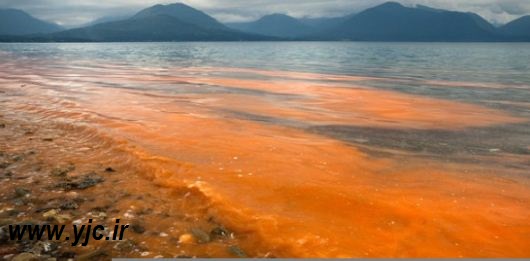


ترسناک ترین و البته بزرگترین قاتل حیوانات دریایی گیاهی به نام "Red Tide "است که سمی قوی را از خود ساتع می کند. در زمان های مشخصی از سال در برخی از ساحل های اقیانوس های آرام و اطلس این جلبک های قرمز نمایان می شوند و تنها نزدیک شدن به آن ها می تواند حیوانات را از بین ببرد. بسیاری از مرگ های دسته جمعی به علت وجود همین جلبک ها است. "باشگاه خبرنگاران"

** Spurge Laurel
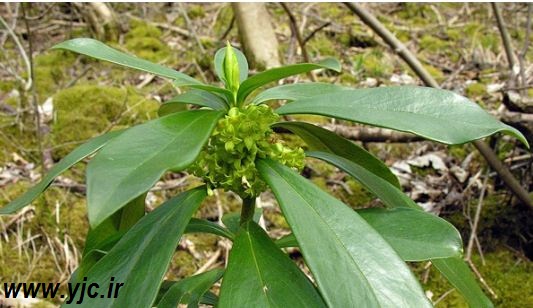


یکی از بی رحم ترین گیاهان دنیا را می توانید در هر جنگلی ببینید. این گیاه برگ های سبز و نرمی دارد که بسیار زیبا هم هستند اما در پشت این زیبایی با خشونت رفتار می کنند. دست زدن و یا حمل و نقل اشتباه این گیاه می تواند باعث بروز خونریزی های داخلی و از کار افتادن عضلات ظرف چند ساعت شود. این نشانه ها به سرعت انسان ها را به سمت مرگ راهی می کنند. درمان برای این گیاه بسیار کم است و البته درمان آن بسیار دردناک نیز هست.

** گزنه نیوزلندی
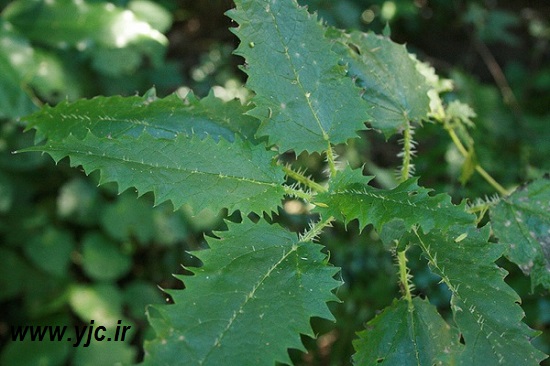


گزنه یکی از دردناک ترین گیاهانی است که می توانید در دنیا پیدا کنید ولی نوع نیوزلندی آن واقعا شگفت انگیز  و ترسناک است. این گزنه حتی با قدم زدن در کنارش هم شما را مسموم و به سرعت می کشد. این درخت ها می تواند تا سه متر رشد کنند و البته برای آنکه به شما آسیبی وارد نکند باید از لباس ها خاصی استفاده کنید.

** توت سیاه هیمالیا
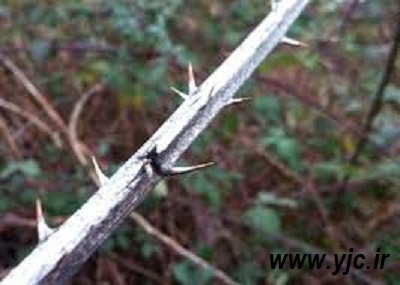


یکی از مظلوم ترین گیاهان کشنده دنیا در کوه ها هیمالیا زندگی می کند و انسان های زیادی را تا به حال راهی بیمارستان و برخی را راهی گورستان کرده است. این گیاه شاخه هایی با تیغ هایی به اندازه دندان های کوسه و تیز دارد. تنها کمی خراش روی بدن می تواند شما را راهی بیمارستان کند و البته باید چندهفته ای تحت درمان باقی بمانید در غیر این صورت جانتان را از دست خواهید داد.

** Hogweed
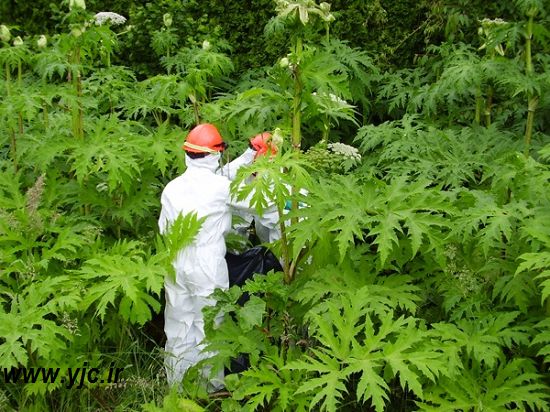


یکی از گیاهانی که به کابوس شب ها نیز شباهت دارد به نام " Hogweed"  شناخته می شود و دومین گیاهی است که میتواند تنها با تماسی بسیار ساده انسان ها را بکشد. سم این گیاه به راحتی از منافذ روی پوست وارد خون می شود وحتی پوست را نیز می سوزاند. ارتفاع این درخت به 2 متر می رسد و باید با لباس های مخصوص به آن نزدیک شوید.
+ نوشته شده در  چهارشنبه بیست و یکم فروردین ۱۳۹۲ساعت 22:55  توسط   | 

کیهان چاپ کرد:

وقتی سم از رگ خاک بیرون می زند..

نگاهی به کمیت و کیفیت کشاورزی بدون مواد شیمیایی- بخش دوم

نگاهی به کمیت و کیفیت کشاورزی بدون مواد شیمیایی بخش پایانی

در بخش دوم مصاحبه کوتاهی از بنده هم آورده شده است.


با تشکر از خانم توانگر

+ نوشته شده در  پنجشنبه بیست و ششم بهمن ۱۳۹۱ساعت 16:57  توسط   | 

همایش داخلی گیاهان زینتی- واحد رشت

اوایل اسفند ماه ۱۳۹۱

علاقمندان مقاله پژوهشی خود را در اسرع وقت (حداکثر تا ۵ بهمن ماه) به مدیرگروه تحویل دهند.

+ نوشته شده در  دوشنبه هجدهم دی ۱۳۹۱ساعت 12:11  توسط   | 

Effects of different rootstocks on aroma volatile compounds and carotenoid content of melon fruits

C. Condursoa Verzeraa, G. Dimaa, G. Tripodia, P. Crinòb, A. Paratored, D. Romanoc

Abstract

Grafting plants on resistant rootstocks is an effective tool for controlling soil borne diseases and represents a common practice in land-intensive melon cultivation. Although it is known that type of rootstock alters both yield and quality attributes of the fruit, the horticultural industry has traditionally focused only on yield. The increasing consumer attention for high quality vegetable crops makes it indispensable to carefully select rootstocks/scion combinations able to ensure also a high quality fruits. In this regards the research aimed to evaluate the effects of grafting on melon volatile aroma compounds and carotenoid content that are quality parameters rarely investigated till now in grafted melon. Five Cucurbita maxima × Cucurbita moschata hybrids (namely Polifemo, AS10, RS841, P360 and ELSI) and two genotypes of melon (Energia and Sting), selected for their disease resistance, were tested as rootstocks for melon cv. Proteo under greenhouse conditions. All the used rootstocks exhibited a good affinity with the scion, with Polifemo showing, in the early harvest, a productivity higher than control (about 60%) and a significant increase in fruit number. As regards the volatile compounds, the content of key aroma esters ethyl 2-methylbutanoate and ethyl butanoate resulted lower in most of the grafted samples (20–55% and 63–95% less than control, respectively), except in sample from Proteo/Sting grafting combination. The aroma of melons grafted on pumpkin hybrid and on Energia rootstocks resulted more similar to the control. The use of pumpkin hybrids rootstocks determined an improvement of qualitative and quantitative carotenoid profile for the presence of lutein (5.5–13.7 mg kg−1 of fresh weight) in fruit samples from Elsi, P360, RS841 and AS10 grafting combinations and the higher amount of β-carotene (about eightfold more than control) and α-carotene (about 56% more than control) in P360 sample, whereas the melon genotype rootstocks determined a decrease in the amount of β-carotene (about 55% less than control). In conclusion, the Cucurbita rootstocks resulted acceptable for melon cv. Proteo, both for productivity and quality of fruits, whereas Sting rootstock caused a reduction in fruit quality parameters.

+ نوشته شده در  پنجشنبه چهارم آبان ۱۳۹۱ساعت 23:23  توسط   | 

 پاییز 1391

+ نوشته شده در  جمعه چهاردهم مهر ۱۳۹۱ساعت 12:56  توسط   | 

الف) درس فیزیولوژی تنش در گیاهان باغبانی:

فيزيولوژی تنش های محيطی و مکانيسم های مقاومت در گياهان باغی

(دوره دوجلدی) 

تالیف:دکتر رسول جليلی مرندی ناشر : جهاددانشگاهي واحد آذربايجان غربي

 ب) درس فیزیولوژی درختان میوه:


۱- فیزیولوژی درختان میوه مناطق معتدله.... دکتر طلایی

تالیف میکولوس فاوست

۲- فيزيولوژي درختان ميوه .... دکتر راحمی

۳- فيزيولوژي درختان ميوه مناطق معتدله....دکتر غلامی

تالیف میکولوس فاوست

+ نوشته شده در  دوشنبه بیست و هفتم شهریور ۱۳۹۱ساعت 1:9  توسط   | 

لینک لیست دروس ارشد باغبانی و لینک مستقیم

دروس الزامي براي كليه گرايشها

كشت بافت و سلول گياهي

تغذيه و متابوليسم در گياهان باغباني

هورمونها و مواد تنظيم كننده رشد گياهي

 فيزيولوژي پس از برداشت تكميلي

 فيزيولوژي تنش در گياهان باغباني

گرده افشاني و باروري گياهان باغباني

سمينار1

دروس گرايش فيزيولوژي و اصلاح گياهان زينتي

 گلكاري تكميلي*

اصلاح گياهان زينتي تكميلي*

مديريت گلخانه و اتوماسيون

درختان و درختچه هاي زينتي تكميلي

چمن و گياهان پوششي

طراحي كاشت گياهان در فضاي سبز

مباني بيوتكنولوژي

طرحهاي آزمايشي و روشهاي آماري تكميلي

سمينار2


كمبود براي كليه گرايشها

طرح آزمايشهاي كشاورزي 1

اصول اصلاح گياهان باغباني

فيزيولوژي گياهي

فيزيولوژي پس از برداشت

ميوه هاي مناطق معتدله

گلكاري

سبزيكاري خصوصي

گياهان دارويي،ادويه اي و عطري


دروس گرايش فيزيولوژي و اصلاح درختان ميوه

فيزيولوژي درختان ميوه *

اصلاح درختان ميوه تكميلي*

ميوه هاي معتدله تكميلي

ريزميوه هاي تكميلي

ميوه هاي گرمسيري و نيمه گرمسيري تكميلي

خشك ميوه هاي تكميلي

خزانه كاري و مديريت نهالستان

 مباني بيوتكنولوژي ط

رحهاي آزمايشي و روشهاي آماري تكميلي

سمينار2

پايان نامه 6 واحد برای همه گرایشها

  دانشجوياني كه در دوره كارشناسي درس وصيت نامه امام (ره) (1) و روش تحقيق ( 2 واحد) را نگذرانده اند بايد اين دروس را نيز بگذرانند.

دانشجويان داراي ليسانس باغباني و فضاي سبز براي گرايش گياهان زينتي درس كمبود نمي گذرانند بقيه ملزم به گذراندن گلكاري 3 واحدي +ازدياد نباتات یا فیزیولوژی گیاهی 3 واحدي هستند(6 واحد).

دانشجويان داراي ليسانس غيرباغباني براي گرايش درختان ميوه، ملزم به گذراندن دروس ميوه هاي مناطق معتدله 3 واحدي +ازدياد نباتات یا فیزیولوژی گیاهی 3 واحدي هستند.

دانشجویان رشته های غیرمرتبط (غیرکشاورزی) به صلاحدید کمیته تخصصی باید تا 8 واحد دروس کمبود بگذرانند.

+ نوشته شده در  جمعه بیست و چهارم شهریور ۱۳۹۱ساعت 15:20  توسط   | 

Study on effect of soybean and tea intercropping on yield and yield components of soybean and tea

Shahram Sedaghathoor and Gholamreza Janatpoor

The factorial experiment (2×2×3) was done over five years to survey the best planting and density patterns of two cultivars of soybean in a cleanly pruned tea plantation. The effects of these three factors were studied on soybean and tea yield and yield ingredients. The first factor (i.e., soybean cultivars) was distributed in two levels including Williams and Williams Chipava cultivars, as well as second factor (i.e., planting pattern) was doled out in two levels including single and double row planting. The third factor (density of planting) contained 12, 17 and 22 plants per m-2. The results showed that planting pattern and interaction of "cultivar × density" had significant effect (p<0.01) on soybean yield. Based on mean comparison, maximum yield of soybean was obtained under single-row planting. On the other hand, single-row planting of "Williams Chipava" cultivar with 22 plants m-2 had the highest yield. While Williams's cultivar produced minimum yield by 12 and 22 plants m-2, respectively. Planting pattern resulted in tea yield rising (p<0.01). The highest tea yield gained by double-row soybean planting.

+ نوشته شده در  سه شنبه بیست و یکم شهریور ۱۳۹۱ساعت 0:24  توسط   | 

ABSTRACT

Effects of sowing date and plant population on seed yield of Cucurbita pepo L. were investigated. The experimental treatments included plant population at three levels (0.6, 1.3 & 2.2 plant m-2) as the main plot and sowing date at three levels (April 18, 29 & May 9) as the sub-plot. Seed yield per unit area, the number of seeds per fruit, fruits per plant, flowers per plant and auxiliary branches per plant were recorded. The highest seed yield was recorded in plots having 2.2 plant m-2 sown on April 18. Thus, present results revealed that suitable plant density cannot improve yield and yield components of pumpkin if sowing date was delayed.

Key Words: Cucurbita pepo L.; Population; Sowing date; Yield

مقاله کامل

+ نوشته شده در  یکشنبه پانزدهم مرداد ۱۳۹۱ساعت 0:55  توسط   | 

 
Google

در اين وبلاگ
در كل اينترنت
وبلاگ-کد جستجوی گوگل